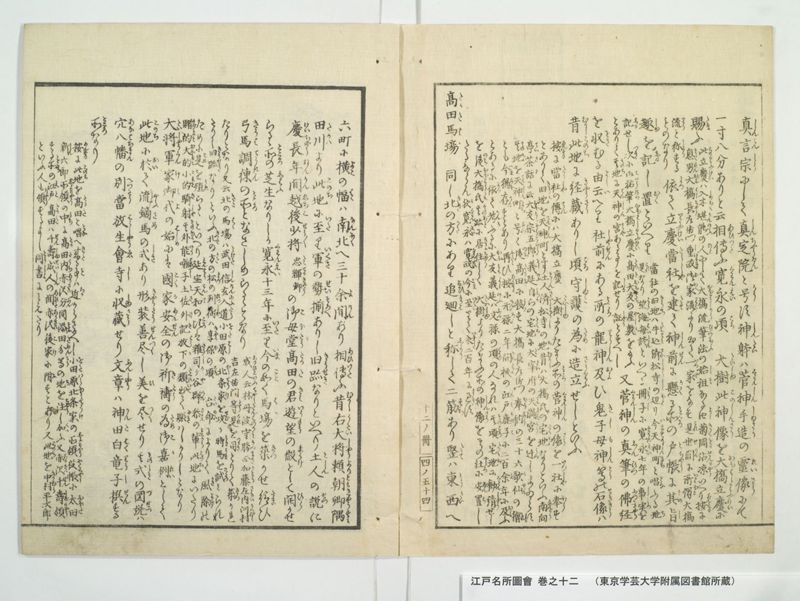
翻刻
【右丁】
真言宗(しんこんしう)にして真定院(しんちやうゐん)と号(かう)す神躰(しんたい)は菅神(くわんしん)手造(しゆさう)の靈像(れいさう)にて
一寸八分ありと云 相博(あひつた)ふ寛永(くわんえい)の頃(ころ) 大樹(たいしゆ)此(この)神像(しんさう)を大橋立慶(おほはしりふけい)に
賜(たま)ふ《割書:此(この)立慶(りふけい)は入木(しゆほく)堪能(たんのふ)の人(ひと)にて大橋流筆法(おほはしりうひつほふ)の始祖(しそ)なる由(よし)菊岡仙凉(きくをかせんりやう)いへり按(あんする)に|息男(そくなん)大橋長左衛門重政(おほはしちやう しけまさ)御家流(おいへりう)より出て一家(いつけ)をなす是(これ)世間(せけん)に所謂(いはゆる)大橋》
《割書:流(りう)と称(しよう)する|ものなり》依(よつ)て立慶(りふけい)當社(とうしや)を建(たて)て神前(しんせん)に懸(かく)る所(ところ)の戸帳(とちやう)に其(その)旨(し)
趣(しゆ)を記(しる)し置(おく)といへり 《割書:當社の旧地(きうち)は牛込(うしこみ)済松寺(さいしようし)の辺(ほと)り今(いま)天神町(てんしんまち)と唱(とな)ふる地(ち)|是(これ)なり望海毎談(ほうかいはいたん)といへる冊子(さうし)に寛永(くわんえい)七年の事実(ししつ)を》
《割書:記(しる)せし次(つき)に御祐筆(こいうひつ)大橋立慶(おほはしりふけい)に高田大友(たかたおほとも)の屋敷(やしき)を給ふ|とありて其地(そのち)に天神(てんしん)の宮(みや)ある事を記(しる)せり証(しやう)とすへし》又/菅神(くわんしん)の真筆(しんひつ)の佛経(ふつきやう)
を収(をさ)むる由(よし)云(い)へり社前(しやせん)にある所(ところ)の龍神(りうしん)及(およ)ひ鬼子母神(きしもしん)等(とう)の石像(せきさう)は
昔(むかし)此地(このち)に経蔵(きやうさう)ありし頃(ころ)守護(しゆこ)の為(ため)に造立(さうりふ)せしといふ
《割書:按(あんする)に當社(とうしや)の傳(てん)には大橋立慶 大樹(たいしゆ)よりたまふ所(ところ)の菅神(くわんしん)の像(さう)を一社(いつしや)に奉(ほう)す|とありて旧地(きうち)を天神町(てんしん )とす土人(としん)済松寺(さいしようし)の地(ち)昔(むかし)は大橋氏の宅地(たくち)なりといふ南向(なんかう)》
《割書:亭茶話(ていさわ)に云/大友宗五郎義延(おおともそうこらうよしのふ)自(みつか)らの宅地(たくち)に太宰府(たさいふ)の天満宮(てんまんくう)を迁(うつ)しまゐらす|其地(そのち)を天神町(てんしんまち)と号(なつ)く後(のち)高田(たかた)に移(うつ)す大橋長左衛門/奉納(ほうなう)の三十六歌仙( かせん)の繪(ゑ) 》
《割書:とも今猶(いまなほ)存(そん)すとあり再(ふたゝ)ひ按(あんする)に元禄(けんろく)二年/開板(かいはん)の江戸鹿子(えとかのこ)に二百余年( よ )に及(およ)ふ|とあるに依(よつ)て考(かんか)ふるに大友義延(おほともよしのふ)は文禄(ふん )の頃(ころ)の人なれは其頃(そのころ)宅地(たくち)に勧請(くわんしやう)せし》
《割書:を後(のち)大橋氏(おほはしうち)其跡(そのあと)に居住(きよちゆう)して 大樹(たいしゆ)よりたまふ所の神像(しんさう)をその社(やしろ)に安置(あんち)し|たるならん欤(か)寛永(くわんえい)は寛政(くわんせい)の今(いま)に至(いた)りて未(いまた)二百年に過(すき)す》
高田馬塲(たかたはゝ) 同し北(きた)の方(かた)にあり追廻(おひまは)しと称(しよう)して二筋( すち)あり竪(たて)は東西(とうさい)へ
【左丁】
六町に横(よこ)の幅(はゝ)は南北(なんほく)へ三十余間( よけん)あり相傳(あひつた)ふ昔(むかし)右大将頼朝卿(うたいしやうよりともきやう)隅(すみ)
田川(たかは)より此地(このち)に至(いた)り軍(いくさ)の勢揃(せいそろへ)ありし旧跡(きうせき)なりといへり土人(としん)の説(せつ)に
慶長年間(けいちやうねんかん)越後少将(ゑちこせう〳〵)《割書:忠輝卿(たゝてるきやう)|》の御母堂(こほたう)《振り仮名:髙田の君|たかた きみ》遊望(いうもう)の儲(まうけ)として開(ひら)かせ
らるゝ所(ところ)の芝生(しはふ)なりしか寛永(くわんえい)十三年に至(いた)り今(いま)の如(こと)く馬塲(はゝ)を築(きつ)かせ給(たま)ひ
弓馬調練(きうはてうれん)の所(ところ)となさしめらるゝとなり《割書:或人云(あるひといふ)林丹波守勝正(はやしたんはのかみかつまさ)加藤左内(かとうさない)河村(かはむら) |吉左衛門 等(とう)是(これ)を司(つかさ)とりて築(きつ)かれ》
《割書:たりとなり又云 北(きた)の馬塲(はゝ)は武田信玄入道(たけたしんけんにふたう)小田原(をたはら)の北条家(ほうてうけ)を攻(せむ)る時(とき)馬(うま)を試(こゝろ)みられ|たりし旧跡(きうせき)なりといふ北(きた)の方(かた)の松(まつ)の列樹(れつしゆ)は享保(きやうほ)の頃(ころ) 台命(たいめい)によりて風除(かさよけ)の》
《割書:ために是(これ)を殖(うゑ)らるゝといへり延宝(えんはう)天和(てんわ)の頃(ころ)は《振り仮名:雜司ヶ谷|さうしかや》群参(くんさん)の軰(ともから)此地(このち)にいたり|賭的(かけまと)大的(おほまと)小的(こまと)騎射(きしや)其外(そのほか)能囃子(のうはやし)土佐外記(とさけき)放下(はうか)の類(たくひ)出(いて)て賑(にき)はしかりしとなり》
大将軍家(たいしやうくんけ)御代(みよ)の始(はしめ)には國家安全(こくかあんせん)の御祈禱( きとう)の為(ため)御嘉例(こかれい)として
此地(このち)に於(おい)て流鏑馬(やふさめ)の式(しき)あり形装(きやうさう)善(せん)尽(つく)し美(ひ)を尽(つく)せり其式(そのしき)の図説(つせつ)は
穴八幡(あなはちまん)の別當(へつたう)放生會寺(はうしやうゑし)に収蔵(しゆさう)せり文章(ふんしやう)は神田白竜子(かんたはくりうし)撰(せん)する
所(ところ)なり
《割書:按(あんする)に此地(このち)を髙田(たかた)と唱(とな)へ來(きた)る事(こと)は近(ちか)からさるへし小田原北条家(をたはらほうてうけ)の所領役帳(しよりやうやくちやう)に太田(おほた)|新六郎(しん )所領(しよりやう)の中(うち)に髙田内(たかたうち)赤沢分(あかさはふん)同 添田分(そふたふん)等(とう)の地(ち)を注(ちゆう)し加(くは)ふ又 赤沢千壽(あかさはせんしゆ)領(りやう)》
《割書:する所(ところ)の江戸(えと)髙田(たかた)は千壽(せんしゆ)成人(せいしん)の間(あひた)赤沢(あかさは)後家(こけ)に附(ふ)すとあり又 此地(このち)を中村平次郎(なかむら )|といふ人も領(りやう)するよし同書(とうしよ)にみえたり》
現代語訳
【右丁】
真言宗で真定院と号する。神体は菅原道真が手ずから造った霊像で、一寸八分(約5.4cm)あるという。相伝するところによれば、寛永の頃、将軍がこの神像を大橋立慶に賜った《この立慶は書道に優れた人で、大橋流筆法の始祖である由を菊岡仙凉が述べている。按ずるに、その息子大橋長左衛門重政は御家流から出て一家を成した。これが世間で所謂大橋流と称するものである》。よって立慶は当社を建てて、神前に掛ける戸帳にその趣旨を記し置いたという。《当社の旧地は牛込済松寺の辺り、今天神町と呼ぶ地である。望海毎談という冊子に寛永七年の事実を記した次に、御祐筆大橋立慶に高田大友の屋敷を給うとあって、その地に天神の宮がある事を記している。これは証拠とすべきである》。また菅原道真の真筆の仏経を収めるという。社前にある龍神及び鬼子母神等の石像は、昔この地に経蔵があった頃、守護のために造立したという。
《按ずるに当社の伝には、大橋立慶が将軍より賜った菅原道真の像を一社に奉ずるとあって、旧地を天神町とする。土地の人は済松寺の地は昔は大橋氏の宅地だったという。南向亭茶話に云う、大友宗五郎義延が自らの宅地に太宰府の天満宮を遷し奉る。その地を天神町と号す。後に高田に移す。大橋長左衛門奉納の三十六歌仙の絵も今なお存するとある。再び按ずるに、元禄二年開板の江戸鹿子に二百余年に及ぶとあることで考えるに、大友義延は文禄の頃の人なので、その頃宅地に勧請したのを後に大橋氏がその跡に居住して、将軍より賜った神像をその社に安置したのであろうか。寛永は寛政の今に至ってもまだ二百年に過ぎない》
高田馬場(たかたばば) 同じく北の方にある。追廻しと称して二筋ある。縦は東西へ六町、横の幅は南北へ三十余間ある。相伝するところによれば、昔右大将源頼朝公が隅田川からこの地に至り、軍の勢揃えがあった旧跡だという。土地の人の説に、慶長年間、越後少将《忠輝卿》の御母堂《高田の君》の遊望の設備として開かれた芝生だったが、寛永十三年に至り、今のように馬場を築かせ給い、弓馬調練の所とさせられるようになったという。《ある人が言うには、林丹波守勝正、加藤左内、河村吉左衛門等がこれを司って築かれたという。また言うには、北の馬場は武田信玄入道が小田原の北条家を攻める時、馬を試みた旧跡だという。北の方の松の列樹は享保の頃、台命によって風除けのために植えられたという。延宝・天和の頃は雑司ヶ谷群参の輩がこの地に至り、賭的・大的・小的・騎射その外能囃子・土佐外記・放下の類が出て賑わしかったという》
【左丁】
将軍家御代の始めには国家安全の御祈祷のため、御嘉例としてこの地において流鏑馬の式がある。形装を尽くし美を尽くした。その式の図説は穴八幡の別当放生會寺に収蔵されている。文章は神田白竜子が撰したものである。
《按ずるに、この地を高田と呼び来たることは古くからのことであろう。小田原北条家の所領役帳に太田新六郎所領の中に高田内赤沢分、同添田分等の地を注し加える。また赤沢千壽が領する江戸高田は千壽成人の間、赤沢後家に附すとある。またこの地を中村平次郎という人も領するよし同書に見えている》
英語訳
【Right Page】
It belongs to the Shingon sect and is called Shinjo-in. The divine body is a sacred statue hand-carved by Sugawara no Michizane himself, said to be one sun and eight bu (about 5.4cm) tall. According to tradition, during the Kan'ei period, the shogun bestowed this divine statue upon Ohashi Rikkei. 《This Rikkei was skilled in calligraphy and was the founder of the Ohashi school of calligraphy, as stated by Kikuoka Senryo. Upon investigation, his son Ohashi Chozaemon Shigemasa emerged from the Oie school to establish his own school. This is what is commonly called the Ohashi school.》 Therefore, Rikkei built the current shrine and recorded this purpose on the door curtains hung before the deity. 《The former site of this shrine was near Saisho-ji temple in Ushigome, in what is now called Tenjin-cho. A booklet called Hokai Maidan records events from the seventh year of Kan'ei, stating that the shogun's secretary Ohashi Rikkei was granted the Takada Otomo estate, and records that there was a Tenjin shrine on that land. This should serve as evidence.》 It is also said to house sutras written in Sugawara no Michizane's own hand. The stone statues of dragon gods and Kishimojin in front of the shrine are said to have been erected for protection when there was a sutra repository on this site in ancient times.
《Upon investigation, the shrine's tradition states that Ohashi Rikkei enshrined the statue of Sugawara no Michizane received from the shogun in a single shrine, with the former site being Tenjin-cho. Local people say that the site of Saisho-ji temple was formerly the residential land of the Ohashi family. The Nanko-tei Sawa states that Otomo Sogoro Yoshinobu relocated Dazaifu Tenmangu to his own residential land, called that place Tenjin-cho, and later moved it to Takada. The paintings of the thirty-six immortal poets donated by Ohashi Chozaemon still exist today. Upon further consideration, the Edo Kanoko published in the second year of Genroku mentions over two hundred years, so considering that Otomo Yoshinobu was a person from the Bunroku period, the shrine was probably established on his residential land at that time, and later the Ohashi family resided on that site and enshrined the divine statue received from the shogun in that shrine. From Kan'ei to the present Kansei period, it has not yet exceeded two hundred years.》
Takada Horse Ground (Takada Baba) - Located to the north of the same area. Called "oimawashi" (riding ground), it has two sections. Vertically it extends six cho east to west, and the horizontal width is over thirty ken north to south. According to tradition, this is the historic site where Right General Minamoto no Yoritomo came from Sumida River to this place and held a military muster in ancient times. According to local accounts, during the Keicho period, this was grassland opened for the recreational use of the mother of Echigo Shosho 《Lord Tadateru》, called 《Lady Takada》, but in the thirteenth year of Kan'ei, the horse ground was constructed as it is today and made into a place for archery and horsemanship training. 《Some say it was constructed under the supervision of Hayashi Tanba-no-kami Katsumasa, Kato Sanai, Kawamura Kichizaemon, and others. It is also said that the northern horse ground is the historic site where Takeda Shingen tested horses when attacking the Hojo family of Odawara. The row of pine trees to the north were planted by imperial command during the Kyoho period as windbreaks. During the Enpo and Tenwa periods, groups from Zoshigaya would come to this place, and target shooting, large targets, small targets, mounted archery, and other entertainments like noh music, Tosa geki, and hoka performances would create a lively atmosphere.》
【Left Page】
At the beginning of each shogun's reign, as an auspicious custom for prayers for national security, yabusame (mounted archery) ceremonies are held at this location. The costumes and beauty are perfected. The illustrated explanations of these ceremonies are stored at Hoshoe-ji temple, the administrator of Ana Hachiman shrine. The text was written by Kanda Hakuryushi.
《Upon investigation, calling this place Takada has been done for a long time. In the Odawara Hojo family's domain register, among Ota Shinrokuro's territories, lands such as Takada-uchi Akasawa-bun and the same Soeda-bun are noted and added. Also, Edo Takada, which was ruled by Akasawa Senju, was attached to the Akasawa widow during Senju's minority. It is also seen in the same document that a person named Nakamura Heijiro also ruled this land.》