翻刻
【右丁】
ありし頃(ころ)此(この)御神(おんかみ)を勧請(くわんしやう)なし給と云々 此(この)山岸(やまきし)に少(すこ)しはかりの
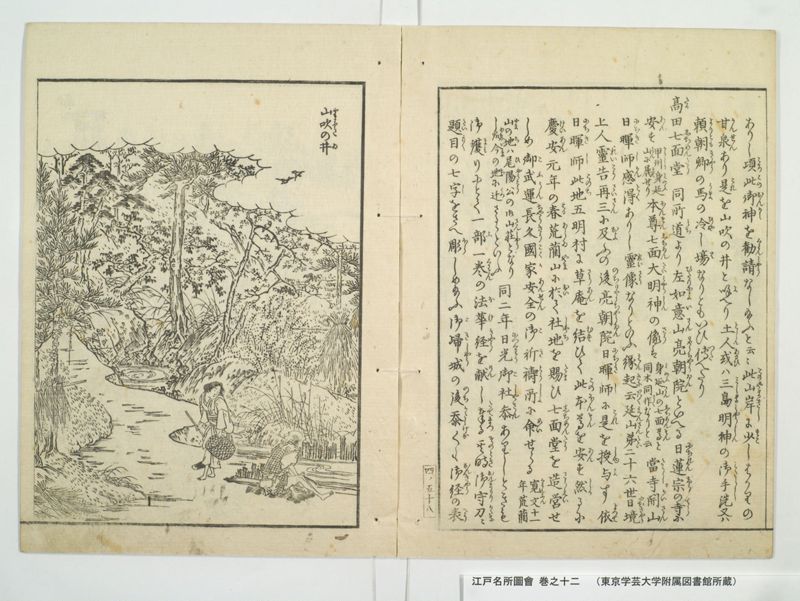
甘泉(かんせん)あり是(これ)を山吹の井と呼(よ)へり土人(としん)或(あるひ)は三島明神(みしまみやうしん)の御手洗(みたらし)又は
()《振り仮名:頼朝卿の馬の冷し塲|よりともきやう うま ひや は 》なりともいひ傳(つた)へたり
髙田七面堂(たか しちめんたう) 同所 道(みち)より左(ひたり)如意山(によいさん)亮朝院(りやうちやうゐん)といへる日蓮宗(にちれんしう)の寺(てら)に
安(あん)す《割書:甲州(かうしう)身延(みのふ)|山(さん)に属(そく)せり》本尊(ほんそん)七面大明神(しちめんたいみやうしん)の像(さう)は《割書:身延山(みのふさん)の七面尊(しちめんそん)と|同木 同作( さく)なりと云》當寺(たうし)開山(かいさん)
日暉師(にちきし)感得(かんとく)ありし靈像(れいさう)なりといふ緣起云(えんきにいはく)延山(えんさん)弟(たい)二十六世 日境(にちきやう)
上人 靈告(れいこう)再三(さいさん)に及(およ)ふの後(のち)亮朝院日暉師(りやうちやうゐんにちきし)に是(これ)を授与(しゆよ)す依(よつて)
日暉師(にちきし)此地(このち)五明村に草庵(さうあん)を結(むす)ひて此(この)本尊(ほんそん)を安(あん)す然(しか)るに
慶安(けいあん)元年の春(はる)荒藺山(あらゐやま)に於(おい)て社地(しやち)を賜(たま)ひ七面堂(しちめんたう)を造営(さうえい)せ
しめ御武運長久(こふうんちやうきう)國安全家(こくかあんせん)の御祈禱所(こきとうしよ)に命(めい)せらる《割書:寛文(くわんふん)十一|年荒藺》
《割書:山(やま)の地(ち)は尾陽公(ひやうこう)の御山荘( さんしやう)となり|し故(ゆゑ)今(いま)の地(ち)に迁(うつ)さるゝといふ》同二年 日光(につくわう)御社参(こしやさん)ありしときも
御護( まも)りにとて一部( ふ)一巻( くわん)の法華経(ほけきやう)を献(けん)し奉(たてまつ)る其時(そのとき)御守刀(おんまもりかたな)に
題目(たいもく)の七字( し)をさへ彫(ほら)しめ給ふ御㱕城(こきしやう)の後(のち)忝(かたしけな)くも御経(おんきやう)の表(へう)
【左丁 絵図】
《振り仮名:山吹の井|やまふき ゐ 》
現代語訳
【右丁】
あった頃、この御神を勧請なさったと言われている。この山岸に少しばかりの甘い泉があり、これを山吹の井と呼んでいる。土地の人は、あるいは三島明神の御手洗い、または頼朝卿の馬の冷やし場であったとも言い伝えている。
高田七面堂 同じ場所の道より左手にある如意山亮朝院という日蓮宗の寺に安置されている。(甲州身延山に属している)本尊の七面大明神の像は(身延山の七面尊と同じ木・同じ作であると言われている)当寺開山の日暉師が感得された霊像であるという。縁起によると、身延山第二十六世の日境上人が霊告を再三受けた後、亮朝院の日暉師にこれを授与した。そこで日暉師はこの地の五明村に草庵を結んでこの本尊を安置した。しかし慶安元年の春、荒藺山において社地を賜り、七面堂を造営させ、御武運長久・国家安全の御祈祷所に命じられた。(寛文十一年、荒藺山の地は尾張公の御山荘となったため、今の地に移されたという)同二年、日光御社参があった時も御守りにと一部一巻の法華経を献上申し上げた。その時、御守刀に題目の七字をさえ彫らせなさった。御帰城の後、恐れ多くも御経の表
【左丁 絵図】
山吹の井
英語訳
【Right page】
It is said that this deity was invited here around that time. On this hillside there is a small sweet spring, which is called Yamabuki no I (Kerria Well). The local people say it was either the purification basin of Mishima Myōjin or the place where Lord Yoritomo's horses were watered.
Takada Shichimen-dō: Located at Nyoisan Ryōchōin, a Nichiren sect temple to the left of the road in the same area. (It belongs to Mount Minobu in Kōshū) The image of the principal deity, Shichimen Daimyōjin, is said to be (made from the same wood and by the same craftsman as the Shichimen-son of Mount Minobu) a sacred image that the founding priest Nikki obtained through divine inspiration. According to the temple's origin story, after the 26th patriarch of Mount Minobu, Nikkyō Shōnin, received divine revelations repeatedly, he bestowed this upon priest Nikki of Ryōchōin. Accordingly, priest Nikki built a hermitage in Gomyō village at this location and enshrined this principal image. However, in the spring of the first year of Keian, he was granted land at Mount Arai and ordered to construct Shichimen-dō as a place of prayer for long military fortune and national security. (In the 11th year of Kanbun, the land at Mount Arai became the mountain villa of the Lord of Owari, so it was moved to the present location) In the second year of the same era, when there was an imperial visit to Nikkō, he presented a complete one-volume Lotus Sutra as protection. At that time, the seven characters of the daimoku were even carved into the protective sword. After the imperial return to the castle, most graciously the cover of the sutra...
【Left page illustration】
Yamabuki no I (Kerria Well)