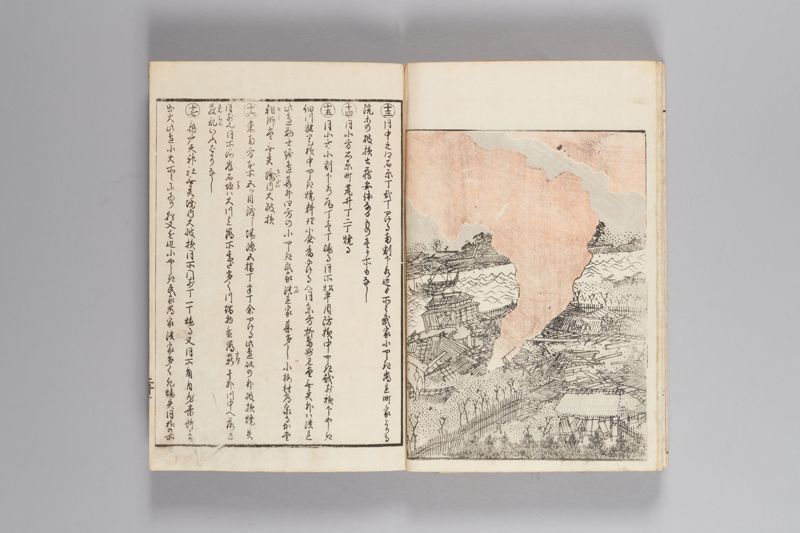
翻刻
【左丁】
【漢数字丸囲み】十三 同中之郷石原丁弐丁やける南割下近辺ゟ所々武家小やしき崩れ町家より寺
院等の破損土蔵安体なるもの壱ケ所もなし
【漢数字丸囲み】十四 同北方石原町荒井丁二丁焼る
【漢数字丸囲み】十五 同北方北割下水瓦丁壱丁焼る同所松平周防様中やしき越前様下やしき
細川能登様中やしき焼料理小倉房やける△同東方柳島妙見堂無異外は潰れ
此辺勤士堀辺其外四方の小やしき民家 潰(つぶ)れ家甚多し小梅村常泉寺本堂
祖師(そし)堂無異 境内(けいだい)大破損
【漢数字丸囲み】十六 東南方本所五ツ目渡し場際五橋丁半丁余やける此辺以の外破損焼失
同前也同所河岸石 垣(がき)は大川迄崩所甚だ多く川端物置 薪(たきゞ)其外川中へ落■
散乱(さんらん)いふばかりなし
【漢数字丸囲み】十七 亀戸天神社無異境内大破損同所門前丁一丁焼る又同所角自身番所より
出火此辺小火所々にあり猶又近辺小やしき民家崩家潰家多く凡焼失同様の所
現代語訳
【十三】同じく中之郷石原町二丁目が焼ける。南割下水近辺より所々の武家の小屋敷が崩れ、町家から寺院等に至るまで破損し、土蔵で無事なものは一か所もなかった。
【十四】同じく北方の石原町・荒井町、二丁が焼ける。
【十五】同じく北方の北割下水瓦町、一丁が焼ける。同所の松平周防守様の中屋敷・越前様の下屋敷・細川能登守様の中屋敷が焼ける。料理屋・小倉屋(房)が焼ける。△同じく東方の柳島妙見堂は無事であったが、それ以外は潰れた。この辺りの勤番士の掘辺(堀端)、その他四方の小屋敷・民家で潰れた家が非常に多い。小梅村の常泉寺は本堂・祖師堂が無事であったが、境内は大きく破損した。
【十六】東南方向の本所五ツ目の渡し場際、五橋町が半丁余り焼ける。この辺りは甚だしく破損・焼失し、前述と同様の状況である。同所の河岸の石垣は大川(隅田川)まで崩れた箇所が非常に多く、川端の物置・薪その他が川中へ落ち込み、散乱していること言葉に表しようがない。
【十七】亀戸天神社は無事であったが、境内は大きく破損した。同所の門前町一丁が焼ける。また同所の角の自身番所から出火し、この辺りで小火(ぼや)が所々に起きた。さらに近辺の小屋敷・民家でも崩れた家・潰れた家が多く、おおよそ焼失したと同様の有様の場所もあった。
英語訳
[Item 13] In the same area, two blocks of Nakanogō Ishiwara-chō burned down. From the vicinity of Minami-Warishitamizu, small samurai residences in various locations collapsed, and everything from townhouses to temple buildings was damaged, with not a single earthen storehouse (dozō) left unscathed.
[Item 14] To the north, two blocks of Ishiwara-chō and Arai-chō also burned.
[Item 15] To the north, one block of Kita-Warishitamizu Kawara-chō burned. In the same area, the middle residence (naka-yashiki) of Lord Matsudaira Suō, the lower residence (shimo-yashiki) of the Lord of Echizen, and the middle residence of Lord Hosokawa Noto all burned. A restaurant and the establishment known as Ogura-bō also burned. △ To the east, the Yanagishima Myōken-dō hall survived unscathed, but everything else around it collapsed. In this area, the residences along the moat belonging to duty officers (kinban-shi) and the numerous small samurai residences and townspeople's houses in all directions suffered massive collapses. At Jōsen-ji Temple in Koume Village, the main hall (hondō) and the Soshi-dō hall survived, but the temple grounds suffered extensive damage.
[Item 16] To the southeast, near the Honjo Itsutsu-me ferry crossing, more than half a block of Gokyō-chō burned. The damage and destruction by fire in this area was extreme, comparable to the situations described previously. The stone embankments along the riverside all the way to the Ōkawa (Sumida River) crumbled in a great many places, and storage sheds, firewood, and other materials along the riverbank fell into the river, causing a state of chaos and debris-strewn disorder beyond description.
[Item 17] The Kameido Tenjin Shrine survived intact, but its grounds suffered major damage. One block of the temple's gate-front town (monzen-chō) burned. Furthermore, a fire broke out from the neighborhood watch post (jishinban-sho) at the corner of the same area, and small fires occurred here and there nearby. Moreover, there were many collapsed and crumbled houses among the small samurai residences and townspeople's homes in the vicinity, with some areas left in a state no different from those that had burned entirely.