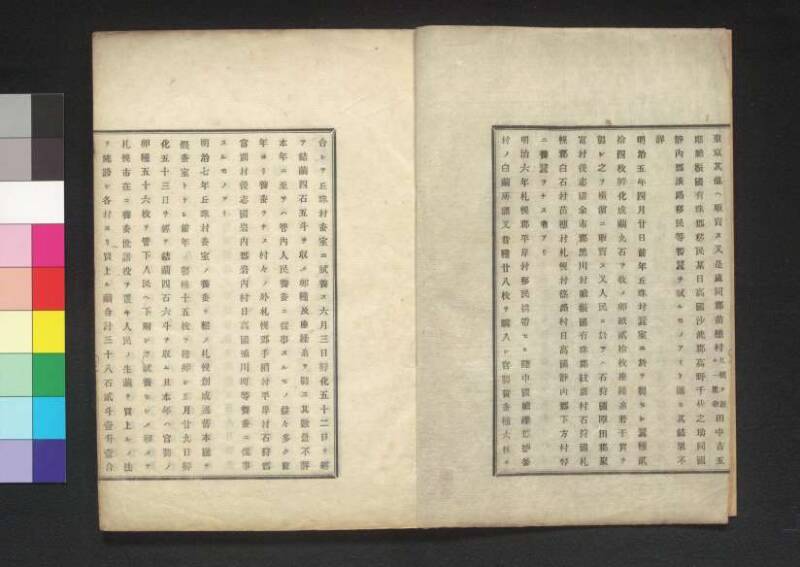
翻刻
東京其他ヘ販売ス又是歳同郡苗穂村《割書:札幌ヲ距|ル一里余》田中吉五
郎胆振国有珠郡移民某日高国沙流郡高野千代之助同国
静内郡淡路移民等養蚕ヲ試ルモノアリト雖トモ其結果不
詳
明治五年四月廿日前年丘珠村蚕室ニ於テ製セシ蚕種弐
拾四枚孵化成繭九石ヲ収メ卵紙弐拾枚座繰糸若干貫ヲ
製シ之ヲ横浜ニ販売ス又人民ニ於テハ石狩国厚田郡聚
富村後志国余市郡黒川村胆振国有珠郡紋別村石狩国札
幌郡白石村苗穂村札幌村篠路村日高国静内郡下方村等
ニ養蚕ヲナス者アリ
明治六年札幌郡平岸村移民携帯セル陸中国胆沢郡塩釜
村ノ白繭所謂又昔種廿八枚ヲ購入シ官製黄蚕種六枚ヲ
合シテ丘珠村蚕室ニ試養ス六月三日孵化五十二日ヲ経
テ結繭四石五斗ヲ収メ卵種及座繰糸ヲ製ス其数量不詳
本年ニ至テハ管内人民養蚕ニ従事スルモノ益々多ク前
年ヨリ養蚕ヲナス村々ノ外札幌郡手稲村平岸村石狩郡
当別村後志国岩内郡岩内村日高国浦川町等養蚕ニ従事
スルモノアリ
明治七年丘珠村蚕室ノ養蚕ヲ輟メ札幌創成通旧本庁ヲ
仮蚕室トナシ前年ノ製種十五枚ヲ掃卵シ五月廿九日孵
化五十三日ヲ経テ結繭四石六斗ヲ収ム且本年ハ官製ノ
卵種五十六枚ヲ管下人民へ下附シテ試養セシメ初メテ
札幌市在ニ養蚕世話役ヲ置キ人民ノ生繭ヲ買上ルノ法
ヲ施設シ各村ヨリ買上ル繭合計三十八石弐斗壱升壱合
現代語訳
これらを東京その他へ販売した。また、この年(明治四年)、同郡苗穂村(札幌より一里余り)の田中吉五郎、胆振国有珠郡の移民の某、日高国沙流郡の高野千代之助、同国静内郡の淡路移民らが養蚕を試みた者もあったが、その結果は不明である。
明治五年四月二十日、前年に丘珠村蚕室において製造した蚕種二十四枚を孵化させ、繭九石を収穫し、卵紙二十枚および座繰糸若干貫を製造して、これを横浜に販売した。また、民間においては、石狩国厚田郡聚富村・後志国余市郡黒川村・胆振国有珠郡紋別村・石狩国札幌郡白石村・苗穂村・札幌村・篠路村・日高国静内郡下方村などで養蚕を行う者があった。
明治六年、札幌郡平岸村の移民が携帯してきた陸中国胆沢郡塩釜村産の白繭、いわゆる「又昔種」二十八枚を購入し、官製黄蚕種六枚を合わせて丘珠村蚕室で試験飼育を行った。六月三日に孵化し、五十二日を経て繭四石五斗を収穫し、卵種および座繰糸を製造した。その数量は不詳である。
この年に至っては、管内の人民で養蚕に従事する者がますます多くなり、前年から養蚕を行っていた村々のほか、札幌郡手稲村・平岸村・石狩郡当別村・後志国岩内郡岩内村・日高国浦川町なども養蚕に従事する者が現れた。
明治七年、丘珠村蚕室での養蚕を取りやめ、札幌創成通の旧本庁を仮蚕室として、前年製造の蚕種十五枚を掃卵し、五月二十九日に孵化、五十三日を経て繭四石六斗を収穫した。また、この年は官製の卵種五十六枚を管内の人民へ下付して試験飼育させ、初めて札幌市在に養蚕世話役を設置し、人民の生繭を買い上げる制度を設けた。各村から買い上げた繭の合計は三十八石二斗一升一合……
英語訳
These were sold to Tokyo and other locations. Also in that year (Meiji 4), Tanaka Kichigoro of Naebo Village in the same district (approximately one ri from Sapporo), certain migrants from Usu District, Iburi Province, Takano Chiyonosuke of Saru District, Hidaka Province, and migrants from Awaji in Shizunai District of the same province attempted sericulture, though the results are unknown.
On the twentieth day of the fourth month of Meiji 5 (1872), twenty-four sheets of silkworm eggs produced the previous year at the Okadama Village silkworm-rearing facility were hatched, yielding nine koku of cocoons. Twenty sheets of egg paper and several kan of thread reeled by hand-cranked reeling machines (zaguri) were produced and sold in Yokohama. Among the general populace, sericulture was practiced in Shūfu Village in Atsuta District, Ishikari Province; Kurokawa Village in Yoichi District, Shiribeshi Province; Monbetsu Village in Usu District, Iburi Province; Shiroishi Village, Naebo Village, Sapporo Village, and Shinoro Village in Sapporo District, Ishikari Province; and Shimohō Village in Shizunai District, Hidaka Province.
In Meiji 6 (1873), twenty-eight sheets of the white cocoon variety known as "Matamukashi-dane," brought by migrants from Shiogama Village in Isawa District, Rikuchū Province, who had settled in Hiragishi Village, Sapporo District, were purchased. Combined with six sheets of government-produced yellow silkworm eggs, a trial rearing was conducted at the Okadama Village silkworm facility. The eggs hatched on the third day of the sixth month, and after fifty-two days, four koku and five to of cocoons were harvested, and egg sheets and zaguri-reeled thread were produced. The quantities are unknown.
By this year, the number of people in the jurisdiction engaged in sericulture had grown considerably. In addition to the villages already practicing sericulture from the previous year, new participants appeared in Teine Village and Hiragishi Village in Sapporo District; Tōbetsu Village in Ishikari District; Iwanai Village in Iwanai District, Shiribeshi Province; and Urakawa Town in Hidaka Province.
In Meiji 7 (1874), sericulture operations at the Okadama Village facility were discontinued. The former main office building on Sōsei-dōri in Sapporo was repurposed as a temporary silkworm-rearing facility. Fifteen sheets of silkworm eggs produced the previous year were hatched, the eggs hatching on the twenty-ninth day of the fifth month, and after fifty-three days, four koku and six to of cocoons were harvested. Furthermore, that year, fifty-six sheets of government-produced silkworm eggs were distributed to residents within the jurisdiction for trial rearing. For the first time, a sericulture liaison officer (yōsan sewayaku) was appointed in the Sapporo area, and a system was established for purchasing raw cocoons from the populace. The total cocoons purchased from the various villages amounted to thirty-eight koku, two to, one shō, and one gō…