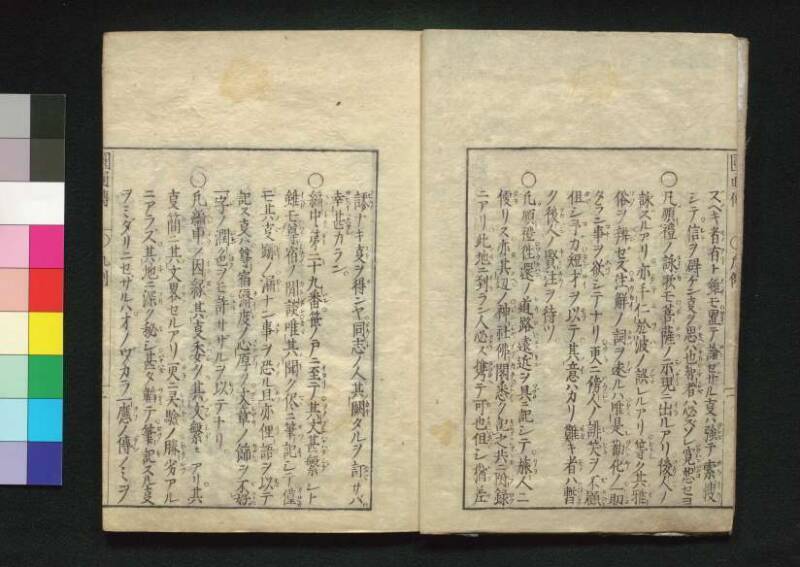
翻刻
【コマ5】
【右丁】
ズベキ者(モノ)有(アリ)ト𨿽(イヘド)モ。置(ヲイ)テ論(ロン)ゼザル㕝ハ。強(シヒ)テ《振り仮名:索⁻捜|サクソウ》
シテ。信(シン)ヲ碍ケン㕝ヲ思(ヲモヘ)バ也(ナリ)。《振り仮名:智⁻者|チシヤ》ハ必ズソレ。《振り仮名:寛⁻恕|クハンジヨ》セヨ
○凡 ̄ソ順⁻禮ノ《振り仮名:詠⁻歌|エイカ》モ。《振り仮名:菩⁻薩|ボサツ》ノ《振り仮名:示⁻現|ジゲン》ニ出(イツ)ルアリ。《振り仮名:後⁻人|コウジン》ノ
詠ズルアリ。亦 ̄タ《振り仮名:手₋仁₋於₋波|テニヲハ》ノ誤(アヤマ)レルアリ。等(ヒトシ)ク其 ̄ノ《振り仮名:雅⁻|ガ 》
俗(ゾク)ヲ辨(ベン)ゼズ。《振り仮名:注⁻觧|チウカイ》ノ詞(コトバ)ヲ述(ノブ)ルハ。《振り仮名:唯₋是 ̄レ|タヾ 》《振り仮名:勸⁻化|クハンケ》ノ。《振り仮名:一⁻助| ジヨ》#1
タラン事(コト)ヲ欲(ホツ)シテナリ。更(サラ)ニ《振り仮名:傍⁻人|ハウジン》ノ《振り仮名:誹⁻笑|ヒセウ》ヲ《振り仮名:不_レ顧| ズ カヘリミ》
但(タヾ)シ予(ヨ)ガ。《振り仮名:短⁻才|タンサイ》ヲ以(モツ)テ。《振り仮名:其 ̄ノ₋意| イ》ハカリ難(ガタ)キ者(モノ)ハ。暫(シバラク)
ク《振り仮名:後⁻人|コウジン》ノ《振り仮名:賢⁻注|ケンチウ》ヲ待(マ)ツ。
○凡 ̄ソ順⁻禮。《振り仮名:往⁻還|ワウクハン》ノ《振り仮名:道⁻路|トウロ》。《振り仮名:遠⁻近|エンキン》ヲ《振り仮名:具󠄁|ツブサ》ニ記シテ。《振り仮名:旅⁻人|リヨ 》ニ
《振り仮名:𠊳|タヨ》リス。亦 ̄タ《振り仮名:其 ̄ノ₋辺| ヘン》ノ。《振り仮名:神⁻社佛⁻閣|ジンジヤブツカク》。悉(コト〳〵⁻)ク《振り仮名:記_レ之|キシテ コレヲ》。共(トモ)ニ《振り仮名:附⁻録|フロク》
ニアリ。此 ̄ノ地(チ)ニ到(イタ)ラン人。必(カナラ)ズ携(タヅサヘ)テ可(カ)也(ナリ)。但(タヾ)シ《振り仮名:猶󠄁|ナヲ》《振り仮名:差⁻|サ 》
【左丁】
謬(ビウ)ナキ㕝(コト)ヲ得(エ)ンヤ。《振り仮名:同⁻志|ドウシ》ノ人。《振り仮名:其 ̄ノ₋闕| カケ》タルヲ訂(タヾ)サバ。
《振り仮名:幸₋甚|サヒハイハナハダシ》カラン。
○《振り仮名:編⁻中|ヘンチウ》《振り仮名:第二⁻十九⁻番|ダイ バン》。笹ノ戸ニ至(イタリ)テ。《振り仮名:其⁻文|ソノブン》甚(ハナハダ)繁(シゲ)ント
《振り仮名:𨿽|イヘド》モ。《振り仮名:尊⁻宿|ソンシユク》ノ《振り仮名:間⁻談|カンダン》。《振り仮名:唯₋其 ̄ノ₋聞|タヾ キ 》ク侭(マヽ)ニ《振り仮名:筆⁻記|ヒツキ》シテ。僅(イサヽカ)
モ其 ̄ノ㕝跡(ジセキ)ノ。漏(モレ)ナン事(コト)ヲ恐(ヲソ)ル。《振り仮名:且₋亦|カツ 》《振り仮名:俚⁻語|リゴ》ヲ以(モツ)テ
記ス㕝ハ。尊⁻宿《振り仮名:濟⁻度|サイド》ノ《振り仮名:心₋厚|コヽロアツ》ク。《振り仮名:文⁻章|ブンシヤウ》ノ飾(カザレル)ヲ《振り仮名:不_レ好|ズ コノマ》。
《振り仮名:一⁻字| ジ》ノ《振り仮名:潤⁻色|ジユンシヨク》ヲモ。許(ユル)サザルヲ以(モツ)テナリ。
○凢 ̄ソ《振り仮名:編⁻中|ヘンチウ》ノ《振り仮名:因⁻縁|インヱン》。其 ̄ノ₋㕝 委(クハシ)ク。《振り仮名:其 ̄ノ₋文| フン》繁(シゲ)キアリ。其₋
㕝 簡(カン)ニ其 ̄ノ₋文 畧(リヤク)セルアリ。更(サラ)ニ《振り仮名:㚑⁻驗|レイケン》ノ。《振り仮名:勝⁻劣|シヤウレツ》アル
ニアラズ。《振り仮名:其 ̄ノ₋地| チ》ニ深(フカ)ク秘(ヒ)シ。甚(ハナハダ)タ韜(ツヽミ)テ。《振り仮名:筆⁻記|ヒツキ》スル㕝
ヲミダリニセザルハ。オノヅカラ《振り仮名:一⁻應| ヲフ》ノ傳(デン)ノミヲ
現代語訳
【右丁】
(前ページより続く)論じないのは、無理に詮索して、(人々の)信心を妨げることになりはしないかと思えばこそである。智恵ある人は、どうかこれをお赦しくださるよう。
○そもそも巡礼の詠歌についても、菩薩のお示しになったものあり、後の人が詠んだものあり、また助詞(てにをは)の誤りがあるものもある。等しくその雅俗を弁ずることなく注解の言葉を述べるのは、ただひとえに人々への勧化(教え導くこと)の一助となることを望んでのことである。さらには傍らにいる人の誹りや嘲笑を顧みることなく(記した)。ただし、私の乏しい才能をもってしては、その意味を測りがたいものについては、しばらく後の人の賢明な注釈を待つことにする。
○そもそも巡礼の往還の道のりについて、遠近を詳しく記して旅人の便りとした。また、その周辺の神社仏閣をことごとく記して、ともに附録に収めた。この地を訪れる人は、必ずこれを携帯されるがよい。ただし、なお誤り
【左丁】
のないことを保証できようか。同志の人がその欠けているところを正してくださるならば、誠に幸甚(このうえない幸い)である。
○この書の中、第二十九番・笹の戸に至りては、その文が甚だ繁くなっているとはいえ、尊宿(高僧)との間談(語り合い)を、ただそのお聞きしたままに筆記して、わずかでもその事跡が漏れることを恐れたためである。かつまた俚語(俗語)をもって記したのは、尊宿の済度(人々を救い導く)のお心が篤く、文章を飾ることを好まれず、一字の潤色(表現の装飾)をも許されなかったゆえである。
○そもそもこの書の中の因縁(いわれ・由緒)には、その事が詳しくその文が繁いものあり、その事が簡略にしてその文が省かれているものもある。これは霊験の優劣があるからではない。その地において深く秘して、甚だつつみ、筆記することをみだりにしないのは、おのずと一応の伝えのみを
英語訳
[Right page]
(Continued from previous page) ...the reason for not discussing (certain matters) is that I feared that forcing an exhaustive search would hinder (people's) faith. Those who are wise, I ask for your generous forbearance.
○ As for the devotional verses (eika) of the pilgrimage circuit: some originated from the manifestations of the Bodhisattva, some were composed by later persons, and some contain errors in the grammatical particles (te-ni-o-ha). Without equally distinguishing between the refined and the vulgar among them, the reason I have set forth words of commentary is solely my wish that it may serve as an aid to guiding and encouraging the faithful. Furthermore, I have not concerned myself with the ridicule or mockery of bystanders. However, for those matters where my limited talents make it difficult to fathom the meaning, I shall for the time being await the learned annotations of those who come after.
○ As for the routes of the pilgrimage circuit—the roads going and returning—I have recorded the distances near and far in detail for the convenience of travelers. Furthermore, all the shrines and temples in the surrounding areas have been recorded and included together in the appendix. Those who visit these places would do well to carry this volume with them. However, can one be assured that there are still no errors—
[Left page]
—whatsoever? Should fellow devotees correct what is lacking, it would be the greatest of fortune.
○ Within this compilation, concerning the Twenty-ninth Station at Sasanodo: although the text there becomes quite lengthy, I transcribed the conversations with the venerable master (sonsuku) exactly as I heard them, fearing that even the slightest detail of the events and traces might be omitted. The reason俚語 (colloquial language) was used in the recording is that the venerable master's heart for saving sentient beings was so sincere, and he so disliked ornate writing, that he would not permit even a single character of embellishment.
○ As for the karmic origins (innen) recorded within this compilation: some matters are described in detail with abundant text, while others are recorded briefly with abbreviated text. This is not because there is any difference in the greatness of the miraculous virtues (reiken). The reason that things deeply guarded as secrets in those places are carefully veiled, and not recorded carelessly, is that naturally only a general account...