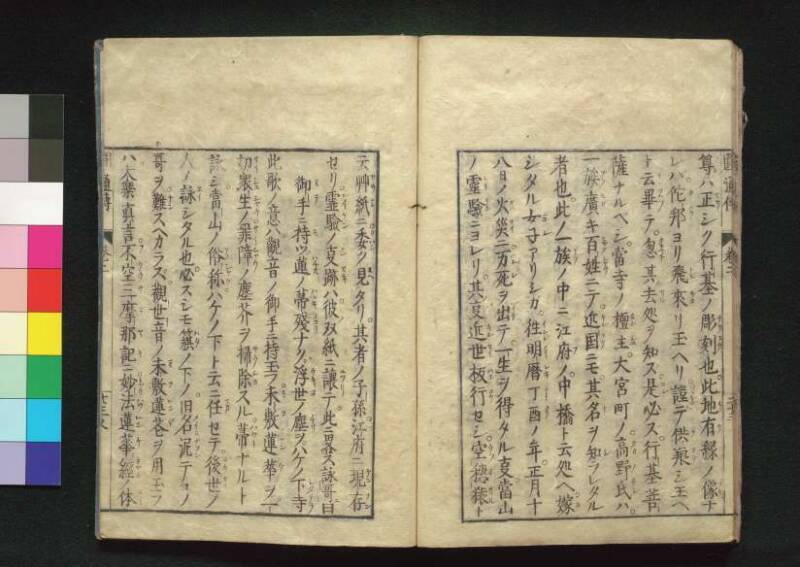
翻刻
【コマ53】
【右丁】
《振り仮名:尊󠄁|ソン》ハ正(マサ)シク。行-基ノ彫刻(テウコク)也。此 ̄ノ地(チ)有縁(ウ )ノ像(ゾウ)ナ
レバ。《振り仮名:佗-邦󠄁|タハウ》ヨリ飛來(トビキタ)リ玉ヘリ。謹(ツヽシン)デ《振り仮名:供-羪|クヨウ》シ玉ヘ
ト云畢(イヽヲハツ)テ。忽(タチマチ)其 ̄ノ去(サル)処ヲ知ズ。是(コレ)必ズ。行-基菩-
薩ナルベシ。當寺ノ《振り仮名:𣞀主|タンシユ》。大宮町ノ。高野氏(タカノウジ)ハ。
一族( ゾク)廣(ヒロ)キ《振り仮名:百-姓|ヒヤクシヤウ》ニテ。《振り仮名:近-国|キンゴク》ニモ。其名( ナ)ヲ知(シ)ラレタル
者也。此ノ一族( ゾク)ノ中ニ江府( フ)ノ。中橋ト云処ヘ。嫁(カ)
シタル女子(ニヨシ)アリシガ。徃(インジ)《振り仮名:明-暦丁酉|メイレキテイコウ》ノ年。正月十
八日ノ火災(クハサイ)ニ。万死(ハンシ)ヲ出(イテ)テ。一-生ヲ得タル㕝。當山
ノ霊驗(レイケン)ニヨレリ。其 ̄ノ㕝 近世(キンセイ)板行(ハンコウ)セシ。《振り仮名:空-穂-猿|ウツボサル》ト
【左丁】
云 艸紙(サウシ)ニ。委(クハシ)ク見(ミヘ)タリ。其者ノ子-孫。江-府ニ《振り仮名:現-存|ケンソン》
セリ。霊驗(レイケン)ノ㕝跡(シセキ)ハ。彼 ̄ノ双紙ニ讓(ユツリ)テ。此ニ畧ス詠-哥 ̄ニ曰
《振り仮名:御-手|ミテ》ニ持(モ)ツ。蓮(ハチス)ノ箒(ハヽキ)殘(ノコリ)ナク。浮世(ウキヨ)ノ塵(チリ)ヲ。ハケノ下寺(シタテラ)
此歌ノ意ハ。觀音ノ御手ニ持玉フ。《振り仮名:未-敷蓮𬜻|ミフレンケ》ヲ。一-
《振り仮名:切衆-生|サイシユシヤウ》ノ。罪障(サイシヤウ)ノ塵芥ヲ掃除(サウシヨ)スル。箒(ハワキ)ナルト
詠シ。當-山ノ《振り仮名:俗-称|ソクシヤウ》。ハケノ下ト云ニ任(マカ)セテ。後世(コウセイ)ノ
人ノ詠(ヱイ)シタル也。必スシモ籏(ハタ)ノ下ノ。旧名( メイニ)泥(ナツン)テコノ
哥ヲ。《振り仮名:難|ナン》スヘカラズ。観-世-音ノ《振り仮名:未-敷蓮-芲|ミフレンゲ》ヲ用玉フ
ハ。大-樂眞󠄀-言。《振り仮名:不-空|フクウ》《振り仮名:)三-摩-那記|サマヤキ》ニ。《振り仮名:妙-法蓮蕐-經|ミヤウハウレンケキヤウ》ノ体(タイ)
現代語訳
【コマ53】
【右丁】
この尊像はまさしく行基の彫刻である。この地は(この像と)縁のある地であるから、他の地より飛び来たられたのである。謹んで供養なさるよう」と言い終えて、たちまちその立ち去った場所も分からなくなった。これはきっと、行基菩薩であったに違いない。当寺の檀那(寺を支援する施主)である大宮町の高野氏は、一族の広い百姓にて、近国にもその名を知られた者である。この一族の中に、江府(江戸)の中橋という所へ嫁いだ女子がいたが、往時の明暦丁酉の年(明暦三年・一六五七年)正月十八日の火災(明暦の大火)に、万死を脱して一命を得たことは、当山の霊験によるものである。そのことは近年板行された「空穂猿(うつぼざる)」と
【左丁】
いう草紙に詳しく見える。その者の子孫は、江府に現存している。霊験の事跡は、彼の冊子に譲って、ここでは略す。詠歌に曰く、
御手に持つ 蓮の箒 残りなく 浮世の塵を ハケノ下寺
この歌の意は、観音の御手にお持ちになる未敷蓮華(まだ開かない蓮の花)を、一切衆生の罪障の塵芥を掃除する箒と詠み、当山の俗称「ハケノ下」という名に任せて、後世の人が詠んだものである。必ずしも「旗の下」という旧名にこだわって、この歌を難じるべきではない。観世音が未敷蓮華を用いられることについては、大楽真言・不空三摩耶記に、妙法蓮華経の体(本質)として
英語訳
[Frame 53]
[Right page]
"This venerable image is unmistakably a carving by Gyōki. As this land shares a karmic bond (*en*) with the image, it has flown hither from another land. Please reverently make offerings to it." Having said this, the monk vanished in an instant, and no one knew where he had gone. This was surely none other than the Bodhisattva Gyōki himself. The *danna* (patron) of this temple, the Takano clan of Ōmiya-machi, is a farming family (*hyakushō*) with an extensive kinship network, well known by name throughout the neighboring provinces. Among this family, there was a woman who had married into a household in Nakabashi in Edo. During the great fire of the Meireki *hinoto-tori* year (Meireki 3, 1657), on the eighteenth day of the first month — the fire known as the Great Meireki Fire — she escaped from the very jaws of death and saved her life, and this was due to the miraculous power (*reiken*) of this sacred mountain. This matter is described in detail in a recently printed booklet called "Utsubo-zaru" (The Quiver Monkey),
[Left page]
as it appears there at length. The descendants of that woman still exist in Edo. As for the account of the miraculous events, we defer to that booklet and omit it here. A poem (*eika*) composed on this temple reads:
*Miте ni motsu / hachisu no hōki / nokorinaku / ukiyo no chiri wo / Hake no Shitatera*
(In your hand you hold / a lotus blossom as a broom / sweeping away without a trace / all the dust of this fleeting world — / the Temple Beneath the Hake)
The meaning of this poem is as follows: the unopened lotus blossom (*mifurenke*) held in Kannon's hand is likened to a broom that sweeps away the dust and defilements of sin (*zaishō*) of all sentient beings. The poem takes its cue from the popular name of this temple, "Hake no Shita," and was composed by someone in later times. One need not insist on the old name "Hata no Shita" (Beneath the Banner) and find fault with this poem on those grounds. As for why Kanzeon (Kannon) holds the unopened lotus blossom, this is explained in the *Daigyaku Shingon Fukū Samayaki* (Amoghavajra's *Samaya* records), where it is treated as the essential body (*tai*) of the *Myōhō Renge Kyō* (Lotus Sūtra)...