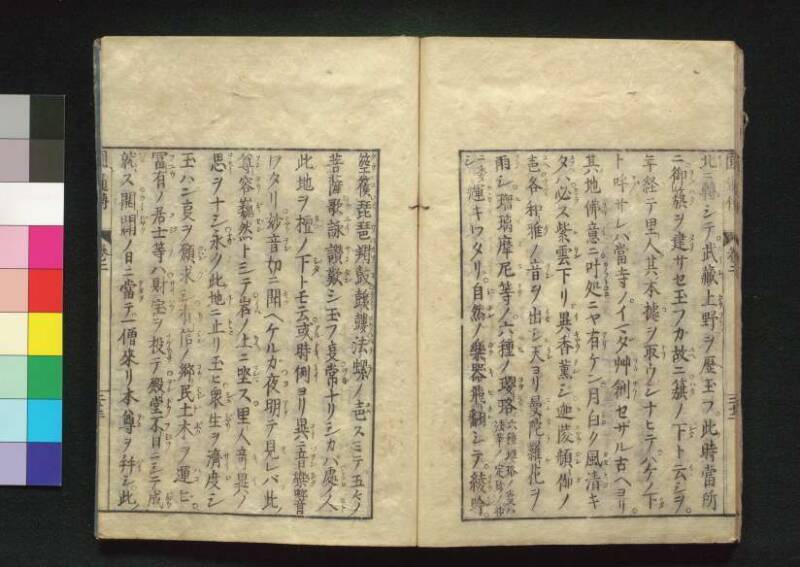
翻刻
【コマ52】
【右丁】
北(キタ)ニ轉(テン)シテ。武藏(ムサシ)上野(カウツケ)ヲ歴(ヘ)玉フ。此 ̄ノ時當所
ニ。《振り仮名:御-旗|ヲンハタ》ヲ建(タテ)サセ玉フガ故(ユヘ)ニ。《振り仮名:籏ノ下|ハタ シタ》ト云(イヽ)シヲ。
年 経(ヘ)テ里-人。其 ̄ノ本拠( コ)ヲ取(トリ)ウシナヒテ。《振り仮名:ハケノ下| シタ》
ト呼(ヨブ)。サレバ當寺ノ。イマダ艸創(ソウサウ)セザル古ヘヨリ。
其 ̄ノ地 佛意(フツイ)ニ。叶処(カノフトコロ)ニヤ有(アリ)ケン。月 白(シロ)ク風(カゼ)清(キヨ)キ
夕(ユフヘ)ハ。必(カナラ)ス紫雲(シウン)下リ。《振り仮名:異-香|イキヤウ》薫(クン)ジ。《振り仮名:迦-陵頻-伽|カリヤウビンガ》ノ
声(コヘ)。各(ヲノ〳〵)《振り仮名:和-雅| ゲ》ノ音(ヲン)ヲ出(イダ)シ。天(テン)ヨリ《振り仮名:曼-陀-羅-花|マンダラケ》ヲ
雨(フラ)シ。瑠璃(ルリ)摩尼(マニ)等(トウ)ノ。《振り仮名:六-種| シユ》ノ《振り仮名:瓔-珞|ヨウラク》。《割書:六種瓔珞ノ㕝ハ|定珍ノ抄》
《割書:ニ委|シ》輝(カヽヤ)キワタリ。自然(ジネン)ノ《振り仮名:樂-器|ガクキ》《振り仮名:飛-翻󠄁|ヒホン》シテ。綾吟(リヤウキン)。
【左丁】
《振り仮名:箜-篌|クウコ》。《振り仮名:琵-琶|ビワ》。《振り仮名:羯-鼓|カツコ》。《振り仮名:■-■|ケイロウ》#1《振り仮名:法-螺|ホウラ》ノ声(コヘ)スミテ。五々ノ
菩薩。歌詠讚歎(カエイサンタン)シ玉フ㕝。常(ツネ)ナリシカバ。處(トコロ)ノ人(ヒト)
此 ̄ノ地ヲ《振り仮名:𣞀ノ下|タン シタ》#2トモ云。或時(アルトキ)例(レイ)ヨリ異(コト)ニ。音樂(ヲンカク)響
ワタリ。玅音(ミヤウヲン)切ニ聞(キコ)ヘケルガ。夜明(ヨアケ)テ見(ミ)レバ。此 ̄ノ
《振り仮名:尊󠄁-容|ソンヨウ》《振り仮名:巍-然|ギゼン》トシテ。岩(イハ)ノ上(ウヘ)ニ㘴(マシマ)ス。里-人 竒異(キイ)ノ
思(ヲモイ)ヲナシ。永(ナガ)ク此 ̄ノ地(チ)ニ止(トゝマ)リ玉ヒ。衆生(シユジヤウ)ヲ濟度(サイド)シ
玉ハン㕝ヲ願求(クバング)シ。《振り仮名:有-信|ウシン》ノ《振り仮名:郷-民|コウミン》土木(ドボク)ヲ運(ハコ)ビ。
《振り仮名:富-有|フユウ》ノ居士等(コジラ)ハ。財宝(サイハウ)ヲ投(ナゲウチ)テ。《振り仮名:殿-堂|デンドウ》《振り仮名:不-日|フジツ》ニシテ成(ジヤウ)
就(ジユ)ス。《振り仮名:開-闢|カイビヤク》ノ日ニ當(アタツ)テ。一僧來リ《振り仮名:本尊󠄁| ゾン》ヲ拜(ハイ)#3シ。此 ̄ノ
現代語訳
【コマ52】
【右丁】
北へと進路を転じて、武蔵・上野を経由なさった。この時、当地に御旗を立てさせなさったゆえに、「旗の下(はたのした)」と言っていたのを、年を経るうちに里人がその本来の由来を失い、「ハケノ下」と呼ぶようになった。さて、当寺がいまだ創建される前の古くから、この地は仏の御意にかなった場所であったのだろうか、月が白く風が清らかな夕べには、必ず紫雲が降り、異香が薫じ、迦陵頻伽の声がそれぞれ和雅な音を出し、天より曼陀羅花を雨のように降らせ、瑠璃・摩尼などの六種の瓔珞が(※六種の瓔珞のことは定珍の抄に詳しい)輝き渡り、自然の楽器が飛び翻って、羸吟(りょうきん)・
【左丁】
箜篌・琵琶・羯鼓・■■(磬鑼か)・法螺の声が澄み渡り、五々(二十五)の菩薩が歌詠し讃歎なさることが、常のことであった。それゆえ、この地の人々はこの地を「檀の下」とも言った。ある時、例によりのことよりも格別に音楽が響き渡り、妙音が切々と聞こえていたが、夜が明けて見ると、この尊容が巍然として岩の上においでになった。里人は奇異の思いをなし、(この尊像が)永くこの地にとどまられ、衆生を済度してくださるよう願い求め、信心ある郷民は土木(の作業)を運び、富裕な居士らは財宝を投じて、殿堂を日ならずして成就させた。開闢(かいびゃく)の日に当たって、一人の僧が来て本尊を拝し、この
英語訳
[Frame 52]
[Right page]
…(Yamato Takeru) turned northward and passed through Musashi and Kōzuke Provinces. At that time, as he planted his royal banner (*mihata*) at this very spot, the place came to be called "Hata no Shita" (Beneath the Banner). Over the years, however, the local people lost sight of the original basis of this name, and it came to be called "Hake no Shita." Now, even before this temple was founded, it seems that this land had long been a place suited to the will of the Buddha: on evenings when the moon shone white and the wind blew clear, purple clouds (*shiunn*) would invariably descend, rare and wondrous fragrances (*ikyō*) would waft through the air, *karyōbinga* birds would each produce harmonious and elegant sounds, *mandāra* flowers would rain down from the heavens, and six kinds of jeweled ornaments (*yōraku*) of lapis lazuli, maṇi gems, and the like *(note: for details on the six kinds of yōraku, see Teichin's commentary)* would shine and glitter all around. Celestial musical instruments would soar and flutter through the air, and the sounds of *ryōkin*,
[Left page]
*kūko* (harp), *biwa* (lute), *kakko* (drum), *■■* (possibly *keiro*, a type of percussion), and *hōra* (conch horn) rang out with crystal clarity. Twenty-five bodhisattvas would sing praises and offer their adoration — and this had become a constant occurrence. For this reason, the people of the area also called this place "Dan no Shita" (Beneath the Sandalwood/Altar). One time, the music resounded far more extraordinarily than usual, and wondrous sounds (*myōon*) were heard with particular intensity — but when dawn broke and people looked, the venerable image (*sonnyō*) was found seated majestically (*gizen*) upon a rock. The villagers were filled with a sense of wonder and awe, and they prayed earnestly that (the image) would remain in this place forever and bring salvation (*saido*) to all sentient beings. The faithful villagers carried out the earthwork, and the wealthy lay practitioners (*koji*) cast their treasures (into the project), and the main hall was completed without delay. On the day of the founding and consecration (*kaibyaku*), a monk arrived, paid reverence to the principal image, and...