翻刻
【コマ41】
【右丁】
大本山圎福寺(だいほんさんゑんふくじ)は京極通四条坊門(きやうこくとをりしでうばうもん)《割書:今は蛸薬師(たこやくし)|通といふ》の東にあり浄土宗 深艸流(ふかくさりう)
義(ぎ)の一本寺也《割書:いにしへは室町三条坊門(むろまち ぼうもん)に|あり今 圎福寺町(ゑんふくじ )といふ》本尊 阿弥陀佛(あみたぶつ)は法然上人(はうねん )の作なり
蛸薬師(たこやくし)は永福寺(ようふくじ)と号(がう)して圎福寺(ゑんふくじ)の境内(けいだい)にあり《割書:旧地(きうち)は三条室町( むろまち)也|水上薬師(みつのかみのやくし)といふ》本尊 薬師(やくし)
佛(ぶつ)は石像(せきざう)にして長(たけ)二尺 傳教大師(でんきやう )の作也《割書:𦾔(もと)《振り仮名:比𠮉山|ひゑいさん》の北谷にあり又 蛸薬師(たこやくし)と號(がう)するは|旧地(きうち)に澤(たく)あり是によつて都下(とか)の人 澤薬(たくやく)》
《割書:師と称ぜしを後丗(こうせい)誤(あやま)ッて稍薬師(たこやくし)といひ風俗(ならは)せりいにしへの堂の梁(うつはり)の銘(めい)には三条室町( むろ )|水上薬師堂(みつのかみ )と記(しる)し侍る○鯉地藏(こいぢざう)は堂の前にあり由来(ゆらい)繁(しげき)によつて略(りやく)す》
西光寺(さいくはうじ)は蛸薬師(たこやくし)の北に隣る虎薬師(とらやくし)は弘法の作《割書:御倉堂(みくらだう)|と称す》
長金寺(ちやうごんじ)は誠心院(じやうしん )の西向ひ也 一言堂(いちごんざう)といふ本尊 十一面観音( くはんをん)は弘法の作《割書:洛陽観音(らくやうくはんをん)|巡(めぐり)の其一也》
清帶寺(せいたい )は西光寺(さいくはうじ)の西向ひなり本尊 腹帯地藏(はらをびのぢざう)は土佛(とぶつ)にして行基(ぎやうぎ)の
作なり《割書:懐妊(くはいにん)の婦人(ふじん)安産(あんさん)を|祈(いの)るに霊驗(れいげん)新也》
誠心院(じやうしん )は西光寺(さいくはうじ)の北に隣(とな)る《割書:俗(ぞく)に和泉式部(いつみしきぶ)といふ古(いにしへ)は小川一条の北にあり御堂(みだう)関白道長公(くはんばくみちながこう)の|草創(さう〳〵)にして和泉式部(いづみ )も此寺に入て尼(あま)となりて住(すみ)し也》
本尊は阿弥陀佛《振り仮名:𦚰壇|けうたん》#1には関白道長公(くはんばくみちながこう)の影(ゑい)を安置す和泉式部塔(いづみしきぶのたう)軒端梅(のきばのむめ)有
《割書:《振り仮名:軒端の梅|のきば 》の傍(かたはら)に誹諧師(はいかいし)紫藤軒言水(しとうけんこんすい)の墓(はか)あり》
凩(こがらし)の果(はて)は有けり海(うみ)の音(をと) 言水
【左丁】
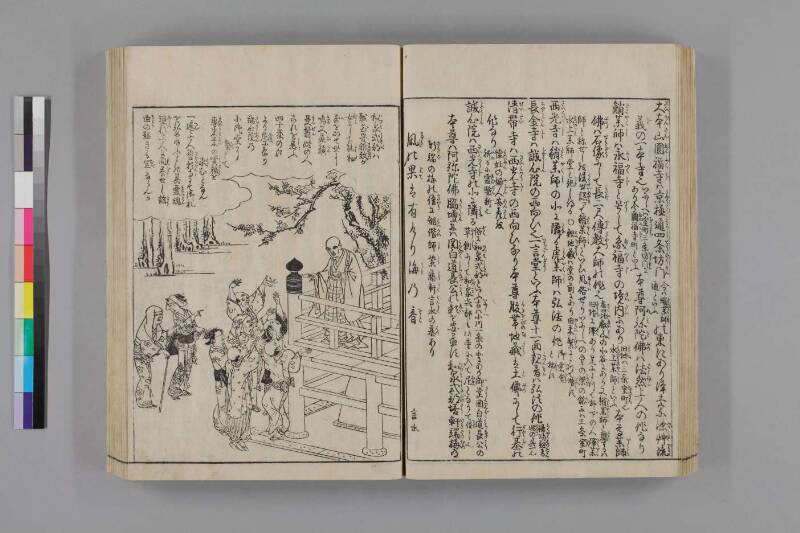
【図】
和泉式部(いづみしきぶ)は
越前守雅致( まさむね)が
女(むすめ)にして能(よく)和(わ)
哥(か)を以て丗に
鳴(なる)又 美顔(びがん)
曼鬋(まんぜん)时の人
これを慕(した)ふ
四十歳の頃
より尼(あま)になり
誠心院(しやうしんゐん)の
小御堂に
蟄(ちつ)して
專(もつはら)未来(みらい)の資粮(しよう)を
求(もと)むとなん
一遍上人( へん )誓願寺(せいぐはんし)にて御札
を弘め給ふとき其 霊魂(れいこん)
現(あらは)れ上人に問荅(もんだう)せし謡(よう)
曲(きよく)の趣きも冝(むべ)ならんか
現代語訳
**【右丁】**
**大本山円福寺**は京極通四条坊門(現在は「蛸薬師通」と呼ばれている)の東に位置する。浄土宗深草流の一本寺(本山)である。(かつては室町三条坊門にあり、現在その地は「円福寺町」と呼ばれている。)本尊の阿弥陀仏は法然上人の作である。
**蛸薬師**は永福寺と号し、円福寺の境内にある。(旧地は三条室町で、「水上薬師」とも呼ばれる。)本尊の薬師仏は石像で、高さ二尺、伝教大師の作である。(もとは比叡山の北谷にあった。また「蛸薬師」という名称については、旧地に沢があり、それにちなんで都の人々が「沢薬師」と称していたのを、後世に誤って「蛸薬師」と呼ぶようになり、広まってしまったのである。昔の堂の梁の銘には「三条室町水上薬師堂」と記されていた。○鯉地蔵は堂の前にあるが、由来が多岐にわたるため省略する。)
**西光寺**は蛸薬師の北に隣接する。**虎薬師**は弘法大師の作である。(「御倉堂」とも称する。)
**長金寺**は誠心院の西向かいにある。「一言堂」とも呼ばれる。本尊の十一面観音は弘法大師の作である。(洛陽観音巡りの一つである。)
**清帯寺**は西光寺の西向かいにある。本尊の腹帯地蔵は土仏で、行基の作である。(妊娠中の婦人が安産を祈るのに霊験あらたかである。)
**誠心院**は西光寺の北に隣接する。(俗に「和泉式部」と呼ばれる。かつては小川一条の北にあった。御堂関白道長公の草創によるもので、和泉式部もこの寺に入り尼となって住んだ。)本尊は阿弥陀仏。経壇には関白道長公の像を安置している。和泉式部の塔と「軒端の梅」がある。
(軒端の梅のそばに、俳諧師・紫藤軒言水の墓がある。)
> 凩の果ては有けり海の音 言水
---
**【左丁】(図の説明文)**
和泉式部は越前守雅致の娘で、和歌に優れ世に名高かった。また容姿も美しく、艶やかであったため、時の人々はこぞって彼女を慕った。四十歳の頃より尼となり、誠心院の小御堂に籠もって、もっぱら来世のための功徳を積むことに専念したという。
一遍上人が誓願寺にて御札を広められたとき、和泉式部の霊魂が現れ、上人と問答をしたという謡曲(能の曲)の趣も、なるほどもっともなことであろう。
英語訳
**【Right Page】**
**Daihonzan Enfukuji Temple** is located to the east of Kyōgoku-dōri Shijō-bōmon (now called "Tako-yakushi-dōri"). It is the head temple of the Fukakusa school of the Jōdo sect. (In former times it was located at Muromachi Sanjō-bōmon; that area is now called "Enfukuji-chō.") The principal image, an Amida Buddha, is said to have been crafted by the monk Hōnen.
**Tako-yakushi** (the Octopus Yakushi) is formally named Eifukuji Temple and is located within the precincts of Enfukuji. (Its former site was at Sanjō-Muromachi, and it is also known as "Mizunokami Yakushi.") The principal image, a medicine buddha (Yakushi Nyorai), is a stone statue standing two shaku tall, and is attributed to Dengyō Daishi (Saichō). (It was originally located in the northern valley of Mt. Hiei. The name "Tako-yakushi" (Octopus Yakushi) derives from the fact that there was a marsh [taku/sawa] at the former site; the people of the capital called it "Taku-yakushi" (Marsh Yakushi), which was later corrupted by subsequent generations into "Tako-yakushi" (Octopus Yakushi), and the name took hold. The inscription on a beam of the old hall read "Sanjō-Muromachi Mizunokami Yakushi-dō." ○ The "Koi Jizō" (Carp Jizō) is located in front of the hall; its origins are complex and are therefore omitted here.)
**Saikōji Temple** is located immediately to the north of Tako-yakushi. The **Tora-yakushi** (Tiger Yakushi) is a work by Kōbō Daishi (Kūkai). (It is also called "Mikura-dō.")
**Chōgonji Temple** stands directly across from Jōshinin to the west. It is also known as the "Ichigon-dō" (One-Word Hall). The principal image, an Eleven-Faced Kannon, is a work by Kōbō Daishi. (It is one of the temples on the Rakuyō Kannon Pilgrimage circuit.)
**Seitaiji Temple** stands directly across from Saikōji to the west. The principal image, the "Haraobi Jizō" (Sash-Wrapped Jizō), is a clay statue attributed to the monk Gyōki. (It is known for its miraculous power in granting safe childbirth to pregnant women who pray here.)
**Jōshinin Temple** is located immediately to the north of Saikōji. (It is popularly known as "Izumi Shikibu." In former times it was located to the north of Ogawa-Ichijō. It was founded by the Regent Michinaga (the Lord of the Midō), and Izumi Shikibu herself entered this temple, became a nun, and lived here.) The principal image is an Amida Buddha. On the sutra platform, an image of Regent Michinaga is enshrined. The tomb of Izumi Shikibu and the "Nokiba no Ume" (the eave plum tree) are found here.
(Beside the Nokiba no Ume is the grave of the haiku poet Shitōken Konsui.)
> *Kogarashi no / hate wa arikeri / umi no oto* — Konsui
> *(At the end of the winter gale / there it was — / the sound of the sea)*
---
**【Left Page】(Explanatory text accompanying the illustration)**
Izumi Shikibu was the daughter of Ōe no Masamune, Governor of Echizen. She was celebrated throughout the world for her mastery of waka poetry, and her beauty and elegance were such that people of her time adored her greatly. Around the age of forty, she became a nun and withdrew into the small sanctuary of Jōshinin Temple, devoting herself entirely to accumulating merit for her life to come.
When the priest Ippen Shōnin was at Seiganji Temple distributing sacred talismans, it is said that the spirit of Izumi Shikibu appeared and engaged him in dialogue — and the subject of the nō play that depicts this is surely most fitting and appropriate.