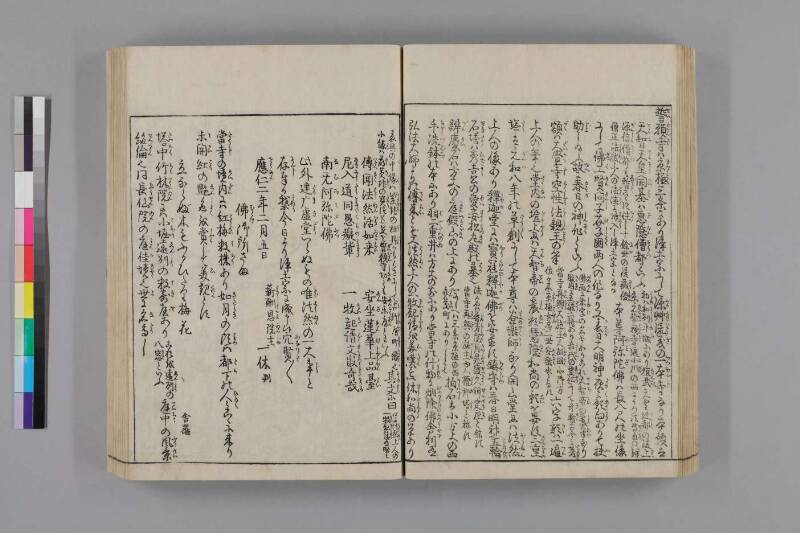
翻刻
誓願寺は京極三条にあり浄土宗にして深艸流義の一本寺なり本願は
天智天皇開基は惠隠僧都といふ
初は和州平城にあり桓武天皇迁都の後上
京元誓願寺通小川の西にうつす専貞法師
源信僧都も暫こゝに住し十餘世の後藏俊
僧正法然上人の法徳に帰入し浄土宗となる
本尊阿弥陀仏は長八尺の坐像
にして仏工賢問子芥子國两人の化なり又春日大明神夜々影向ありて扶
佛面に朱字の名号ありこれ天智帝の宸筆なり
助し給ふ故春日の神仏ともいふ
佛面に朱字の名号ありこれ天智天皇の宸筆なり
腹内に五臓六腑あり希代の霊仏にして奇零限驗古今に著
額は大學寺空性法親王の筆
當寺再興大施主大相國北御方
佐々木京極女為二世安楽也と云す
六字額は一遍
上人の筆也堂内の壇上には天智帝の宸慧陰和尚の影を安す三重
塔は元和八年の草創にして本尊は谷藥師なり開山堂には法然
上人の像あり釈迦堂には寶冠釋迦仏を安置す鎮守は春日明神也五輪
石塔は秀吉の愛妾松丸殿の墓也
法名は寿芳院月晃盛久禅定尼と銘す
当寺再興の施主ゆへ檀那塔と称す
辨慶石は方丈の庭假山の上にあり
いにしへは三条京極の西
弁慶町にありしと也
柏石は小方丈の西
手洗鉢の本にあり羽二重井は方丈の前にあり當寺の什物に烟除佛舎利有
弘法大師よりの傳来とぞ又法然上人の一枚起請を美嘆す一休和尚の字あり
表具の中縁は紫地の牡丹からくさにして古竹屋町織也
に縁は萌黄地の寶つくし■を誓願寺切とも安楽庵ともいふ
傳聞法然活如来 安坐蓮華上品台
尼入道同愚癡輩 一枚起請文最奇哉
南无阿弥陀佛
此外達磨虚堂いらぬもの唯法然の一大事と
存奉る■今日より浄土宗に成申候穴賢〳〵
新酬恩院主
應仁二年二月五日 一休判
佛御所さま
當寺の境内には紅梅数株あり如月の頃は都下の人々こゝに来り
未開紅の艶色を賞して美観とす
立ならぶ木もふるひたり梅花
塔中竹林院には小堀遠州の数寄屋あり
これを遠州の
八窓といふ
絶倫也同長仙院の庭佳境也世に名高し
現代語訳
**誓願寺**
誓願寺は京極三条にある。浄土宗・深草流義の一本寺(本山)である。本願(創建の発願)は天智天皇によるもので、開基は恵隠僧都という。
当初は大和国平城(奈良)にあったが、桓武天皇の遷都の後、上京・元誓願寺通・小川の西に移された。専貞法師・源信僧都もしばらくここに住し、十余世の後、蔵俊僧正が法然上人の法徳に帰依し、浄土宗の寺となった。
本尊の阿弥陀仏は長さ八尺の坐像で、仏工・賢問と子芥子国(天竺)の二人が感化されて造ったものとされる。また春日大明神が夜ごとに影向(神が来臨すること)あって仏を守護したことから、「春日の神仏」とも呼ばれる。仏面には朱字の名号があり、これは天智天皇の宸筆(天皇自ら書かれたもの)である。腹内には五臓六腑が納められており、希代の霊仏として古今に類まれなる霊験が著名である。
額は大覚寺・空性法親王の筆による。「当寺再興の大施主・大相国(豊臣秀吉)の北御方(正室・北政所)、佐々木京極女、二世安楽のためなり」と伝えられる。
六字(南無阿弥陀仏)の額は一遍上人の筆である。堂内の壇上には天智帝の宸慧陰和尚の影(肖像)を安置する。三重塔は元和八年(1622年)の草創で、本尊は谷薬師である。開山堂には法然上人の像がある。釈迦堂には宝冠釈迦仏を安置する。鎮守は春日明神である。五輪石塔は秀吉の愛妾・松丸殿の墓であり、法名は「寿芳院月晃盛久禅定尼」と銘してある。当寺再興の施主であったため、「檀那塔」と称される。
---
**弁慶石**
弁慶石は方丈の庭の仮山(築山)の上にある。かつては三条京極の西・弁慶町にあったという。
柏石は小方丈の西に、手洗鉢のもとにある。羽二重井は方丈の前にある。
当寺の什物には煙除け仏舎利があり、弘法大師よりの伝来とされる。また法然上人の「一枚起請文」も所蔵し、一休和尚の字が記されている。表具の中縁は紫地の牡丹唐草で、古竹屋町織である。下縁は萌黄地の宝尽くし文様で、これを「誓願寺切」または「安楽庵切」ともいう。
伝聞す、法然は活如来にして、蓮華上品台に安座す。
尼も入道も、同じく愚癡の輩。一枚起請文、最も奇なるかな。
南無阿弥陀仏
(一休の賛文)
「この外、達磨も虚堂もいらぬもの、ただ法然の一大事と存じ奉る。今日より浄土宗に成り申し候。穴賢々々(かしこかしこ)。
新酬恩院主
応仁二年二月五日 一休(判)
仏御所様へ」
---
**境内の風物**
当寺の境内には紅梅が数株あり、如月(二月)の頃、都の人々がここに来て、未開紅(蕾の艶やかな紅色)を賞でる美観である。
立ち並ぶ木もふるひたり梅花
塔中(境内の子院)の竹林院には小堀遠州の数寄屋があり、これを「遠州の八窓」という。絶倫の出来栄えである。同じく長仙院の庭もまた佳境であり、世に名高い。
英語訳
**Seigan-ji Temple**
Seigan-ji Temple is located at Kyōgoku Sanjō and is the head temple (ippondera) of the Fukakusa school of the Jōdo sect. The original vow of its founding is attributed to Emperor Tenji, and its founder-in-residence (kaiki) was the monk Eion Sōzu.
Originally located in Heijō (Nara) in Yamato Province, it was relocated to the west of Ogawa on Moto-Seigan-ji-dōri in the upper part of the capital (Kamikyō) following Emperor Kanmu's transfer of the capital. The monks Senjō Hōshi and Genshin Sōzu also resided here for a time, and more than ten generations later, the high monk Zōshun Sōjō converted to the teachings of the monk Hōnen, and the temple became a temple of the Jōdo sect.
The principal image, a seated Amida Buddha measuring eight shaku in height, is said to have been created through the spiritual influence of the Buddhist craftsman Kenmon and a master from Keshinokuni (India/a land of the Buddha). Spring Kasuga Daimyōjin is said to have come to the temple every night to protect the Buddha — hence the deity is also called the "Kasuga Deity-Buddha." On the face of the Buddha there is an inscription in red characters of the nenbutsu name, said to be in the imperial hand of Emperor Tenji. Within the statue's body are enshrined representations of the five organs and six viscera, making it a miraculous image whose divine efficacy is celebrated throughout the ages.
The temple plaque is in the calligraphy of Imperial Prince Kūshō of Daikaku-ji. It is said that "the great benefactress of the temple's revival, the Northern Lady of the Great Chancellor (Toyotomi Hideyoshi) — a daughter of the Sasaki-Kyōgoku clan — [donated this] for peace and happiness in this and the next life."
The plaque bearing the six-character nenbutsu (Namu Amida Butsu) is in the hand of the monk Ippen. On the altar inside the hall are enshrined portraits of Emperor Tenji and the monk Eion. The three-storied pagoda was founded in Genna 8 (1622), with Tani Yakushi as its principal image. The Founding Patriarch's Hall contains a statue of the monk Hōnen. The Shakyamuni Hall enshrines a jewel-crowned Shakyamuni Buddha. The tutelary deity is Kasuga Myōjin. The five-ringed stone stupa is the grave of Matsumaru-dono, a beloved concubine of Hideyoshi; her posthumous Buddhist name is inscribed as "Juhōin Gekkō Jōkyū Zenjōni." As she was the patron of the temple's revival, the stupa is called the "Danna-tō" (patron's tower).
---
**Benkei Stone**
The Benkei Stone is located on the ornamental garden hill (tsukiyama) in the abbot's garden. It is said that in former times it stood in Benkei-chō, to the west of Sanjō Kyōgoku.
The Kashiwa Stone is to the west of the small abbot's quarters, beside the hand-washing basin. The Habutae Well is in front of the abbot's quarters.
Among the temple's treasures is a relic of the Buddha said to ward off fire (smoke), passed down from Kōbō Daishi. The temple also preserves Hōnen's "Ichimai Kishōmon" (One-Page Vow), accompanied by a calligraphic inscription by the monk Ikkyū. The mounting's inner border is of purple-ground peony arabesque fabric from the old Takeyamachi weave. The lower border is of moegi (young green)-ground "treasure" pattern fabric, known either as the "Seigan-ji gire" (Seigan-ji cut) or the "Ankoku-an gire."
*I have heard that Hōnen is the living Tathāgata, seated at ease upon the highest lotus throne.*
*Nuns and lay monks alike are of the same foolish and ignorant kind. The One-Page Vow is most wondrous indeed.*
*Namu Amida Butsu*
(Ikkyū's inscription)
"Beyond this, Bodhidharma, Xutang — I have no need of any of them. I hold only the one great matter of Hōnen as worthy of reverence. From this day forth I have become a follower of the Jōdo sect. Respectfully, respectfully.
New Abbot of Shūon-in
Second year of Ōnin, second month, fifth day — Ikkyū (seal)
To the Buddha's Palace [addressed to Seigan-ji]"
---
**The Grounds**
Within the temple grounds are several red plum trees, and around the time of Kisaragi (the second lunar month), people from across the capital come here to admire the beautiful sight of the not-yet-fully-opened crimson blossoms (mikai-beni).
*The trees standing in a row also tremble — plum blossoms*
In the sub-temple Chikurin-in within the temple grounds, there is a sukiya (tea-ceremony room) designed by Kobori Enshū, known as "Enshū's Eight Windows." It is of incomparable excellence. Likewise, the garden of Chōsen-in nearby is a scene of outstanding beauty and is celebrated throughout the world.