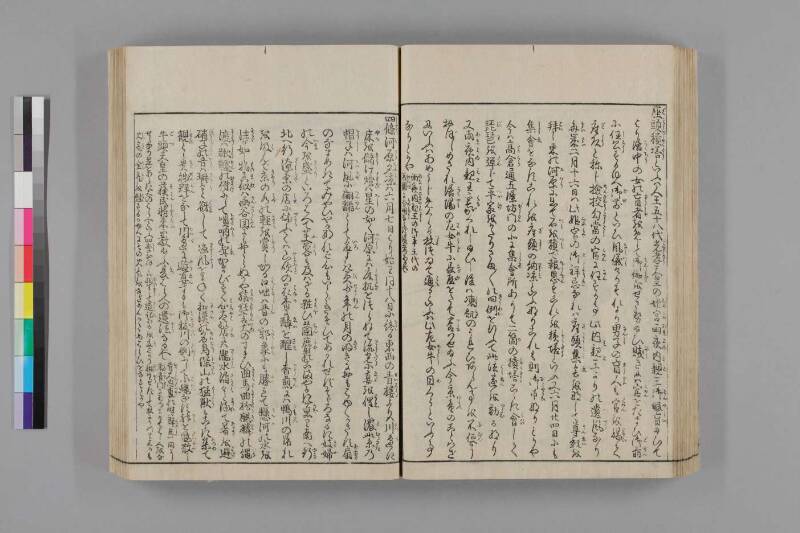
翻刻
座頭積塔といふは人王五十八代光孝天皇の姫宮雨夜内親王御眼肓給ひて
より洛中の女の盲者をめして御伽をせさせ給ひ賤きには官をたまひ御前
に伺公するゆへ御前といひ風儀けりそれより男子の盲人も官を賜て
座頭と称じ検校勾當の官に任する事此内親王よりの遺風なり
毎歳二月十六日は此姫宮の御祥忌なれは座頭集会をなして尊顔を
拝し東の河原に出て石を積で報恩すこれを積塔といふ又六月廿四日にも
集會をなすこれを座頭の納涼といふなりこれも則御■なりとかや
今は髙倉通五條坊門の北に集會所ありて二箇の積塔こゝに會して
琵琶を弾じて平家をかたりさま〳〵の旧例を行ふて此法■を勤るなり
又雨夜内親王君がくれし給ひし後は凍飢のうれひあらん事を不便に
おぼしめされ洛湯の左女牛に長屋をたて養はせ給ふ今京童のことはざ
にいふはあめうじめくらが杖つゐて通るといふは此左女牛の目くらといふ事
なりとかや
雨夜内親王の御事王代の
系圖に分明ならず後考あるべし
四條河原夕涼は六月七日より始り同十八日に終る東西の青樓よりは川辺に
床を儲け燈は星の如く河原には床机をつらねて流光に宴を催し濃紫の
帽子は河風に翩飜として色よき美少年の月の明きにおもはゆくかさす扇
のなまめきてみやひやかなれば心もいとゞきそひてめかれせずそゞろなるに妓婦
の今を盛といろはへて芙蓉も及はざる粧ひ蘭麝のこまやかに薫り南へ行
北へ行淹茶の居に休ふては山吹の花香に酔を醒し香煎には鴨川の流れ
を汲んで京の水の輕を賞しかる口咄は晋の郭象にも勝れて懸河の水を
注が如し物真似は函谷関にもおとらぬかや猿狂言犬のすまひ曲馬曲枕麒麟の縄
渡は鞦韆の俤にして■咽の聲かまびすて心左の店には瀧水滔々と流て暑を避
硝子の音珊々と谺風をまねく和漢の名鳥深山の猛獣もこゝに集て
観とし貴賤群をなして川辺に遊宴するも御祓川の例にして小蝿なす神を退散し
牛頭天皇の蘓民將來に教給ふ夏はらへの遺法なるべし
昔大内裏の時は群臣一同に
朱雀門にあつまりては■人をな
せしなり是をあら■このはらへといふ四季おほくは相生して造化あるを■はかり相生せずして秋にうつりしかも
火気の金気取を尅するかゆへにその火気をなだめんかためはらひをなすとかや
現代語訳
## 座頭積塔(ざとうせきとう)
座頭積塔と呼ばれるものについて。人王五十八代・光孝天皇の姫宮、雨夜内親王(あめよないしんのう)が御眼が不自由になられてより、洛中の盲目の女性たちを召し寄せてお伽をさせられた。身分の低い者にも官位を与え、御前に伺候させたことから「御前(ごぜ)」と呼ぶ風習が生まれた。それ以来、男性の盲人にも官位が授けられて「座頭(ざとう)」と称し、検校(けんぎょう)・勾当(こうとう)の官に任じられるようになったのも、この内親王からの遺風である。
毎年二月十六日は姫宮の御祥忌(命日)であるため、座頭たちが集会を開いて尊顔を拝し、東の河原に出て石を積んで報恩する。これを「積塔」という。また六月二十四日にも集会を開き、これを「座頭の納涼」と呼ぶ。これもすなわち御法事(みのりごと)にあたるとのことである。
今は高倉通五条坊門の北に集会所があり、二か所の積塔もここに集まって、琵琶を弾じて平家物語を語り、さまざまな旧例の行事を行ってこの法事を勤めるのである。
また、雨夜内親王がお隠れになった後は、座頭たちが飢えや寒さに苦しむことを不憫に思し召されて、洛中の左女牛(さめうし)に長屋を建てて養わせられた。今、京の子供たちの言葉に「あめうじめくらが杖ついて通る」と言うのは、この左女牛の盲人(目くら)のことであるとのことだ。
> 雨夜内親王の御事は、王代の系図に明らかでなく、後に考察すべきである。
---
## 四条河原の夕涼み(よすずみ)
四条河原の夕涼みは六月七日より始まり、同じく十八日に終わる。東西の青楼(妓楼)からは川辺に床(縁台)を設け、燈火は星のごとく、河原には床机(しょうぎ)を連ねて流れる川の光の中で宴を催す。濃紫の帽子は川風にひるがえり、色美しい美少年が月の明るい夜に眩しいほど差しかける扇のなまめかしくも優雅なさまに、心はますます引き寄せられて目が離せない。そぞろに歩く妓婦たちは今を盛りと艶やかに装い、芙蓉(はす)の花もかなわぬほどの粧いに、蘭や麝香の香りがこまやかに薫る。南へ行き、北へ行き、淹茶(えんちゃ)の茶店に休んでは山吹の花の香りで酔いを醒まし、香煎(こうせん)には鴨川の流れを汲んで京の水の軽さを賞でる。
巧みな口話(おしゃべり)は晋の郭象(かくしょう)にも勝り、まるで懸河(けんが)の水を注ぐかのようである。物真似は函谷関(かんこくかん)にも劣らぬとか。猿の狂言・犬の相撲・曲馬・曲枕・麒麟の縄渡りはまるで鞦韆(ぶらんこ)の面影のようで、嗚咽(おえつ)の声が騒がしく、心惹かれる左手の店では瀧水がとうとうと流れて暑さを避け、硝子(ガラス)の音が涼やかに響いて風を招く。和漢の名鳥・深山の猛獣もここに集まり、見物として貴賤が群れをなして川辺で遊宴するのも、御祓川(みそぎかわ)の例にならい、小蠅のごとき神々を退散させ、牛頭天皇が蘇民将来(そみんしょうらい)に教え給うた夏祓(なつはらえ)の遺法にほかならないであろう。
> 昔、大内裏の時代には、群臣が一同に朱雀門に集まって【祓人(はらいびと)】を行ったのである。これを「あら【人】このはらへ」という。四季はおおむね相生(そうしょう)の順で造化するところ、【夏だけ】は相生せずして秋に移り、火気が金気を尅(こく)するがゆえに、その火気をなだめるためにはらいを行うとのことである。
英語訳
## Zato Sekito (The Stone Stupa of the Blind Musicians)
Regarding what is called the "Zato Sekito": ever since Princess Amenoyo Naishinnō, daughter of the 58th sovereign Emperor Kōkō, lost her sight, she summoned blind women from throughout the capital to serve as her companions. Even those of humble status were granted official ranks and allowed to attend at her presence, which gave rise to the custom of calling them "goze" (御前, "before the honorable presence"). From that time on, blind men also came to be granted official ranks and called "zato" (座頭), and the practice of appointing them to the offices of kengyō and kōtō originated as a tradition bequeathed by this princess.
Every year on the sixteenth day of the second month, which is the princess's memorial day, the zato gather in assembly, pay their respects before her portrait, proceed to the eastern riverbank, and pile stones there to express their gratitude. This is called "Sekito" (stone stupa). They also hold an assembly on the twenty-fourth day of the sixth month, which is called the "Zato no納涼" (the blind musicians' summer cooling). This too is said to be a memorial observance.
Today, there is an assembly hall to the north of Gojo-bōmon on Takakura Street, and the two sites of stone-piling ceremonies are now held here, where participants play the biwa and recite the Tale of the Heike, and carry out various traditional ceremonies to observe this memorial rite.
Furthermore, after Princess Amenoyo passed away, out of compassion for the blind musicians who might suffer from cold and hunger, she had a tenement built in Sameushi in the capital to provide for them. The saying among the children of Kyoto — "ameuji mekura ga tsue tsusite tōru" (the blind of Ameji pass by with their canes) — refers, it is said, to these blind inhabitants of Sameushi.
> The details of Princess Amenoyo Naishinnō are not clearly recorded in the imperial genealogies, and this matter should be investigated further.
---
## The Evening Cool at Shijo Kawara
The evening cool (yūsuzumi) at Shijo Kawara begins on the seventh day of the sixth month and concludes on the eighteenth. From the pleasure quarters (seirō) on both the east and west banks, platforms are set up along the river's edge; lanterns shine like stars, and along the riverbed, folding stools are lined up for banquets held in the shimmering light of the current. Deep-purple hats flutter in the river breeze, and handsome young men in the bright moonlight half-dazzle the eye as they hold up their fans with an alluring and elegant grace, drawing the heart ever closer so that one cannot look away. The courtesans, in the full bloom of their beauty and adorned beyond what even the lotus flower could rival, diffuse the delicate fragrance of orchid and musk as they stroll south and north. Resting at tea stalls, one dispels the haze of drink with the scent of kerria blossoms, and in the herbal drinks (kōsen), one scoops water from the Kamo River to appreciate the lightness of Kyoto's water.
Witty conversation surpasses even Guo Xiang of the Jin dynasty, flowing like a torrent of water poured from a great height. Mimicry is said to be second to none — not even to the passes of Hanguguan. Monkey performances, dog wrestling, trick riding, acrobatic feats, and tightrope walking by a "kirin" evoke the image of a swing (shūsen), and the clamoring voices fill the air. On the left, shops have waterfalls cascading noisily to ward off the heat; the tinkling of glass reverberates coolly, summoning a breeze. Famous birds from China and Japan, fierce beasts from deep mountains, all gather here for people of all ranks to view and enjoy. The festive riverside revelry follows the precedent of the purification river (misogi-gawa), dispersing troublesome spirits like small flies, and is indeed a continuation of the summer purification ritual (natsugare) taught by the Gozu Tennō (Ox-Head Heavenly King) to Somin Shōrai.
> In the days of the Great Imperial Palace, all the court officials assembled at the Suzakumon Gate together to perform the purification ritual [haraibito]. This was called "ara[hito] no harae." In the four seasons, creation generally follows the cycle of mutual generation (sōshō); however, [summer alone] does not proceed by mutual generation but transitions directly to autumn, and because the fire element (kaki) overcomes the metal element (kinki), purification rites are performed to pacify this fire energy.