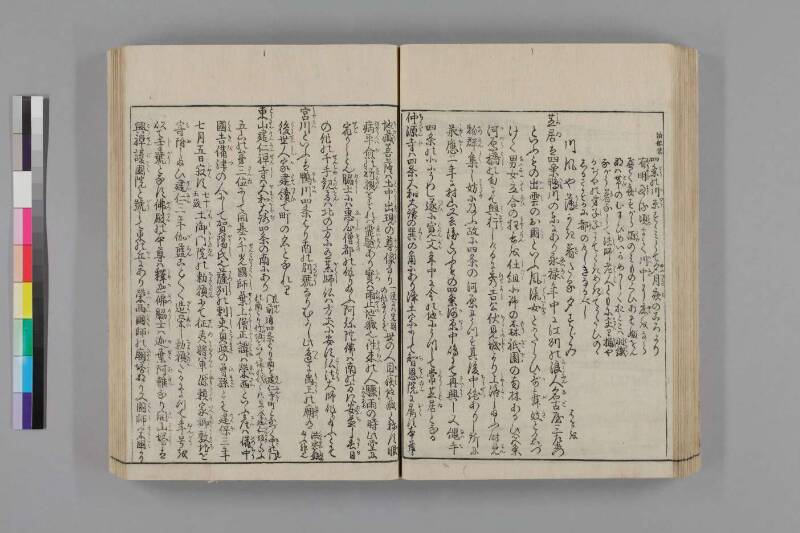
翻刻
泊舩集
四条の川原すゝみとて夕月夜のころより
有明過る頃まて川中に床をなら
べて夜すがら酒のみものくひあそぶをん
なは帯のむすびめいかめかしくおとこは羽織
ながう着なして法師老人ともに交り桶や
かぢやの弟子子まてときめきてうたひのゝ
しるさすかに都のけしきなるべし
川風や薄■き着たる夕すゞみ はせを
芝居は四条鴨川の東にあり永禄年中に江州の浪人名古屋三左衛門
といふもの出雲のお國といふ風流女とかたらひ哥舞妓と名づ
けて男女立合の狂言を仕組北野の森祇園の南林あるひは五条
河原橋の南にて興行しけるに秀吉公伏見城より上洛し給ふ時見
物群集し妨に及ふ故に四条の河原にうつす其後中絶ありし所に
承應二年に村山又兵衛といふもの四条河原中嶋にて再興し又縄手
四条の北にうつし遂に寛文年中に今の地にうつして常芝居となる
仲源寺は四条大和大橋の巽の角にあり浄土宗にして智恩院に属す本尊
地藏菩薩は土中出現の尊像なり
一説には定朝
の作なりとぞ
世の人目疾地藏と称す眼
病平愈の祈願をすれば霊驗あり實は雨止地藏也往来の人驟雨の時此堂に
宿りしと也脇土には惠心僧都の作り給ふ阿弥陀佛は南の方に安置し春日
の作の千手観音は北の方に薬師仏は方丈に安す弘法大師作り給ふとそ
宮川といふは鴨川四条より南の別號なりむかし此辺に禹王の廟有
洪水を鎮
給ふ神也
後世人家建續て町の名となれり
東山建仁禅寺は大和大路四条の南にあり
門前通四条より南を建仁寺町となづく中の門
の南より竹垣を以て塀の代とす是を建仁垣といふ
五山の第三位にして開基は千光國師葉上僧正諱は榮西といふ産は備中
國吉備津の人にして賀陽氏也薩州の剌吏貞政の曽孫とそ建保三年
七月五日寂す
七十
五歳
土御門院の勅願たるによつて征夷將軍源頼家卿敷地を
寄附し給ひ建仁三年伽藍こと〳〵く造栄し勅願たるによつて年号を
以て寺號となす佛殿の本尊は釋迦仏脇士は迦葉阿難なり開山塔は
興禅護國院と号して東の丘にあり榮西国師の廟塔なり又國師宋国より
現代語訳
## 泊舩集(はくせんしゅう)より
四条の川原での夕涼みは、夕月が出る頃から有明の月が過ぎる頃まで、川の中に床几を並べて、夜通し酒を飲み、物を食べ、遊ぶ。女性は帯の結び目をいかめしく(きちんと)結び、男性は羽織を長く着こなし、法師や老人もともに交じり、桶屋や鍛冶屋の弟子・子供に至るまでが浮かれ騒ぎ、歌い騒ぐ様は、さすがに都らしい風情である。
川風や薄物(うすもの)着たる夕涼み 芭蕉
---
## 芝居(歌舞伎)について
芝居は四条鴨川の東にある。永禄年中(1558〜1570年)に、江州(近江国)の浪人・名古屋三左衛門という者が、出雲のお国という風流な女と語らい、「歌舞伎」と名づけて男女が立ち合う狂言を仕組み、北野の森、祇園の南の林、あるいは五条の河原・橋の南で興行した。秀吉公が伏見城より上洛なさる時、見物の群衆が妨げとなったため、四条の河原に移した。その後、一時中絶したが、承応二年(1653年)に村山又兵衛という者が四条河原の中島で再興した。また、縄手の四条の北に移し、ついに寛文年中(1661〜1673年)に現在の地に移して常設の芝居(常芝居)となった。
---
## 仲源寺(ちゅうげんじ)
仲源寺は四条大和大橋の巽(南東)の角にある。浄土宗にして知恩院に属する。本尊の地蔵菩薩は土中から出現した尊像である。
(一説には定朝の作とも言われる。)
世の人は「目疾地蔵(めやみじぞう)」と称する。眼病平癒の祈願をすれば霊験がある。実は「雨止地蔵(あめやみじぞう)」とも呼ばれ、往来の人が突然の夕立の時にこの堂に宿ったことに由来する。脇の壇には、恵心僧都(源信)が作られた阿弥陀仏が南の方に安置され、春日作の千手観音は北の方に、薬師仏は方丈に安置されている。いずれも弘法大師が作られたとのことである。
---
## 宮川について
宮川とは、鴨川の四条より南の別称である。昔、この辺りに禹王(うおう)の廟があった。(禹王は洪水を鎮めた神である。)後に人家が建ち続いて、町の名となった。
---
## 東山・建仁禅寺
東山の建仁禅寺は大和大路・四条の南にある。
(門前を通る四条より南を建仁寺町と名づける。中の門の南より竹垣をもって塀の代わりとする。これを「建仁垣(けんにんがき)」という。)
五山の第三位であり、開基は千光国師・葉上僧正、諱(いみな)は栄西という。出身は備中国・吉備津の人で、賀陽氏である。薩州の刺吏・貞政の曽孫とのこと。建保三年(1215年)七月五日に遷化(死去)された。七十五歳。
土御門院の勅願であったことから、征夷大将軍・源頼家卿が敷地を寄附され、建仁三年(1203年)に伽藍がことごとく造営された。勅願であったことから、年号をもって寺号とした。仏殿の本尊は釈迦仏で、脇士は迦葉・阿難である。開山塔は「興禅護国院」と号して東の丘にあり、栄西国師の廟塔である。また、国師が宋国より(以下次ページへ続く)
英語訳
## From Hakusen-shū (Collection of Moored Boats)
The evening cool at Shijō riverbank: from around the time of the evening moon until past the hour of the dawn moon, beds (yuka, riverside platforms) are lined up in the middle of the river, and through the night people drink sake, eat food, and make merry. Women wear their obi sashes tied primly and properly; men wear their haori jackets long and elegantly. Buddhist monks and elderly people mingle together, and even apprentices and children of coopers and blacksmiths join in the lively singing and revelry — truly a scene befitting the capital.
*Kawakaze ya / usumono kitaru / yū-suzumi*
(The river breeze — wearing thin summer robes / the evening cool) — Bashō
---
## On the Kabuki Theatre
The theatre is located to the east of Shijō on the Kamo River. During the Eiroku era (1558–1570), a rōnin from Ōmi Province named Nagoya Sanzaemon colluded with a refined woman called Izumo no Okuni, and devised a form of theatrical performance called "Kabuki," featuring both male and female performers. They staged performances in the Kitano forest, in the southern grove of Gion, and south of the Gojō riverbank and bridge. When Lord Hideyoshi traveled up to the capital from Fushimi Castle, the crowds of spectators caused an obstruction, and so the performances were relocated to the Shijō riverbank. After a period of suspension, in the second year of Jōō (1653), a man named Murayama Matabei revived the performances on the central island of the Shijō riverbank. The venue was then moved to north of Shijō on Nawate Street, and finally, during the Kanbun era (1661–1673), it was relocated to its present site and became a permanent theatre (*tsune-shibai*).
---
## Chūgen-ji Temple
Chūgen-ji is located at the southeastern corner of the Yamato Ōhashi bridge on Shijō. It belongs to the Jōdo sect and is affiliated with Chion-in. The principal image, a Jizō Bodhisattva, is a sacred statue that appeared from within the earth.
(One account says it is the work of the sculptor Jōchō.)
People commonly call it the "Eyesore Jizō" (*Meyami Jizō*). Praying here for the healing of eye diseases is said to bring miraculous efficacy. In truth, it was originally called the "Rain-stopping Jizō" (*Ameyami Jizō*), derived from travelers taking shelter in this hall during sudden summer showers. On the side altar, an Amida Buddha made by the Venerable Eshin Sōzu (Genshin) is enshrined to the south; a Senju Kannon (Thousand-armed Avalokiteśvara) of Kasuga's making is to the north; and a Yakushi Buddha is placed in the abbot's quarters. All are said to have been made by Kōbō Daishi.
---
## On the Miyakawa River
The Miyakawa is another name for the Kamo River south of Shijō. In ancient times, there was a shrine to the legendary King Yu (*Uō*) in this area. (King Yu is the deity who subdued floods.) In later ages, as houses were built one after another, it became the name of the district.
---
## Kenninji Zen Temple, Higashiyama
Kenninji Zen Temple of Higashiyama is located south of Yamato Ōji and Shijō.
(The street south of Shijō in front of the gate is called Kenninji-machi. South of the inner gate, bamboo fencing is used in place of a wall — this is called *Kennin-gaki* [Kenninji fencing].)
It ranks third among the Five Mountain temples (*Gozan*). Its founder is the National Master Senkō, the high priest Yōjō, whose posthumous name (*imina*) was Eisai. He was born in Kibitsu, Bitchū Province, of the Kaya clan — said to be the great-grandson of the Governor of Satsuma Province, Sadamasa. He passed away on the fifth day of the seventh month of the third year of Kenpō (1215), at the age of seventy-five.
As the temple was founded at the prayer-wish (*chokugan*) of Emperor Tsuchimikado, the Shōgun Minamoto no Yoriie donated the grounds, and in the third year of Kennin (1203), the entire temple complex was constructed. Because it was a *chokugan* temple, the era name was used for the temple's name. The main image in the Buddha Hall is Śākyamuni Buddha, flanked by Mahākāśyapa and Ānanda. The Founder's Pagoda, named Kōzen-gokoku-in, stands on the eastern hill and serves as the mausoleum of National Master Eisai. Furthermore, from Song China, the National Master... *(continued on next page)*