翻刻
帰朝の時携給ひし菩提樹は當院にあり
今繁茂して
數株となる
河原院鐘は仏殿の北
に二つの鐘堂あり東の大鐘これ也是融大臣六條河原に殿舎を建給ひ後に佛
閣となし河原院と号す此所にありし鐘也荒廢の後鴨川七条の南の深渕
に沈む榮西國師是を窺知りて官吏に訴乞求て當寺に掲る此鐘かの渕を
引上る時更に動ず然るに國師のはからひとして力者の音頭に榮西と唱又國
師の弟子長首座と呼んて引べしと教給ふ力者大勢是を■聲してやす〳〵
と當寺にうつす
今重き物を引に此名を呼で運送するは此所謂なり又鴨川七条の南七町
に釜が渕といふあり此鐘の沈ありし所也實は鐘か渕なり
又此鐘毎夜子の時より数九十聲撞也晨■には十八聲を合て百八撞也昔は陀羅
尼經を誦して撞しゆへ此鐘の■るを称して建仁寺の陀羅尼といふ池を法水池と
號し中門を矢立門と呼ぶ
平家の一門門脇教盛卿の
の舘の門なりといふ
禅居庵には摩利支天を安
置す嘉暦二午十唐土より將来せし霊像也
應験新にして
常に詣人多し
妙徳石
方丈の
北に有
の石橋
をいふ
楽神廟は國師の勸請にして當山の鎮守也
備中国吉備津宮の第三神■
御前を祭るなり
安國寺塔
方丈の
庭に有
織田有樂塔
正傳院にあり則有楽翁
の数寄屋あり
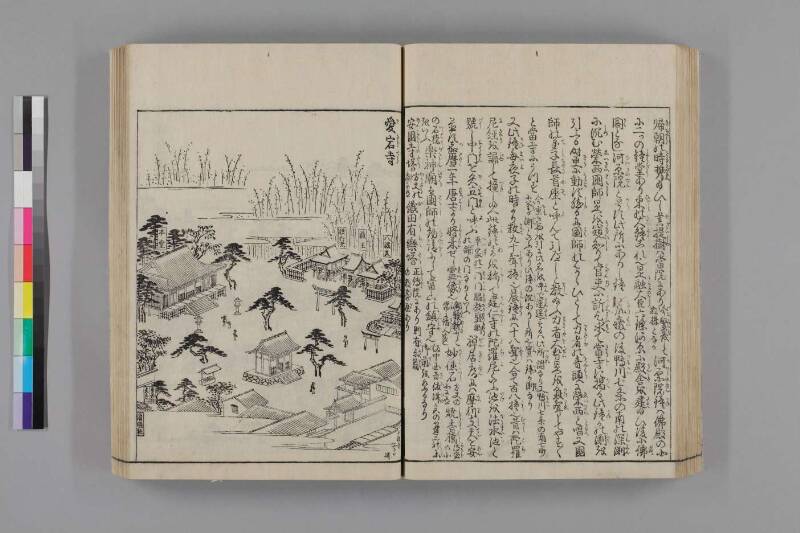
愛宕寺
十全寺
ぜゞが
■
八幡■
藏王
役行者
本堂
車寄松
矢立門
晴明社
現代語訳
## 建仁寺(けんにんじ)— 境内の説明
【菩提樹について】
(栄西国師が)帰朝の際にお持ち帰りになった菩提樹は当院にある。今では繁茂して数株となっている。
【河原院の鐘について】
仏殿の北に二つの鐘堂があり、東の大鐘がこれである。これはもともと、融大臣(源融)が六条河原に殿舎を建てられ、後に仏閣となして「河原院」と号したところにあった鐘である。河原院が荒廃した後、この鐘は鴨川七条の南の深淵に沈んでいた。栄西国師はこれを探り知り、官吏に訴えて求め、当寺に掲げることとなった。この鐘を件の淵から引き上げようとした時、まったく動かなかった。そこで国師の計らいとして、力者(人夫)たちに音頭を取らせ、「栄西」と唱えさせ、また国師の弟子である「長首座(ちょうしゅそ)」と呼んで引くよう教えられた。すると力者の大勢がこれを掛け声にして、やすやすと当寺へ移すことができた。
今日においても重いものを引く際にこの名を呼んで運搬するのは、このことに由来する。また、鴨川七条の南七町に「釜が渕」というところがある。この鐘が沈んでいた場所であり、実は「鐘が渕」である。
また、この鐘は毎夜子の刻(深夜零時)より九十声を撞き、暁(夜明け)には十八声を合わせて百八撞きとなる。昔は陀羅尼経を誦しながら撞いたため、この鐘の響きを称して「建仁寺の陀羅尼」と言った。池を「法水池」と号し、中門を「矢立門」と呼ぶ。
平家一門の門脇教盛卿の館の門であったと言われている。
【禅居庵・摩利支天について】
禅居庵には摩利支天を安置する。嘉暦二年(1327年)、午の年に唐土(中国)より将来せし霊像である。霊験あらたかで、常に参詣する人が多い。
【妙徳石について】
妙徳石は方丈の北にある石橋のことをいう。
【楽神廟について】
楽神廟は国師(栄西)の勧請によるもので、当山の鎮守である。備中国吉備津宮の第三の神■(一字不明)の御前を祭るものである。
【安国寺塔】
方丈の庭にある。
【織田有楽塔】
正伝院にあり、すなわち有楽翁の数寄屋(茶室)もある。
---
【境内の建物・施設・場所の配置】(下部の図の注記)
- 愛宕寺(あたごでら)
- 十全寺(じゅうぜんじ)
- ぜぜが■(一字不明)
- 八幡■(一字不明)
- 蔵王(ざおう)
- 役行者(えんのぎょうじゃ)
- 本堂(ほんどう)
- 車寄松(くるまよせまつ)
- 矢立門(やたてもん)
- 晴明社(せいめいしゃ)
英語訳
## Kenninji Temple — Description of the Temple Precinct
**[On the Bodhi Tree]**
The bodhi tree that (Zen Master Eisai) brought back upon his return from China is located within this temple. It has since flourished and grown into several trunks.
**[On the Kawara-no-in Bell]**
To the north of the Buddha Hall there are two bell towers; the large bell to the east is this one. It was originally at the Kawara-no-in, the palace that Minister Tōru (Minamoto no Tōru) built along the Rokujō riverbank, which was later converted into a Buddhist hall and named "Kawara-no-in." After the Kawara-no-in fell into ruin, the bell sank to the bottom of a deep pool to the south of Shichijō on the Kamo River. Zen Master Eisai learned of this, appealed to the authorities, obtained permission, and arranged to have it hung at this temple. When they tried to raise the bell from the pool, it would not budge at all. Therefore, through the master's wisdom, he instructed the laborers to call out in unison "Eisai!" as their chant, and also to call the name of the master's disciple "Chō Shuso (Head Monk Chō)" as they pulled. With this great cry among all the laborers, the bell was moved to this temple with surprising ease.
Even today, when moving heavy objects, calling out this name during transport derives from this very episode. Furthermore, some seven chō (approx. 760 meters) to the south of Shichijō on the Kamo River, there is a place called "Kama-ga-fuchi." This is the spot where the bell lay submerged, and in truth it should properly be called "Kane-ga-fuchi" (Bell Pool).
This bell is struck ninety times from the hour of the Rat (midnight) every night, and at dawn eighteen more strokes are added to make a total of one hundred and eight. In former times, the Dhāraṇī Sūtra was recited while the bell was struck; for this reason, the sound of this bell came to be called "the Dhāraṇī of Kenninji." The pond is named "Hōsui-ike" (Dharma Water Pond), and the middle gate is called "Yadate-mon" (Arrow-Stand Gate).
It is said that this was the gate of the residence of Lord Kadomaki Noritaka of the Taira clan.
**[On Zenkyoan and Marishiten]**
Marishiten is enshrined at Zenkyoan (sub-temple). This sacred image was brought from China in the year of the Horse, in Karyaku 2 (1327). Its miraculous efficacy is ever fresh, and worshippers constantly come to visit.
**[On the Myōtoku-seki Stone]**
The "Myōtoku Stone" refers to the stone bridge to the north of the Hōjō (Abbot's Quarters).
**[On the Rakushin-byō Shrine]**
The Rakushin-byō Shrine was established through the invocation of the Zen Master (Eisai) and serves as the guardian deity of this mountain. It enshrines the divine presence of the third deity ■ (one character illegible) of the Kibitsu Shrine in Bitchū Province.
**[Ankokuji Pagoda]**
Located in the garden of the Hōjō.
**[Oda Urakusai Pagoda]**
Located at Shōden-in. The sukiya (tea house) of the venerable Urakusai is also there.
---
**[Labels in the diagram — buildings, shrines, and features]**
- **Atago-dera** (Atago Temple)
- **Jūzenji** (Jūzen Temple)
- **Zeze-ga-■** (one character illegible)
- **Hachiman-■** (one character illegible)
- **Zaō** (Zaō Gongen Shrine)
- **En no Gyōja** (shrine/hall of En no Gyōja)
- **Hondō** (Main Hall)
- **Kurumayose-matsu** (Pine Tree at the Carriage Stop)
- **Yadate-mon** (Arrow-Stand Gate)
- **Seimei-sha** (Seimei Shrine)