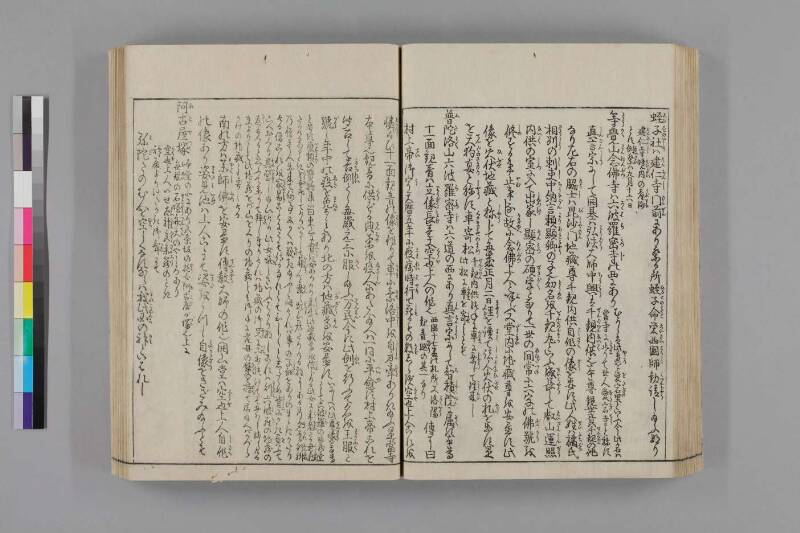
翻刻
蛭子社は建仁寺門前にあり祭る所蛭子命堂栄西國師勧請し給ふなり
建仁寺境内の産沙
とす例祭は九月十六日
等學山念佛寺は六波羅密寺の西にあり
むかしは此辺を愛宕里といふ今此名は
當寺に止りて世人愛宕寺と称す
真言宗にして開基は弘法大師中興は千観内供也本尊観世音千観の作
なり左右の脇士は毘沙門地藏尊千観内供自作の像を安す此人姓は橘氏
相州の剌吏中納言頼顕卿の子之幼名を千観丸といふ成長して叡山運照
内供の室に入て出家し顯密の硯学となりて一世の間常に六字の仏號を
修する事止事なし故に念佛上人と呼ぶ又堂内に地藏尊を安置す此
像を火伏地藏と称じて毎歳正月二日經を讀て諸人火仕の札を出す是
を天狗宴と称す
車寄松
千観内供つねに車に乗じて往来し
此松に車を寄しとぞ
普陀洛山六波羅密寺は六道の西にあり眞言宗にして智積院に属する本尊
十一面観音は立像長壱丈空也上人の作也
西国十七番の札所又洛陽
観音巡の其一なり
傳に曰
村上帝御宇天暦五年に疫■時行て死るもの数しらず空也上人これを
憐給ひ十一面観音の像を作りて車に乗洛中を自身牽ありき給ふ日當寺
本尊也観音に供ずる典茶を疫人にあたへ給へは一同に平愈す村上帝これを
聞召して吉例とし毎歳元三に服し給ふ万民今に此例を行ふて名を王服と
號し年中の疫を免るゝとなり北の方は地藏尊を安置す
いにしへは此尊像を本尊像を本尊
として六波羅の地藏堂
と号す康頼の寶物集に曰東山に貧き女ありけり年来此地蔵寺を信じける此女に年老たる母を持
たりけるあるとき老母死してけりいかゞして葬んと案じ煩ひ居たりける程にある■夕暮行脚
の僧壱人出来て何事にかくは歎き給ふと問ければ事の子細をありのまゝにかたり
ける僧これを容易ことにこそ侍るなれともひし〳〵としたゝめ背にかき屓ふて
山へおくり其営し給ひけり此女曉しさいふばかりなしこれは則六波羅の地蔵の
為給へると思ふて参りて拝し奉りけれは地藏の御足に土打つけてばおはしましける
まよりして此地蔵をば山をくりの地蔵とも御手に老母の鬘を持て居給へばかづら
かけの地蔵とも号しける
南の方は薬師仏を安置す傳教大師の作也開山堂は空血上人自作
の像あり姿見池は上人こゝにて姿をうつし自像をきざみ給ふとそ
阿古屋塚
本堂の北にあり五条坂の遊女阿古屋が塚也上に
無銘の石塔弁天のやしろあり
空也上人いせ大神宮参籠のとき
神殿よりけたかき御聲にて
弥陀たのむ人を空しくなすならは我此国の神といはれし
現代語訳
## 蛭子社
蛭子社は建仁寺の門前にある。祭神は蛭子命であり、堂は栄西国師が勧請されたものである。
建仁寺境内の産土神とされており、例祭は九月十六日である。
---
## 等學山念佛寺
等學山念佛寺は六波羅蜜寺の西にある。
昔はこの辺りを愛宕里と言ったが、今はその名はこの寺のみに残り、世人は「愛宕寺」と称している。
真言宗であり、開基は弘法大師、中興は千観内供である。本尊の観世音菩薩は千観の作である。左右の脇侍は毘沙門天と地蔵尊であり、千観内供が自ら作った像を安置している。この人の姓は橘氏で、相州の刺史(国司)である中納言頼顕卿の子である。幼名を千観丸といった。成長して叡山・運照内供の室(寺内の学房)に入り出家し、顕密の碩学となって、一世の間、常に六字の仏号(南無阿弥陀仏)を唱えることを止むことがなかった。それゆえ「念仏上人」と呼ばれた。また堂内に地蔵尊を安置する。この像を「火伏地蔵」と称し、毎年正月二日に経を読んで、諸人に火事除けの札を出す。これを「天狗宴」と称する。
**車寄松**
千観内供は常に車に乗って往来し、この松に車を寄せたと伝えられる。
---
## 普陀洛山六波羅蜜寺
普陀洛山六波羅蜜寺は六道の辻の西にある。真言宗であり、智積院に属する。本尊の十一面観音は立像で、高さ一丈、空也上人の作である。
西国三十三所第十七番の札所であり、また洛陽観音巡礼のうちの一つでもある。
伝えによれば――
村上天皇の御代、天暦五年(951年)に疫病が流行し、死者は数知れなかった。空也上人はこれを哀れに思い、十一面観音の像を作り、車に乗せて洛中を自ら引いてお歩きになった。その折、当寺の本尊である観音に供える典茶(お茶)を病人に与えられたところ、一同に平癒した。村上天皇はこれをお聞きになり吉例とされ、毎年元旦(元三)にお服みになった。万民が今もこの例に倣い、「王服」と号して一年中の疫病を免れるとされている。
北の方には地蔵尊を安置する。
昔はこの尊像を本尊として「六波羅の地蔵堂」と号した。
康頼の『宝物集』にいわく――東山に貧しい女がいた。長年この地蔵寺を信仰していた。この女には年老いた母がいたが、ある時その老母が亡くなってしまった。どのようにして葬ろうかと思い悩んでいたところ、ある日の夕暮れに行脚の僧が一人やって来て、「何事をそのように嘆いておられるのか」と問うた。女は事の次第をありのままに語った。僧は「これは容易いことでございます」と言い、しっかりと(遺体を)くるんで背に背負い、山へ送り届けて葬儀を執り行ってくださった。この女は感激して言葉もなかった。「これはすなわち六波羅の地蔵が成してくださったのだ」と思い、参詣して拝み申し上げたところ、地蔵の御足に土が付いておられた。それゆえ、この地蔵を「山送りの地蔵」とも呼び、また御手に老母の鬘(かつら)を持っておられたことから「鬘掛けの地蔵」とも号した。
南の方には薬師仏を安置する。伝教大師の作である。開山堂には空也上人が自ら彫った像がある。「姿見池」は上人がここで自身の姿を水面に映して自像を刻まれたとのことである。
---
## 阿古屋塚
本堂の北にある。五条坂の遊女・阿古屋の塚である。上には無銘の石塔と弁天の社がある。
**空也上人が伊勢大神宮に参籠された時、神殿より尊い御声があって、次のような御歌があった――**
弥陀たのむ人を空しくなすならば 我この国の神といはれじ
(阿弥陀仏を信頼する人をむなしく(見捨てて)するならば、私はこの国の神とは言えまい)
英語訳
## Ebisu Shrine
The Ebisu Shrine stands before the gates of Kennin-ji Temple. Its enshrined deity is Hiruko no Mikoto, and the hall was established through the prayers of National Master Eisai.
It serves as the guardian shrine (ubusuna) of the Kennin-ji precinct, and the annual festival is held on the sixteenth day of the ninth month.
---
## Tōgakuzan Nembutsu-ji Temple
Tōgakuzan Nembutsu-ji Temple is located to the west of Rokuhara Mitsu-ji Temple.
In former times, this area was called Atago-sato, but now the name survives only in connection with this temple, and people generally refer to it as "Atago-dera."
It belongs to the Shingon sect, and was founded by Kōbō Daishi (Kūkai), with Senkan Naikū as its restorer. The principal image of Kannon (Bodhisattva of Compassion) is a work of Senkan. The flanking attendants are Bishamonten and Jizō Bosatsu, statues carved by Senkan Naikū himself. Senkan was of the Tachibana clan, the son of Middle Counselor Yoriaki, the governor of Sagami Province. His childhood name was Senkan-maru. Upon coming of age, he entered the cell of Unshō Naikū on Mount Hiei, took holy orders, and became a distinguished scholar of both Exoteric and Esoteric Buddhism. Throughout his life, he never ceased reciting the six-character Buddha's name (*Namu Amida Butsu*). For this reason, he came to be called the "Nembutsu Shōnin" (Saint of the Nembutsu). The hall also enshrines a Jizō Bosatsu. This statue is known as the "Fire-Warding Jizō," and every year on the second day of the first month, sutras are read and protective talismans against fire are distributed to worshippers. This ceremony is called the "Tengu Feast."
**The Carriage-Rest Pine**
It is said that Senkan Naikū would always travel by carriage and would draw his carriage up to this pine tree.
---
## Fudarakusan Rokuhara Mitsu-ji Temple
Fudarakusan Rokuhara Mitsu-ji Temple is located to the west of the Rokudō crossroads. It belongs to the Shingon sect and is affiliated with Chishaku-in. The principal image is a standing eleven-faced Kannon, one *jō* (approximately three meters) in height, carved by Saint Kūya.
It is the seventeenth sacred site of the Saigoku (Western Provinces) Pilgrimage of Thirty-Three Temples, and also one of the temples on the Rakuyō Kannon Circuit.
According to tradition:
In the fifth year of Tenryaku (951 CE), during the reign of Emperor Murakami, a plague spread throughout the capital and countless people perished. Saint Kūya, moved by compassion, carved an image of the eleven-faced Kannon, placed it on a cart, and personally pulled it through the streets of the capital. The ceremonial tea (*tencha*) offered to the Kannon—the principal image of this very temple—was given to the sick, and all of them recovered. Emperor Murakami heard of this and declared it an auspicious precedent, partaking of the tea every year at New Year (*Ganzan*). The common people continue this practice to this day, calling it *Ōbuku* ("Royal Drink"), and it is said to ward off illness throughout the year.
To the north, a Jizō Bosatsu is enshrined.
In former times, this statue was venerated as the principal image, and the hall was known as the "Rokuhara Jizō-dō."
As recorded in Yasuyori's *Hōbutsushū*:
There was a poor woman in the Eastern Hills. She had long been a devotee of this Jizō Temple. This woman had an elderly mother, who one day passed away. The woman was deeply troubled, wondering how she might arrange for the burial. One evening, a wandering monk appeared and asked why she was lamenting so. She explained the situation in full detail. The monk said, "That is an easy matter," and carefully wrapping the body, carried it on his back to the mountains, where he performed the funeral rites. The woman was overcome with gratitude beyond words. Believing this to have been the work of the Jizō of Rokuhara, she went to worship before the statue, and found that the Jizō's feet were covered with soil. From this episode, the Jizō came to be called both the "Mountain-Sending Jizō" and the "Wig-Hanging Jizō," because the statue was holding the old mother's hairpiece in its hand.
To the south, a Yakushi Buddha (Medicine Buddha) is enshrined, a work attributed to Dengyō Daishi. In the Founder's Hall stands a self-carved image of Saint Kūya. The "Sugatami Pond" (Mirror Pond) is said to be where the Saint reflected his image in the water to carve his self-portrait.
---
## Akoya-zuka (Akoya's Mound)
Located to the north of the main hall, this is the burial mound of Akoya, a courtesan of Gojō-zaka. Atop it stand an unmarked stone pagoda and a small Benzaiten shrine.
**When Saint Kūya was in retreat at the Grand Shrine of Ise, a noble voice issued from the shrine, bearing the following verse:**
*Mida tanomu hito wo munashiku nasu naraba / Ware kono kuni no kami to iware ji*
(If I were to abandon in vain those who place their trust in Amida, / Then I could not be called a deity of this land.)