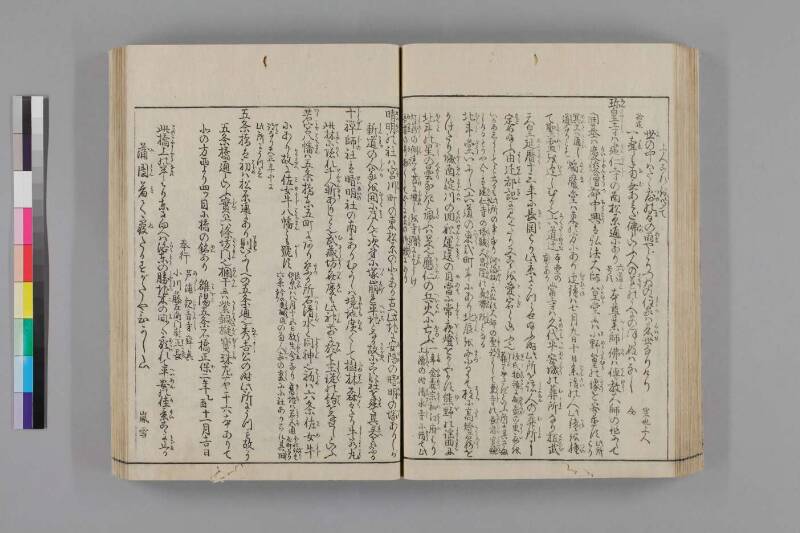
翻刻
上人これを聞て
世の中はたゝ露の間の雨やどりつゐの住家は来世なりけり 空也上人
拾遺
一声も南無あみだ仏といふ人の蓮のうへにのほらぬはなし 仝
珍皇寺は建仁寺の南松原通にあり
六道と
号す
本尊薬師仏は傳教大師の作にして
開基は慶俊僧都中興は弘法大師篁堂には小野篁の像を安置す
此所
より
冥土へ通し
道なりとそ
焔魔堂は東の方にあり迎鐘は七月九日十日参詣の人此鐘を撞
て聖霊を迎しむる也
六道辻
本堂の
前にあり
當寺は久代平安城の葬所なり桓武
天皇延暦十三年に長岡より此京にうつらせ給ふ時此所を諸人の葬所に
定め給ふ由迁都記に見えたり又こゝを愛宕ともいふ也
源氏物語に桐壺の更衣を
葬りおたぎといふ所に其さま
いかめしうしてと出るも此所の事なり河海抄には弘法大師の聖跡として東寺の長者官領
しけるとかや今は建仁寺の塔頭大昌院の兼帯所となる
北斗堂いにしへ六道の東弐町斗にあり北辰を祭りて柱に髙燈籠を
かけたり城南淀川の回船運送の目當に常夜燈をかゝやかす熊野の謡曲に
北斗の星の曇なきと諷ふは是也應仁の兵火に亡ぶ
一年金森宗和江府より
上洛の時清水寺に詣て此
灯籠の倒れて苔に埋しを寺僧に乞うけ
吾妻の奇物として今に芝の御館にあり
晴明の社は宮川町の東松原の北にあり古へ此地に安陪の時明の塚ありしが
新道の人家を開に及んで次第に塚崩れ平地となる故にこゝに社を建を霊を祭る
丁禅師社は晴明社の南にありむかしは境地広くして樹林森々たり牛若丸
此林に隠れ千人斬ありしと也武藏坊毎慶も此神前に於て主従の約をなせしといふ
若宮八幡は五条橋東五町にあり祭る所石清水と同神也初は六条佐女牛
にあり故に佐女牛八幡とも號す
例祭は八月十五日放生会なり𦾔地は若宮通り
今の仏具
屋町なり
六条
今の魚棚通
なり
の南人家の裏に小社ありこれ其旧
跡なり天正年中に
此所にうつす
五条橋は初は松原通にあり則いにしへの五条通也秀吉公の時此所にうつす故に
五条橋通といふ實は六條坊門也欄干には紫銅擬寶珠左右に十六本ありて
北の方西より四ッ目に橋の銘あり雒陽五条石橋正保二年乙酉十一月十一月吉日
奉行
芦浦観音寺舜興
小川藤左衛門尉正長
此橋上の半より東に向人は洛東の勝地木の間〳〵に顕れて平安の佳景こゝに止る
蒲団着て寝たるすがたやひかし山 嵐雪
現代語訳
(前頁より続く)上人はこれを聞いて、次の歌を詠まれた。
世の中はただ露の間の雨やどり ついの住処は来世なりけり 空也上人
【拾遺(追加の歌)】
一声も「南無阿弥陀仏」という人の 蓮の上に上らぬはなし 同(空也上人)
---
## 珍皇寺
珍皇寺は建仁寺の南、松原通にある。
「六道」と号する。
本尊の薬師仏は伝教大師の作であり、開基は慶俊僧都、中興は弘法大師である。篁堂には小野篁の像を安置する。
この場所より冥土へ通じる道があるとのことである。
焔魔堂は東の方にある。迎え鐘は七月九日・十日に参詣する人々がこの鐘を撞いて、精霊(先祖の霊)を迎えるものである。
**六道の辻**
本堂の前にある。
当寺は古くより平安城の葬所であった。桓武天皇が延暦十三年(794年)に長岡京からこの京(平安京)へ遷都あそばされた時、この場所を諸人の葬所に定められたことが『遷都記』に見える。またここを「愛宕」とも言う。
『源氏物語』に、桐壺の更衣を葬って「おたぎという所に、そのさまいかめしうして」と出てくるのも、この場所のことである。『河海抄』には弘法大師の聖跡として東寺の長者が管領していたとある。今は建仁寺の塔頭である大昌院の兼帯所となっている。
---
## 北斗堂
昔、六道の東二町ほどのところにあった。北辰(北極星)を祭り、柱に高い燈籠を掛けていた。城南・淀川の回船運送の目当てとして、常夜燈を輝かせていた。謡曲「熊野」に「北斗の星の曇なき」と謡うのはこれのことである。応仁の兵火によって滅んだ。
あるとき、金森宗和が江戸より上洛した折、清水寺に詣でて、この燈籠が倒れて苔に埋もれているのを寺僧に乞い受け、東国(吾妻)の珍しいものとして、今も芝の御館(江戸の金森家の屋敷)にあるという。
---
## 晴明の社
晴明の社は宮川町の東、松原の北にある。古くこの地に安倍晴明の塚があったが、新たに道を開いて人家を造るにあたって、次第に塚が崩れ、平地となった。そのためここに社を建てて霊を祭っている。
---
## 丁禅師社
丁禅師社は晴明社の南にある。昔は境内が広く、樹林が鬱蒼としていた。牛若丸がこの林に隠れて千人斬りをしたとも言われている。武蔵坊弁慶もこの神前において主従の誓約を結んだと言われている。
---
## 若宮八幡
若宮八幡は五条橋の東五町にある。祭神は石清水八幡と同じ神である。はじめは六条の佐女牛にあったため、「佐女牛八幡」とも号する。
例祭は八月十五日の放生会である。旧地は若宮通り、今の仏具屋町である。
六条(今の魚棚通り)の南、人家の裏に小さな社があり、これがその旧跡である。天正年中(1573〜1592年)に現在の場所に移された。
---
## 五条橋
五条橋は初め松原通にあった。すなわちこれが古くからの五条通である。秀吉公の時に現在の場所に移されたため「五条橋通」と言うが、実際は六条坊門にあたる。欄干には紫銅(青銅)の擬宝珠が左右に十六本あり、北側の西から四つ目に橋の銘がある。
「雒陽五条石橋 正保二年乙酉十一月 吉日」
奉行 芦浦観音寺 舜興
小川藤左衛門尉正長
この橋の上の中ほどより東に向かうと、洛東の景勝地が木々の間から現れて、平安の佳景はここに極まる。
蒲団着て寝たるすがたや東山 嵐雪
英語訳
*(Continued from the previous page)* Upon hearing this, the Saint composed the following poem:
*Yo no naka wa tada tsuyu no ma no amayadori / tsui no sumika wa raise narikeri*
(This world is but a brief shelter from the rain, lasting only a moment like the dew; / our true and final dwelling place is the world to come.)
— Saint Kūya
**Supplement (additional poem):**
*Hitokoe mo "Namu Amida Butsu" to iu hito no / hasu no ue ni noboranu wa nashi*
(There is no one who utters even a single recitation of "Namu Amida Butsu" / who does not ascend upon a lotus flower [in the Pure Land].)
— Same (Saint Kūya)
---
## Chinnouchi-ji Temple (Chinpōji / Rokudō Chinnō-ji)
Chinnouchi-ji Temple is located along Matsubara-dōri, to the south of Kennin-ji Temple.
It is known by the name "Rokudō" (the Six Paths).
The principal image, a Yakushi Buddha (Medicine Buddha), is the work of Dengyō Daishi. The temple was founded by the monk Keishun Sōzu, and restored by Kōbō Daishi. The Takamura-dō hall enshrines a statue of Ono no Takamura.
It is said that a path leading to the underworld (*meido*) passes through this very location.
The Emma-dō (Hall of Emma, King of Hell) is to the east. The "Welcoming Bell" (*mukae-gane*): on the ninth and tenth days of the seventh month, worshippers visiting the temple ring this bell to summon the spirits of their ancestors.
**The Rokudō Crossroads**
Located in front of the main hall.
This temple has served since ancient times as the burial ground of the capital. When Emperor Kanmu moved the capital from Nagaoka to this city (Heian-kyō) in the thirteenth year of Enryaku (794 CE), he designated this site as the public burial ground, as recorded in the *Sentoki* (Record of the Capital Transfer). This area is also called "Atago."
In *The Tale of Genji*, the passage describing the burial of Kiritsubo no Kōi — "she was taken to a place called Ōtagi, and the proceedings were carried out with great solemnity" — refers to this very location. According to the *Kakaishō* (a commentary on *The Tale of Genji*), this was a sacred site of Kōbō Daishi and was once administered by the head of Tō-ji Temple. It is now under the jurisdiction of Daishō-in, a sub-temple of Kennin-ji.
---
## Hokuto-dō (Northern Dipper Hall)
In former times, this hall stood approximately two *chō* (about 220 meters) to the east of the Rokudō crossroads. It was dedicated to the North Star (*Hokushin*), and tall lanterns were hung from its pillars. These lanterns shone as all-night lights (*jōyatō*), serving as navigational markers for boats traveling from south of the capital along the Yodo River. The line in the *Nō* chant "Kumano" — "the stars of the Northern Dipper shine without a cloud" — refers to this hall. It was destroyed in the fires of the Ōnin War.
On one occasion, Kanamori Sōwa, while traveling from Edo to Kyoto, visited Kiyomizu-dera Temple and, finding this lantern toppled and buried in moss, requested it from the temple monks. He took it back to Edo as a curious Eastern treasure, and it is said to remain to this day at his Shiba residence.
---
## Seimei Shrine
The Seimei Shrine is located north of Matsubara, to the east of Miyagawa-chō. In ancient times, a burial mound (*tsuka*) of Abe no Seimei stood on this site, but as new roads were laid and houses built, the mound gradually crumbled away and the land became flat. A shrine was therefore built here to enshrine and venerate his spirit.
---
## Tei Zenji Shrine
The Tei Zenji Shrine is to the south of the Seimei Shrine. In former times, the precinct was vast and thickly wooded. It is said that Ushiwakamaru (the young Minamoto no Yoshitsune) hid in this grove and cut down a thousand men. It is also said that Musashibō Benkei, before this very shrine, made his vow of loyalty to his lord.
---
## Wakamiya Hachiman Shrine
Wakamiya Hachiman Shrine is located five *chō* (about 550 meters) to the east of Gojō Bridge. The enshrined deity is the same as that of Iwashimizu Hachiman Shrine. Originally situated at Sameushi in Rokujō, it is also called "Sameushi Hachiman."
The annual festival is the *Hōjōe* (Life-releasing Ceremony) on the fifteenth day of the eighth month. The shrine's former location was along Wakamiya-dōri, in the area now known as Butsugu-ya-chō (Buddhist Goods Street).
To the south of Rokujō (now Uonotana-dōri), a small shrine stands behind the houses — this is the remnant of its former site. During the Tenshō era (1573–1592), it was moved to its present location.
---
## Gojō Bridge
Gojō Bridge was originally located on Matsubara-dōri — this was the ancient Gojō-dōri. During the reign of Lord Hideyoshi (Toyotomi Hideyoshi), it was moved to its present location, and the street is therefore called "Gojō Bridge Street," though in reality it corresponds to the old Rokujō Bōmon. The balustrades are fitted with sixteen giboshi (ornamental bronze finials) of purple copper on each side. On the fourth finial from the west on the north side is the bridge's inscription:
*"Rakuyō Gojō Sekkyō"* (Gojō Stone Bridge of the Capital)
*Shōhō 2nd year, Year of Kinoto-Tori, Eleventh Month, an Auspicious Day* (1645)
Magistrate (*bugyō*):
Ashiura Kannon-ji, Shunkō
Ogawa Tōzaemonojō Masanaga
From the middle of this bridge looking eastward, the scenic spots of eastern Kyoto reveal themselves through the trees, and here the beautiful views of the ancient capital reach their finest expression.
*Futon kite netaru sugata ya higashi yama*
(Clothed in quilts of cloud, lying in slumber — the Eastern Hills)
— Ransetsu