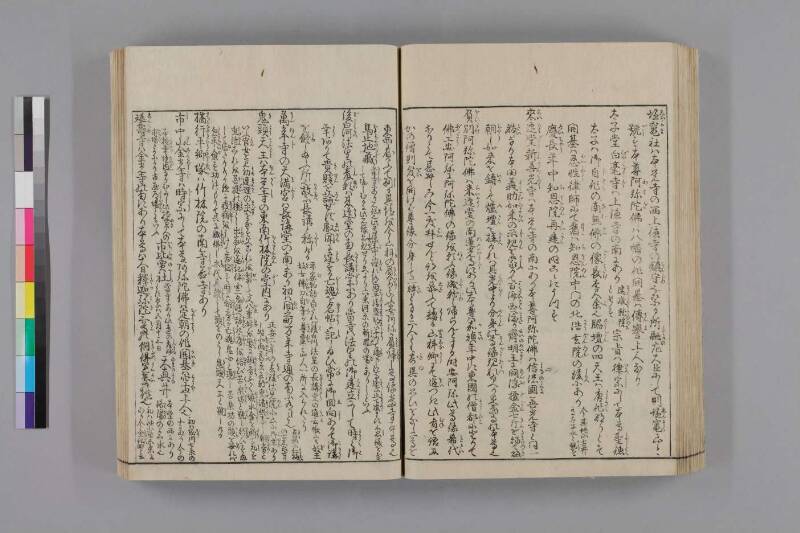
翻刻
塩竃社は本覚寺の西上徳寺の額守也祭る所融左大臣にして則塩竃山と
號す本尊阿弥陀佛は八幡の作開基は傳譽上人なり
太子堂白毫寺は上徳寺の南にあり
速成就院
と号す
宗旨は律宗旨は律宗にして本尊聖徳
太子は御自作の南無佛の像長壱尺余也脇壇の四天王は唐作なりとそ
開基は忍性律師にて𦾔は知恩院中門の北浩玄院の後にあり
今其地に古井
有太子水と號す
慶長年中知恩院再建の時こゝにうつす
来迎堂新善光寺は本覚寺の南にあり本尊阿弥陀佛は信濃国善光寺と同
一
躰なり本田義助如来の示現を蒙りて百済國へ渡り齊明王に閻浮金七斤を奉て帰
朝し如来を鑄して爐壇を構けれは其光中より分身の尊像現れ給へり是當寺の本尊也
屓別阿弥陀佛は来迎堂の南蓮光寺にあり此本尊嘉禎年中に東國の僧都に登りて
佛工安阿弥に阿弥陀佛の像を願ふ像就し帰らんとする時安阿弥此尊像希代
なりとて甚おしみ今一度拝せんと跡を慕ふて■る山科郷にて追つき此旨を語に
かの僧則笈を開けば尊像分身して二躰となる二人とも奇異の思ひをなし二尊を
東西屓ふて別る其地を今山科の屓別山といふ安阿弥屓帰して像當寺本尊也
馬止地蔵
當寺に有石仏也此像土中に埋れし時平清盛駒に乗じて通りし事有途に止て進ます不思議な事
して怪しむるに此石像出現せり夫より六条河原の斬罪の場にありしといふ
後白河法皇の宸影は来迎堂の南長堂にあり當寺は法皇の御建立にして時々御
幸ありて貴賤を論せず叡聞に達する亡魂を名帖に記し給ひ常に御回向ありて御講
を修し給ふ所也故に長講と称しける
平家物語に曰されば後白川法皇の長講堂の過去帳にも妓王
妓女佛刀自等が尊霊と四人一所に入られたり
萬年寺の天満宮は長講堂の南にあり初は問之町万年寺通の南に有しと也
𦾔地に紅梅
の古木存せる
鬼頭天王は本覚寺の東南竹林院の堂内にあり
正安二年の春後伏見院此山に御幸あり
し時北面葛原兵部重清供奉し朝霧と
いふ官女を見初連理の交をなす又これを製して又八重姫を娶朝霧深く嫉水食を絶ちて死す
重清これを菩提の種とし出家を逐紀伊国二鬼■へ赴き庵を結ひ苦楽坊と號し行ひすまを
して居たりなる程に疫病をうけて苦悩す時に朝霧が亡魂鬼女と現し苦楽坊の頭按れば
忽平愈す功つもりて共に成佛し末代其證にして頭をのこし鬼頭天王と號しける
橘行平郷塚は竹林院の南等善寺あり
市中山金光寺は時宗にして本尊阿弥陀佛は定朝の作国巻は空字世上人也
初は堀川七条の
北にあり今の
本願寺境内なりむかし此地賈人の
市場たるにより市屋道場ともいふ
市比売社
當寺にあり此寺の産沙
とす祭は五月十三日
天眞井
本堂の西にあり
洛陽の名水也
延寿寺は金光寺の南にあり本尊は大日釋迦弥陀三高の銅仏運慶の作也
初は油小路五条に
あり今金仏町と云
現代語訳
**塩竃社**
塩竃社は本覚寺の西、上徳寺の額守である。祭神は融左大臣であり、塩竃山と号する。本尊の阿弥陀仏は八幡(師)の作で、開基は傳譽上人である。
---
**太子堂・白毫寺**
白毫寺は上徳寺の南にある。速成就院と号す。宗旨は律宗であり、本尊の聖徳太子像は御自作の「南無仏」の像で、長さ一尺余りである。脇壇の四天王は唐作であると言われている。開基は忍性律師であり、以前は知恩院中門の北、浩玄院の後ろにあった。今もその地に古井があり、「太子水」と号する。慶長年中(1596~1615年)、知恩院再建の際にここ(現在地)へ移された。
---
**来迎堂・新善光寺**
新善光寺は本覚寺の南にある。本尊の阿弥陀仏は信濃国善光寺と同一体である。本田義助が如来の示現を蒙り、百済国へ渡って齊明王に閻浮金(えんぶごん)七斤を奉り、帰朝して如来像を鋳て爐壇を構えたところ、その光の中より分身の尊像が現れた。これが当寺の本尊である。
---
**屓別阿弥陀仏**
屓別阿弥陀仏は来迎堂の南、蓮光寺にある。この本尊は、嘉禎年中(1235~1238年)に東国の僧都が上洛し、仏師・安阿弥(快慶)に阿弥陀仏の像を依頼した。像が完成して帰ろうとした時、安阿弥はこの尊像が希代のものであるとして甚だ惜しみ、もう一度拝したいと後を追って山科郷にて追いつき、この旨を語ったところ、かの僧が笈(おい)を開くと、尊像が分身して二体となった。二人ともこの奇異に感嘆し、二尊を東西に向けて別れた。その地を今も「山科の屓別山(なごりわかれやま)」という。安阿弥が名残惜しみながら帰り、その像が当寺の本尊となった。
**馬止地蔵**
当寺にある石仏である。この像が土中に埋もれていた時、平清盛が馬に乗って通りかかったことがあり、途中で馬が止まって進まなくなった。不思議に思い怪しんでいると、この石像が出現した。それより六条河原の斬罪の場にあったという。
---
**後白河法皇の宸影**
後白河法皇の御影(宸影)は来迎堂の南、長堂にある。当寺は法皇の御建立であり、時々御幸があって、貴賤を問わず叡聞(法皇の耳)に達した亡魂を名帖に記され、常に御回向があり、御講を修められた場所である。故に「長講(堂)」と称された。
平家物語に曰く:「されば後白川法皇の長講堂の過去帳にも、妓王・妓女・仏・刀自等が尊霊と、四人一所に入られたり。」
---
**萬年寺の天満宮**
萬年寺の天満宮は長講堂の南にある。初めは問之町(とんのちょう)、万年寺通の南にあったと言われる。旧地には紅梅の古木が今も残っている。
---
**鬼頭天王**
鬼頭天王は本覚寺の東南、竹林院の堂内にある。
正安二年(1300年)の春、後伏見院がこの山に御幸の際、北面の武士・葛原兵部重清が供奉し、「朝霧」という官女を見初めて、夫婦の契りを結んだ。さらに八重姫を娶ったため、朝霧は深く嫉妬し、水食(飲食)を断って死んだ。重清はこれを菩提の縁として出家し、紀伊国二鬼(ふたおに)へ赴き、庵を結んで「苦楽坊」と号し、修行に励んでいたところ、疫病を受けて苦悩した。その時、朝霧の亡魂が鬼女となって現れ、苦楽坊の頭に触れると、たちまち平癒した。功が積もり、共に成仏し、末代にその証として頭(の像)を残し、「鬼頭天王」と号した。
---
**橘行平郷塚**
竹林院の南、等善寺にある。
---
**市中山・金光寺**
金光寺は時宗であり、本尊の阿弥陀仏は定朝の作、開基は空字(くうじ)世上人である。初めは堀川七条の北にあり、今の本願寺境内にあった。昔、この地は商人の市場であったことから、「市屋道場」とも言う。
**市比売社**
当寺にある。この寺の産土神社とする。祭は五月十三日。
**天眞井**
本堂の西にある。洛陽(京都)の名水である。
---
**延寿寺**
延寿寺は金光寺の南にある。本尊は大日・釈迦・弥陀の三尊の銅仏で、運慶の作である。初めは油小路五条にあり、今は「金仏町」という。
英語訳
**Shiogama Shrine**
Shiogama Shrine is located to the west of Hongaku-ji Temple and serves as the amulet guardian of Jōtoku-ji Temple. The enshrined deity is Minister of the Left Tōru (Minamoto no Tōru), and the shrine is called Shiogama-yama. The principal image, an Amida Buddha, was crafted by the Yawata master, and the temple was founded by the Venerable Denyō.
---
**Taishi-dō / Byakugō-ji Temple**
Byakugō-ji Temple lies to the south of Jōtoku-ji. It is known by the name Sokujōju-in (Temple of Speedy Fulfillment). Its Buddhist denomination is the Ritsu sect. The principal image is a self-carved statue of Prince Shōtoku in the form of "Namubutsu" (Homage to the Buddha), measuring over one shaku (approx. 30 cm) in length. The Four Heavenly Kings on the side altar are said to be of Chinese (Tang) workmanship. The temple was founded by the Vinaya master Ninshō. Originally, it was located to the north of the middle gate of Chion-in, behind Kōgen-in. Even now, an ancient well remains on that original site, called "Taishi-sui" (Prince's Water). During the Keichō era (1596–1615), when Chion-in was rebuilt, the temple was relocated to its present location.
---
**Raigō-dō / Shin-Zenkōji Temple**
Shin-Zenkōji Temple is to the south of Hongaku-ji. Its principal image, an Amida Buddha, is said to be the same body as that of Zenkōji Temple in Shinano Province (present-day Nagano). Honda Yoshisuke received a divine revelation from the Tathāgata, traveled to the kingdom of Baekje (ancient Korea), presented seven kin of Jambu-nada gold to King Saimei, returned to Japan, cast a statue of the Tathāgata, and constructed an altar furnace. From within its light, a manifestation of the revered image appeared — this is the principal image of this temple.
---
**Nagori-wakare Amida Buddha**
The Nagori-wakare (Parting in Reluctance) Amida Buddha is at Renkōji Temple, to the south of Raigō-dō. This principal image dates from the Katei era (1235–1238), when a high-ranking monk from the eastern provinces came to the capital and commissioned the Buddhist sculptor An'ami (Kaikei) to create an Amida Buddha statue. When the statue was completed and the monk was about to depart, An'ami, finding the image exceedingly rare and precious, was deeply reluctant to part with it and followed after the monk, catching up with him in Yamashina. When he told the monk of his feelings, the monk opened his carrying box (oi) and the statue miraculously split into two identical images. Both men marveled at this wonder, and each took one of the two statues, departing in opposite (east and west) directions. The place is still called "Nagori-wakare-yama" (Mountain of Reluctant Parting) in Yamashina. An'ami carried his image home with great reluctance, and it became the principal image of this temple.
**Uma-dome Jizō (Horse-Stopping Jizō)**
This is a stone Buddha at the same temple. When this image was buried in the ground, Taira no Kiyomori once happened to pass by on horseback, but his horse stopped and refused to move forward. Wondering at this strange occurrence, the stone image appeared (was unearthed). It is said that it was thereafter kept at the execution ground on the Rokujō riverbank.
---
**Portrait of Retired Emperor Go-Shirakawa**
The imperial portrait (shinkei) of Retired Emperor Go-Shirakawa is in the Long Hall (Nagadō) to the south of Raigō-dō. This temple was founded by the Retired Emperor himself, who made frequent imperial visits and, without distinction of high or low birth, recorded the names of deceased souls whose voices reached his imperial ears in a memorial register, performing memorial services and conducting regular Buddhist lectures. For this reason, it was called the "Chōkō-dō" (Hall of Long Lectures).
As the Tale of the Heike states: "Thus, in the death register of the Chōkō-dō of Retired Emperor Go-Shirakawa, the souls of Gio, Ginyo, Hotoke, and Toji were all entered together in one place."
---
**Tenman-gū Shrine of Mannen-ji Temple**
The Tenman-gū Shrine of Mannen-ji Temple is to the south of Chōkō-dō. It is said to have originally been located to the south of Ton-no-chō, along Mannen-ji Street. On its former site, an old plum tree with red blossoms still survives.
---
**Kitō Ten'nō (Demon-Head Deity)**
Kitō Ten'nō is enshrined within the hall of Chikurin-in, to the southeast of Hongaku-ji.
In the spring of the second year of Shōan (1300), when Retired Emperor Fushimi made an imperial visit to this mountain, a northern guard (hokumen) warrior named Kuzuhara Hyōbu Shigekiyo accompanied him and fell in love at first sight with a court lady called Asagiri, entering into a conjugal relationship with her. He later also took Yaehime as his wife, whereupon Asagiri, consumed by deep jealousy, refused all food and drink and died. Shigekiyo, taking this as a cause for spiritual awakening, renounced the world, traveled to Futaoni in Kii Province, built a hermitage there, took the religious name Kurakubō, and devoted himself to ascetic practice. In time, he fell ill with a plague and suffered greatly. At that moment, the vengeful spirit of Asagiri appeared as a demon woman and touched Kurakubō's head, whereupon he was instantly cured. Through the accumulation of merit, both attained Buddhahood together. As proof for future generations, the head (of the demon) was left behind and enshrined as Kitō Ten'nō (the Demon-Head Deity).
---
**Tachibana Yukihira's Mound**
Located at Tōzen-ji Temple, to the south of Chikurin-in.
---
**Ichinaka-yama Kinkō-ji Temple**
Kinkō-ji belongs to the Ji sect (Jishū). Its principal image, an Amida Buddha, was crafted by Jōchō, and the temple was founded by the Venerable Kūji (Kūji Shōnin). It was originally located to the north of Horikawa and Shichijō, on what is now within the precincts of Hongan-ji Temple. In ancient times, as this area was a merchants' marketplace, the temple was also called "Ichiya Dōjō" (Marketplace Hall).
**Ichihime Shrine**
Located within this temple precinct. It is regarded as the guardian tutelary shrine of this temple. Festival: the 13th day of the 5th month.
**Tenshini Well**
Located to the west of the main hall. It is one of the famous waters of Rakuyō (Kyoto).
---
**Enjū-ji Temple**
Enjū-ji is to the south of Kinkō-ji. The principal images are three bronze Buddhas — Dainichi (Mahāvairocana), Shaka (Śākyamuni), and Amida (Amitābha) — crafted by Unkei. Originally located on Abura-no-kōji (Oil Lane) at Gojō, the area is now called Kinbutsu-chō (Gold Buddha Town).