翻刻
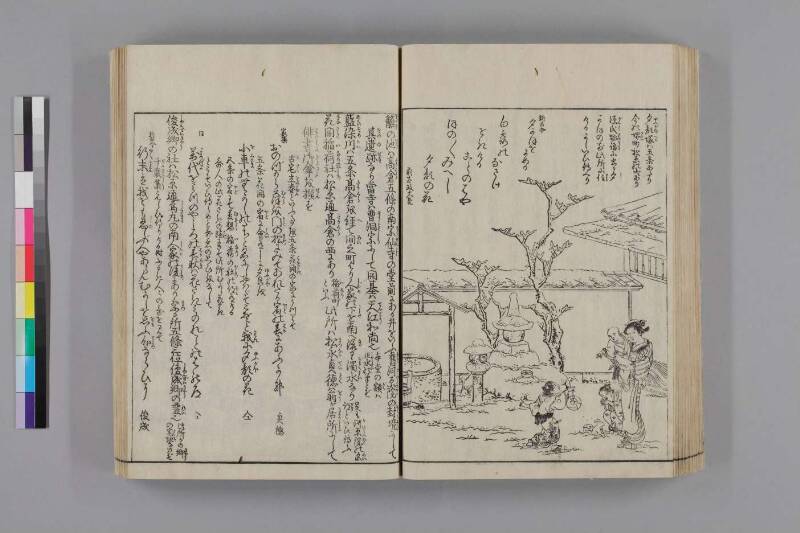
夕顔塚は五条あたり
今の堺町松原の北にあり
源氏物語に出る夕
かほの前此所に住
けるよしいひ伝へり
新古今
夕かほを
よめる
白露の
なさけ
をきける
ことのはや
ほの〳〵みへし
夕顔の花
前太政大臣
離の池は高倉五條の南宗仙寺の堂前にある井をいふ𦾔河原院の封境にして
其遺跡なり當寺は曹洞宗にして開基は天江和尚也
本堂の額は
正水の筆とぞ
藍染川は五条髙倉を経て間之町より人家の下を南へ流るゝ濁水なり
是も河原院の名
跡といひ伝ふ
花開稲荷社は松原通高倉の西にあり
稲荷町
といふ
此所は松永貞德翁が居所にして
俳書御傘を撰す
古宅立春といふ事を五条花開の家にうつりて
家集
おのづから葎を門の松にみてあれたる宿の春にあふかな 貞德
五条花開の宿に会有しに夕貌を
小車のむかしのたちと名にしおはゞそこそと我に夕顔の花 仝
五条の宿にて夢想稲荷の社の跡有ける
哥人の此花さきの陰にきて此所むかし花さき
とこそいひ侍らめと哥意の思ひをなして
同
万代をみつのやしろの春秋は花さきみのれことのはゝの道 仝
俊成卿の社は松原通烏丸の南人家の後にあり祭る所五條三位俊成卿の霊也
此所かの卿
の宅地なりとぞ
千載集えらひ侍りける時ふるき人々の哥を見て
新古今
行末は我をも忍ぶ人やあらんむかしを思ふ心ならひに 俊成
現代語訳
**夕顔塚**
夕顔塚は五条あたり、現在の堺町松原の北にある。
『源氏物語』に登場する夕顔の前身が、この場所に住んでいたと言い伝えられている。
新古今(和歌集より)
夕顔を詠める
白露の なさけをおきける ことのはや
ほのぼの見えし 夕顔の花
前太政大臣
---
**離の池**
離の池は、高倉五条の南、宗仙寺の堂前にある井戸のことをいう。かつての河原院の封境(領域)であり、その遺跡である。当寺は曹洞宗であり、開基は天江和尚である。本堂の額は正水(しょうすい)の筆によるものという。
---
**藍染川**
藍染川は、五条・高倉を経て間之町より人家の下を南へ流れる濁水である。これも河原院の名跡と言い伝えられている。
---
**花開稲荷社**
花開稲荷社は松原通高倉の西にある。この辺りは「稲荷町」という。この場所はかつて俳諧師・松永貞徳翁の居所であり、俳書『御傘』を編纂した地である。
(貞徳の家集より)
古宅に立春ということを、五条花開の家に移りて
おのづから葎を門の松にみて あれたる宿の春にあふかな 貞徳
五条花開の宿で会があった折に、夕顔を(詠んで)
小車のむかしのたちと名にしおはゞ そこそと我に夕顔の花 同
五条の宿にて夢想稲荷の社の跡あり。歌人がこの花咲く木陰に来て、「この所は昔、花咲きと申したことでしょう」と歌の心で思いをめぐらして
万代をみつのやしろの春秋は 花さきみのれことのはゝの道 同
---
**俊成卿の社**
俊成卿の社は松原通烏丸の南、人家の後ろにある。祭る所は、五条三位・俊成卿の霊である。この場所はかの卿の宅地であったとされる。
(俊成が)千載集を撰んでいた折に、古い人々の歌を見て(詠んだ歌)
新古今(和歌集より)
行末は 我をも忍ぶ人やあらん むかしを思ふ 心ならひに 俊成
英語訳
**The Yūgao Mound**
The Yūgao Mound is located in the vicinity of Gojō, to the north of present-day Sakai-machi Matsubara.
It is said by tradition that the woman known as Yūgao, who appears in *The Tale of Genji*, once lived in this very place.
*From the New Kokinshū* — a poem composed on the theme of *yūgao* (the moonflower):
*Shiratsuyu no / nasake wo okikeru / kotonoha ya /
honobono mieshi / yūgao no hana*
*(How tender — the words that lay like white dew;
barely visible in the dimming light, the moonflower blooms)*
Former Grand Minister (Saki no Daijō-daijin)
---
**The Separated Pond (Hanare-no-ike)**
The Separated Pond refers to a well in front of the hall of Sōsen-ji Temple, to the south of Takakura-Gojō. It once lay within the boundary of the Kawara-no-in estate and is a remnant of that historic site. The temple belongs to the Sōtō sect of Zen Buddhism, and was founded by the monk Tenkō. The plaque on the main hall is said to be in the brushwork of Shōsui.
---
**Aizome River (Indigo-Dyeing River)**
The Aizome River flows south from Ton-no-chō, passing beneath the residences, after passing through Gojō and Takakura. It is a turbid stream. This too is said to be a remnant of the famed Kawara-no-in estate.
---
**Hanasaki Inari Shrine**
The Hanasaki Inari Shrine is located to the west of Matsubara-dōri Takakura. The surrounding neighborhood is known as "Inari-chō." This place was once the residence of the haiku master Matsunaga Teitoku, where he compiled the haiku treatise *Mikasa* (御傘).
*(From Teitoku's personal poetry collection:)*
*On the theme of the New Year's arrival at an old dwelling, composed upon moving to the Hanasaki house on Gojō:*
*Onozukara / mugura wo kado no / matsu ni mite /
aretaru yado no / haru ni au kana* — Teitoku
*(Naturally, I see the wild mugwort as the pine at the gate;
how I have come to meet spring at this overgrown, rustic dwelling.)*
*At a gathering held at the Gojō Hanasaki lodging, composed on the topic of yūgao (moonflower):*
*Koguruma no / mukashi no tachi to / na ni shi owaba /
sokoso to ware ni / yūgao no hana* — same author
*(If it truly bears the name of the old mansion from the tale of the little carriage,
then show yourself to me — O moonflower!)*
*At the Gojō lodging, where the former site of the Musō Inari Shrine existed. A poet, coming beneath the shade of these blossoming trees, thought to himself in the spirit of poetry: "This place must have once been called 'Hanasaki' (the blooming of flowers)," and composed:*
*Yorozu yo wo / mitsu no yashiro no / haru aki wa /
hana saki minore / kotonoha no michi* — same author
*(For ten thousand generations, in the shrine of Mitu,
may spring flowers bloom and autumn fruits ripen on the path of poetry.)*
---
**The Shrine of Lord Shunzei**
The shrine of Lord Shunzei is located behind a row of houses to the south of Matsubara-dōri Karasuma. The deity enshrined here is the spirit of Lord Shunzei (Fujiwara no Shunzei), the Third Rank at Gojō (Go-jō no Sanmi). This site is said to have been the residential land of that lord.
When compiling the *Senzaishū* anthology, Shunzei, upon reading the poems of poets of former ages, composed the following poem, which is included in the *New Kokinshū*:
*Yukusue wa / ware wo mo shinobu / hito ya aran /
mukashi wo omou / kokoro narahi ni*
*(In ages to come, will there perhaps be someone who will remember me,
just as I, by habit of heart, think fondly of those who came before?)*
— Shunzei