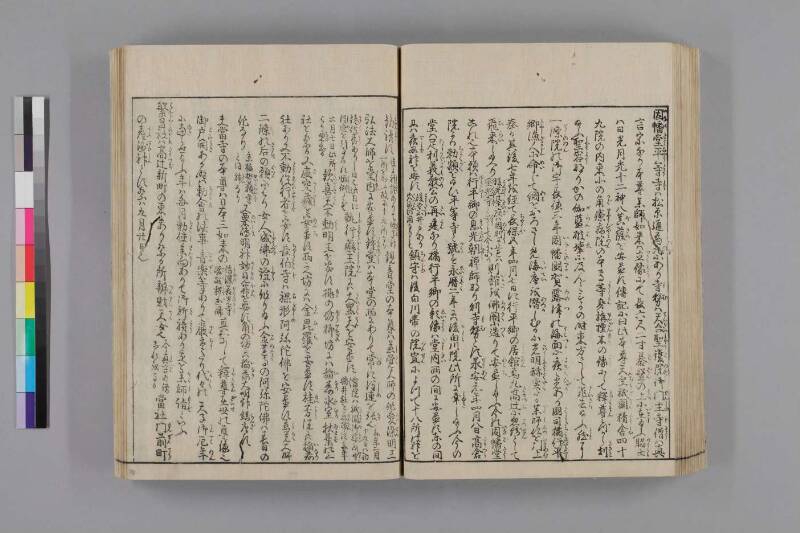
翻刻
因幡堂平等寺は松原通烏丸にあり寺務は天台聖護院御門主寺僧は眞
言宗なり本尊薬師如来は立像にて長六尺二寸碁盤の上に在給ふ脇士
は日光月光十二神八菩薩を安置す傳記に曰此本尊天竺祇園精舎四十
九院の内東北の角療病院の本尊等身栴檀木の像にして釋尊みづから刻
給ふ聖容なりかの伽藍破壊に及んとするの時東方さして飛去給ふ然に
一條院の御宇長徳三年因幡国賀露津の海面に夜々光あり国司桶行平
郷漁人に命じて綱をおろさしめ海底を潜しむるに光明赫■たる薬師仏を引上
奉る其後七年を經て長保五年四月七日に行平卿の居館烏丸髙辻に忽然として
飛来し給へり
後光臺座は因州に止れは
座光寺と号して今にあり
則舘を佛閣に造りて安置し給ふ今の因幡堂
これ也本願は行平卿の息光朝禅師なり則寺務とす承安元年四月八日髙倉
院より勅額を給ひ平等寺と號す永暦二年には後白川院此所に幸し給ふ今の
堂は足利義教公の再建なり橘行平卿の影像は堂内西の間に安置す東の間
には夜叉神を安す
後堂に井戸あり
火災の用なりとそ
鎮守は後白川帝の院宣によつて十八所の神を
勧請す
後に神詫ありて蛭子神
一所を加ふ故に十九所なり
観音堂の本尊は慈覚大師の作愛染明王
弘法大師を堂内に安置す鐘堂は本堂の西にありて常に注連を張也
毎年二月
十九日は初
鐘供養ありし日也此日に
注連を引事これ恒例とぞ
御執行藥王院には大黒天を安置す
當院は祇園院は祇園御旅所少
將井社を兼帯す毎年
六月七日此所
り児出る
歓喜天不動明王を安す桃の坊柳坊には稲荷氷室秋葉の三
社をも祭る又虚空藏を安置す西之坊には金毘羅を安置す桂芳院には稲荷
社あり又不動役行者を安す長伯寺は裸形阿弥陀佛を安置す慈覚大師
二條の后の願により女人成佛の證に作り給ふ金蓮寺の阿弥陀佛は春日の
作なり
京極誓願寺
と同体なり
又粟嶋明神妙見■を安す角の坊には稲荷大明神鎮座す
夫當寺の本尊は日本三如来の
信濃善光寺
嵯峨釋迦仏
其一にして釋尊在世の尊像也
御戸開ある時は勅會の法事音樂寺ありて厳重たり代々の天子御厄年
に当らせ給ふ年は毎月勅使参向ありて御祈祷あり是を薬師詣といふ
繁昌社は高辻新町の東にあり祭る所辨財天女也
今真言の僧
これを守る
當社門前町
の産沙神とす祭は九月廿日也
現代語訳
**因幡堂(平等寺)**
因幡堂平等寺は松原通烏丸にある。寺務は天台宗聖護院御門主が管轄し、寺僧は真言宗である。本尊の薬師如来は立像で、高さ六尺二寸(約188cm)、碁盤の上に安置されている。脇侍として日光菩薩・月光菩薩・十二神将・八菩薩を安置している。
伝記によれば、この本尊はインド(天竺)の祇園精舎四十九院のうち、東北の角にある療病院の本尊であり、釈尊(お釈迦様)自らが彫刻された、等身大の栴檀木の像であるという。かの伽藍が破壊されそうになった時、東の方に向かって飛び去られた。
その後、一条天皇の御代、長徳三年(997年)に、因幡国(現在の鳥取県)賀露津の海上に夜ごと光が現れた。国司の橘行平が漁師に命じて網を下ろし、海底を探らせると、光明が赫々と輝く薬師仏を引き上げ奉った。それから七年が経ち、長保五年(1003年)四月七日に、行平卿の居館があった烏丸高辻に忽然として飛来された。
> 後光(光背)と台座は因州(因幡国)に留まったため、「座光寺」と号して今も存在している。
行平卿はその館を仏閣に造り替えて安置された。現在の因幡堂はこれである。本願(開基)は行平卿の息子、光朝禅師であり、そのまま寺務を担った。承安元年(1171年)四月八日に高倉院より勅額を賜り、「平等寺」と号するようになった。永暦二年(1161年)には後白河院がこの地に行幸された。現在の堂は足利義教公の再建によるものである。橘行平卿の影像は堂内西の間に安置され、東の間には夜叉神が安置されている。
> 後堂に井戸があり、火災の際に用いるためのものだという。
鎮守神は、後白河天皇の院宣によって十八所の神を勧請した。
> 後に神託があり、蛭子神(えびす神)一柱を加えたため、十九所となっている。
観音堂の本尊は慈覚大師(円仁)の作で、堂内には愛染明王・弘法大師(空海)を安置する。鐘堂は本堂の西にあり、常に注連縄を張っている。
> 毎年二月十九日は初鐘供養が行われた日であり、この日に注連縄を引き渡すことが恒例となっている。
御執行(寺の運営を担う役職)の薬王院には大黒天を安置する。
> 当院は祇園院であり、祇園御旅所・少将井社を兼帯している。毎年六月七日にはこの所から稚児が出発する。
歓喜天・不動明王を安置する。桃の坊・柳坊には稲荷・氷室・秋葉の三社も祀る。また虚空蔵菩薩を安置する。西之坊には金毘羅を安置する。桂芳院には稲荷社があり、また不動明王・役行者を安置する。長伯寺には裸形阿弥陀仏を安置する。これは慈覚大師が二条の后の願いにより、女人成仏の証として作られたものである。金蓮寺の阿弥陀仏は春日仏師の作である。
> 京極誓願寺の本尊と同体(同じ由緒・形式)であるという。
また粟嶋明神・妙見(菩薩)を安置する。角の坊には稲荷大明神が鎮座する。
当寺の本尊は日本三如来のうちの一つであり(他の二つは信濃善光寺の本尊・嵯峨の釈迦仏)、釈尊在世の時代に作られた尊像である。御戸開(ご開帳)の時には、勅会の法事・音楽・法要があり、厳かに執り行われる。歴代の天皇が御厄年にあたる年は、毎月勅使が参向して御祈祷が行われる。これを「薬師詣」という。
---
**繁昌社**
繁昌社は高辻新町の東にある。祭神は弁財天女(弁財天)である。
> 現在は真言宗の僧がこれを守っている。当社は門前町の産土神(氏神)とされている。祭礼は九月二十日である。
英語訳
**Inabadō (Byōdōji Temple)**
Inabadō Byōdōji Temple is located on Matsubara-dōri Karasuma. Its temple administration falls under the jurisdiction of the Tendai sect's Shōgoin monzeki (princely abbot), while the resident monks follow the Shingon sect. The principal image, a standing statue of Yakushi Nyorai (Bhaisajyaguru, the Medicine Buddha), stands six shaku and two sun tall (approximately 188 cm) and is enshrined upon a go-board shaped pedestal. As attendant figures, the temple houses Nikkō Bosatsu (Suryaprabha), Gakkō Bosatsu (Candraprabha), the Twelve Divine Generals, and Eight Bodhisattvas.
According to temple records, this principal image was originally the honzon of the Ryōbyōin (Hospital Temple), located at the northeast corner of the forty-nine sub-temples within Jetavana Monastery (Gion Shōja) in India. It is an image carved personally by Śākyamuni Buddha himself from sandalwood, made to his own likeness. When the monastery was on the verge of destruction, the image flew eastward.
Subsequently, in the third year of Chōtoku (997 CE), during the reign of Emperor Ichijō, strange lights appeared nightly over the sea at Karotsu Bay in Inaba Province (present-day Tottori Prefecture). The provincial governor, Tachibana no Yukihira, ordered fishermen to lower their nets and search the sea floor, whereupon they retrieved a brilliantly glowing statue of Yakushi Butsu. Seven years later, on the seventh day of the fourth month of Chōhō 5 (1003 CE), the statue suddenly flew to and alighted at Lord Yukihira's residence at Karasuma Takatsujii.
> The nimbus (halo) and pedestal remained behind in Inaba Province, where a temple called Zakōji was established and still exists today.
Lord Yukihira converted his residence into a Buddhist hall and enshrined the statue there. This is the origin of the present Inabadō. The founding patron was Lord Yukihira's son, the Zen master Kōchō, who also took charge of the temple's administration. On the eighth day of the fourth month of Jōan 1 (1171 CE), the temple received an imperial tablet from Retired Emperor Takakura and was given the name "Byōdōji." In Eiryaku 2 (1161 CE), Retired Emperor Go-Shirakawa visited this site. The present hall was rebuilt by Ashikaga Yoshinori. A portrait image of Lord Tachibana no Yukihira is enshrined in the western chamber of the main hall, while a Yaksha deity is enshrined in the eastern chamber.
> There is a well in the rear hall, kept for use in the event of fire.
The tutelary deities of the temple were invited (kanjō) from eighteen shrines by imperial edict of Retired Emperor Go-Shirakawa.
> Later, a divine oracle was received, and the deity Hiruko (Ebisu) was added, bringing the total to nineteen shrines.
The principal image of the Kannon Hall was made by the Great Master Jikaku (Ennin); within the hall are also enshrined Aizen Myōō (Rāgarāja) and the Great Master Kōbō (Kūkai). The bell tower is located to the west of the main hall and always has sacred straw ropes (shimenawa) stretched across it.
> Every year on the nineteenth day of the second month marks the anniversary of the first bell offering ceremony. It is a longstanding custom to stretch the shimenawa on this day.
The Yakuōin sub-temple, which manages the temple's affairs, enshrines Daikokuten.
> This sub-temple, as the Gion-in, has joint administration of the Gion Otabisho (temporary resting place for the Gion Festival procession) and the Shōshōi Shrine. Every year on the seventh day of the sixth month, festival children (chigo) depart from this location.
Kangiten (Vinayaka) and Fudō Myōō (Acala) are enshrined here. At the Momo-no-Bō and Yanagi-Bō sub-temples, three shrines—Inari, Himuro, and Akiba—are also venerated. Kokuzo Bosatsu (Akasagarbha) is also enshrined. The Nishi-no-Bō sub-temple enshrines Konpira. Keihōin has an Inari shrine and also enshrines Fudō Myōō and En-no-Gyōja. Chōhakuji Temple enshrines a naked-form Amida Butsu, created by the Great Master Jikaku at the wish of the Empress of Nijō as a testament to the possibility of women's attaining Buddhahood. The Amida Butsu of Kinrenji Temple is the work of the Kasuga sculptor.
> This image is said to be of the same type as the principal image of Kyogoku Seigani Temple.
Awashima Myōjin and Myōken (Bosatsu) are also enshrined here. At the corner sub-temple (Kado-no-Bō), Inari Daimyōjin is enshrined.
The principal image of this temple is one of the Three Tathāgatas of Japan (the other two being the principal image of Zenkōji Temple in Shinano Province and the Śākyamuni Buddha of Saga), and is a sacred image created during the lifetime of Śākyamuni Buddha himself. During the periodic unveilings (御戸開, go-tobiraki) of the image, solemn imperial ceremonies, religious services, and sacred music performances are held. In years when reigning emperors reach a traditional unlucky age (yakudoshi), imperial envoys visit every month to offer prayers. This practice is called "Yakushi-māri" (Yakushi pilgrimage).
---
**Hanjō Shrine**
Hanjō Shrine is located to the east of Takatsujii Shinmachi. The enshrined deity is Benzaiten (Sarasvatī, the goddess of fortune and arts).
> Currently, a Shingon Buddhist monk serves as its caretaker. The shrine serves as the tutelary deity (ubusunagami) of the surrounding temple gate town (monzenmachi). The annual festival is held on the twentieth day of the ninth month.