翻刻
新住吉社は醒井通髙辻角にある祭所摂州住吉明神也俊成卿勧請し給ふなりとぞ
荒神社は醒井髙辻の北にあり文禄年中摂州勝尾山より勧請す
近衛川原清荒神
最初の地なり
化粧水は西洞院四條の南にあり
いにしへ此所に小野小野小別荘ありし也これより三間斗
北に四條通人家の下を西へ流れ西洞院川へ落る溝川あり
藍染川といふ小野小町にこゝろをかけし人本意をとけす此川に
落入て死せしと也故に婚礼の轡入此橋を通る事を忌
小松内府重盛別業は室町四條の南西側にあり
一説には大納言公任卿の旧跡ともいふ髙樓
あり近年滅す清水今にあり
杦恵比須社は猪熊通松原の北にあり祭る所蛭子神也
當社の什物に親鸞聖人自筆の九字の
名号あり十月廿日にこれを出す
天道社は五條坊門猪熊の北にあり祭所日月の神なり
太刀懸松
四條猪熊のの西新町人家の裏にあり古は傳教大師の間基とし給ふ天台の伽藍
なり紫雲山金寶寺と号す元暦元年の春源義經此寺に宿し給ひ■の
の■僧より授りし太刀を同■の松に懸給ふより名とす五十七代の止住道珍僧都親鸞
聖人の弟子と成堂舎は應仁の兵火に焼亡し其後寺を西六条御堂に遷て金寶寺と号す
石神社は石神通三条の南にあり
祭所豊石牅命奇石窓命也古は此地中山忠親卿の
亭なり故に中山社と称す
更雀寺は四條通大宮の西にある浄土宗にして本尊阿弥陀仏は春日作也中將賢方朝臣
勅をうけて哥枕の為に吾妻に趣き陸奥に於て卒す其霊雀となつて森に棲むと住
主観智法印の夢に見る故に雀森とも称す
此地旧は大内裏の勧学院
の地なりともいふ
実方塔
寺内
に有
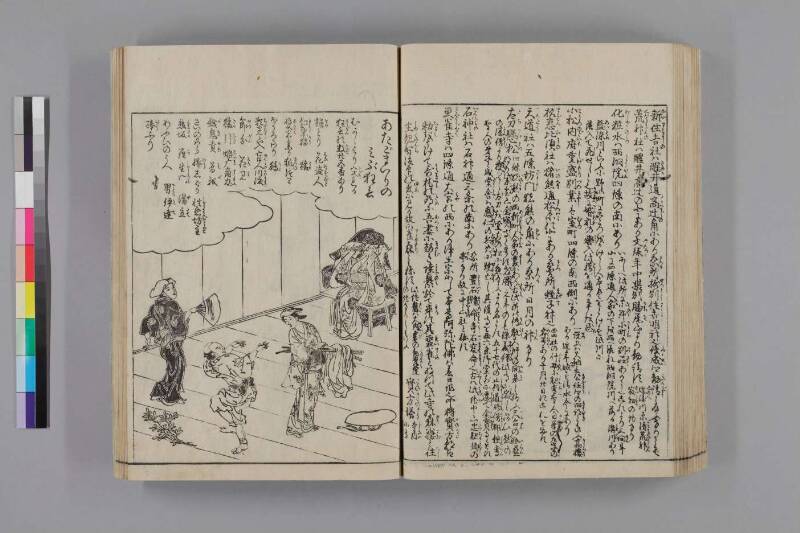
あたごまいりの
みぶ狂言
むかしより定れる
狂言の数廿五番あり
桶とり 花盗人
紅葉狩 猿
愛宕祭り 狐つり
ほうろくわり 鵺
頼光山入 盲人川渡
節分 花見
猿引 焔磨角力
餓鬼責 曽我
さいのかはら 棒しばり 性悪坊主
熊坂 羅生門 湯立
あふひのうへ 男伊達
棒ふり
現代語訳
**新住吉社**
醒井通と高辻の角にある。摂津国の住吉明神を祭る社であり、藤原俊成卿が勧請されたと伝わる。
**荒神社**
醒井と高辻の北にある。文禄年間(1592〜1596)に摂津国の勝尾山より勧請された。
近衛川原の清荒神の最初の地である。
**化粧水**
西洞院四条の南にある。
昔、この場所に小野小町の小別荘があったという。ここより三間ほど北に、四条通りの人家の下を西へ流れ、西洞院川へ落ちる溝川がある。これを「藍染川」という。小野小町に思いを寄せた人が、その思いを遂げられずにこの川に身を投じて死んだと伝わる。それゆえ、婚礼の轡入れ(嫁入り行列)の際には、この橋を通ることを忌む習わしがある。
**小松内府重盛の別業(別荘)**
室町四条の南西側にある。
一説には、大納言藤原公任卿の旧跡ともいわれる。かつて高楼があったが、近年取り壊された。清水は今も残っている。
**杉恵比須社**
猪熊通松原の北にある。蛭子神を祭る。
当社の什物(宝物)に、親鸞聖人自筆の九字の名号がある。十月二十日にこれを公開する。
**天道社**
五条坊門・猪熊の北にある。日月の神を祭る。
**太刀懸松**
四条・猪熊の西の新町の人家の裏にある。古くは伝教大師(最澄)が間基(草創)とされた天台宗の伽藍であり、紫雲山金宝寺と号した。元暦元年(1184)の春、源義経がこの寺に宿泊され、(某)の僧から授かった太刀を同(所)の松に懸けたことがその名の由来である。五十七代の住持・道珍僧都は親鸞聖人の弟子となった。堂舎は応仁の乱の兵火に焼失し、その後、寺を西六条御堂に移して金宝寺と号した。
**石神社**
石神通三条の南にある。
豊石牅命(とよいわまどのみこと)・奇石窓命(くしいわまどのみこと)を祭る。古くはこの地は中山忠親卿の邸宅であった。そのため「中山社」とも称された。
**更雀寺(さらすずめでら)**
四条通大宮の西にある浄土宗の寺であり、本尊の阿弥陀仏は春日仏師の作である。中将・藤原実方朝臣が勅命を受けて歌枕の調査のために東国へ赴き、陸奥にて没した。その霊が雀となって森に棲むと、住持・観智法印の夢に現れた。それゆえ「雀森」とも称される。
この地は、もとは大内裏の勧学院の跡地ともいわれる。
実方の塔 → 寺内に有り
---
**愛宕参りの壬生狂言**
昔より定まった狂言の演目は二十五番ある。
桶取り 花盗人
紅葉狩 猿
愛宕祭り 狐つり
ほうろく割り 鵺
頼光山入り 盲人川渡
節分 花見
猿引き 焔魔角力(えんまずもう)
餓鬼責め 曽我
さいの河原 棒しばり 性悪坊主
熊坂 羅生門 湯立て
葵の上 男伊達
棒ふり
英語訳
**Shin-Sumiyoshi Shrine**
Located at the corner of Samegai-dōri and Takatsujī. It enshrines the deity Sumiyoshi Myōjin from Settsu Province (modern Osaka), and is said to have been established at the invitation of Lord Fujiwara no Shunzei.
**Kōjin Shrine**
Located north of Samegai and Takatsujī. It was established during the Bunroku era (1592–1596) by inviting the deity from Katsuo-yama in Settsu Province.
This is said to be the original site of the Kiyokōjin of Konoe Kawara.
**Kesho-mizu (Cosmetic Water)**
Located south of Nishitōin and Shijō.
In ancient times, it is said that Ono no Komachi had a small villa at this location. About three ken (roughly 5.5 meters) to the north, there is a drainage stream that flows westward beneath the houses along Shijō-dōri and empties into the Nishitōin River. This is called the "Aisomegawa" (Indigo-dyeing River). It is said that a man who had fallen in love with Ono no Komachi, unable to fulfill his desire, threw himself into this river and drowned. For this reason, wedding processions avoid crossing this bridge.
**The Villa of Komatsu no Naifu Shigemori**
Located on the southwest side of Muromachi and Shijō.
One account holds that this was also the former site of the estate of Grand Counselor Fujiwara no Kinto. There was once a tall tower here, which was demolished in recent years. The spring water (shimizu) still remains.
**Sugi Ebisu Shrine**
Located north of Inokuma-dōri and Matsubara. It enshrines Hiruko no Kami (Ebisu).
Among the shrine's treasures is a nine-character nenbutsu inscription in the hand of Saint Shinran. This is displayed on the twentieth day of the tenth month.
**Tendō Shrine**
Located north of Gojō-bōmon and Inokuma. It enshrines the deities of the sun and moon.
**The Tachi-kake Matsu (Sword-hanging Pine)**
Located behind residences at Shijō, Inokuma, west of Shinmachi. In ancient times, this was the founding site of a Tendai Buddhist temple established by Dengyō Daishi (Saichō), called Shiunzan Konpōji. In the spring of Genryaku 1 (1184), Minamoto no Yoshitsune lodged at this temple and hung a sword—received from a certain monk—on the pine tree here, giving rise to the name. The fifty-seventh abbot, Monk Dōchin, became a disciple of Saint Shinran. The temple buildings were destroyed in the fires of the Ōnin War, after which the temple was relocated to the Nishi Rokujō御堂 (御堂, mido/hall) and renamed Konpōji.
**Ishigami Shrine**
Located south of Ishigami-dōri and Sanjō.
It enshrines Toyoiwamado no Mikoto and Kushiiwamado no Mikoto. In ancient times, this site was the residence of Lord Nakayama Tadachika, and it is therefore also known as "Nakayama Shrine."
**Sarasuzume-dera (Temple of the Sparrows)**
Located west of Shijō-dōri and Ōmiya, this is a temple of the Pure Land (Jōdo) sect, whose principal image—an Amida Buddha—is a work of the Kasuga school of Buddhist sculptors. It is said that Chūjō Fujiwara no Sanekata, having received an imperial command to travel to the eastern provinces to research utamakura (poetic place-names), died in Mutsu Province (modern Tōhoku). His spirit, transformed into a sparrow, came to dwell in the forest, as seen in a dream by the temple's head priest, Kanchi Hōin. For this reason, it is also called "Suzume-mori" (Sparrow Grove).
It is also said that this site was formerly the location of the Kangakuin of the Greater Imperial Palace.
Sanekata's Stupa → Located within the temple grounds.
---
**The Mibu Kyōgen Performed for the Atago Pilgrimage**
There are twenty-five traditional kyōgen programs that have been set since ancient times:
Oketori (Bucket Taking) Hana Nusubito (Flower Thief)
Momijigari (Maple Viewing) Saru (Monkey)
Atago Matsuri (Atago Festival) Kitsune-tsuri (Fox Fishing)
Hōroku-wari (Breaking the Clay Pan) Nue (Chimera)
Raikō Yama-iri (Raikō Enters the Mountain) Mōjin Kawawatari (Blind Man Crossing the River)
Setsubun (Bean-throwing Festival) Hanami (Flower Viewing)
Saruhiki (Monkey Performance) Enma Zumō (Wrestling with Emma)
Gaki Seme (Torment of the Hungry Ghosts) Soga
Sainokawara (The Riverbed of Sai) Bō Shibari (Tied to a Pole) Shōwaku Bōzu (Wicked Monk)
Kumosaka Rashōmon Yudate (Hot Water Ceremony)
Aoi no Ue (Lady Aoi) Otoko-date (Chivalrous Man)
Bō-furi (Pole Swinging)