翻刻
壬生の大念仏は中興の
開山圓覚上人よりはじ
まり毎年三月十四日
十日十夜本堂において
修行す此会の中
種々の狂言をなす
事愚癡蒙昧
の輩勝縁を
結はじめて菩
提の道に入しめん
がための方便
なるべし
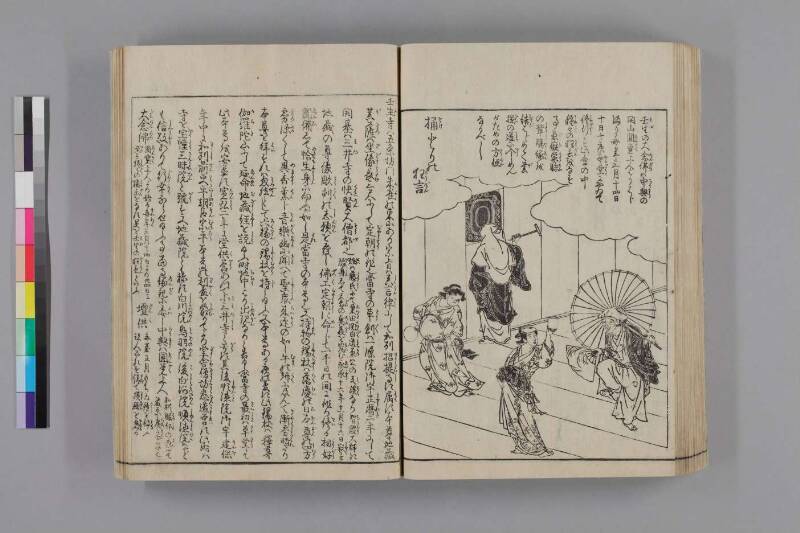
桶とりの
狂言
壬生寺は五条坊門朱雀の東にある宗旨真言律にして和州招提寺に属す本尊地藏
菩薩は座像長三尺にして定朝の作也當寺の草創は一條院御宇正暦二年にして
開基は三井寺の快賢大僧都也
姓は藤氏にて粟田関白道兼公の支族なり智證大師に
随身して天台の奥義を究む永承十六年十一月十六日寂す
地蔵の尊像彫刻の志願を發し佛工定朝に命じて一千日の間に作り終る相好
圓備して恰生身に向ふが如し是當寺の本尊也又持物の錫杖は落慶の日本尊の四方
霧深くして異香薫じ音樂幽に聞へて聖衆来迎の如し午の刻に及んて漸■晴たり
本尊を拝すれは忽然として六■の錫杖を持し給ふ又本尊ある夜の夢に此錫杖は釋尊
伽羅陀山にして延命地藏経を説給ふ時地中より出現なりと告給ふま与當寺の最初は草堂にて
此本尊を安置す寛弘二年に堂供養あつて小三井寺と号す其後順徳院御宇建保
年中に和州前吏平朝臣宗平本尊の利益を蒙りてより堂舎僧坊惣造営す此時は
寺を寶幢三昧院と号す又地蔵院とも称す白川院鳥羽院後白河院順徳院なども信敬ありて行幸ならせ給ふ事當寺縁記に委し中興は圓覚上人等
和州服部の産にて
藤原広元が子也
大念佛
圓覚上人より始る毎年三月十四日より廿四日に
至る種々の猿楽をなす是を壬生の狂言といふ
壇供
毎歳正月もちぬ鏡を備ふ
諸人これを請て横難を免る
現代語訳
**壬生の大念仏**
壬生の大念仏は、中興の開山である円覚上人より始まり、毎年三月十四日から十日十夜にわたって本堂において修行される。この法会の中で種々の狂言が演じられる。これは、愚かで無知な人々に善縁を結ばせ、菩提(悟り)の道へと導くための方便(教化の手段)であろう。
【桶取りの狂言 (挿絵)】
---
**壬生寺**
壬生寺は五条坊門朱雀の東にある。宗旨は真言律宗であり、大和国の唐招提寺に属する。本尊の地蔵菩薩は座像で、高さ三尺、定朝の作である。
当寺の草創は一条天皇の御代、正暦二年(991)であり、開基は三井寺の快賢大僧都である。快賢は藤原氏の出身で、粟田関白道兼公の支族にあたる。智証大師に随身して天台の奥義を極めた。永承十六年(※)十一月十六日に遷化した。
快賢は地蔵の尊像を彫刻することを願い、仏工・定朝に命じて千日の間に作り上げた。その相好(尊容)は完備しており、まるで生身の仏に向かうようであった。これが当寺の本尊である。
また、(本尊が手に持つ)錫杖については、落慶(堂の完成供養)の日、本尊の四方に霧が深く立ちこめ、異香が漂い、音楽がかすかに聞こえて、聖衆来迎のような様子であった。午の刻(正午頃)になってようやく霧が晴れ、本尊を拝すると、忽然として六環の錫杖を持しておられた。また、ある夜の夢に本尊が現れ、「この錫杖は、釈尊が伽羅陀山において延命地蔵経を説かれた時に地中より出現したものである」とお告げになったという。
当寺の最初は草堂であり、この本尊を安置していた。寛弘二年(1005)に堂の供養が行われ、「小三井寺」と号した。その後、順徳天皇の御代、建保年間(1213〜1219)に、大和国の前司・平朝臣宗平が本尊の利益(ご利益)を蒙ったことにより、堂舎・僧坊をすべて造営した。この時、寺を「宝幢三昧院」と号した。また「地蔵院」とも称した。白河院・鳥羽院・後白河院・順徳院なども信仰・敬愛されて行幸になられたことは、当寺の縁起に詳しく記されている。
中興の祖は円覚上人であり、大和国服部の出身で、藤原広元の子である。
---
**大念仏**
円覚上人より始まり、毎年三月十四日から二十四日に至るまで、種々の猿楽を演じる。これを「壬生の狂言」という。
---
**壇供(だんく)**
毎年正月に鏡餅を供える。諸人はこれを受けて、横難(思いがけない災難)を免れるという。
英語訳
**The Great Nenbutsu of Mibu**
The Great Nenbutsu (Dainenbutsu) of Mibu was initiated by the reviving founder, the Venerable Engaku, and is performed each year for ten days and ten nights beginning on the fourteenth day of the third month, in the main hall. During this religious gathering, various kyōgen plays are performed. This is likely a skillful means (hōben) intended to draw those who are foolish and unenlightened into forming a good karmic connection and setting them upon the path to enlightenment (bodhi).
【Illustration: The Kyōgen of "Oketori" (Bucket-taking)】
---
**Mibu-dera Temple**
Mibu-dera is located to the east of Gojō-bōmon and Suzaku. It belongs to the Shingon Ritsu sect and is affiliated with Tōshōdai-ji in Yamato Province (modern Nara). The principal image is a seated statue of Kṣitigarbha (Jizō Bosatsu), three shaku in height, and is a work of the master Buddhist sculptor Jōchō.
The temple was founded in the second year of Shōryaku (991), during the reign of Emperor Ichijō, and its founding patron was the Great Prelate Kaiken of Mii-dera (Onjō-ji). Kaiken was of the Fujiwara clan, a collateral relative of the Awata Regent, Fujiwara no Michikane. He accompanied the Great Teacher Chishō (Enchin) and mastered the innermost teachings of the Tendai school. He passed away on the sixteenth day of the eleventh month of the sixteenth year of Eishō (※).
Kaiken vowed to have a venerable image of Jizō sculpted, and commissioned the Buddhist sculptor Jōchō, who completed the work over the course of one thousand days. The statue's features (sōgō) are perfectly formed, as if one were in the presence of the living Buddha himself. This is the principal image of the temple.
Regarding the staff (shakujō) held by the principal image: on the day of the dedication ceremony (rakkei), a deep mist surrounded the four sides of the principal image, a wondrous fragrance filled the air, music was faintly heard, and it appeared as though the sacred host had come to welcome the departed (shōjū raigō). Around the hour of the Horse (noon), the mist gradually cleared, and when the principal image was venerated, it was suddenly found to be holding a six-ringed staff. Furthermore, on a certain night, the principal image appeared in a dream and announced: "This staff emerged from the ground when Śākyamuni Buddha was preaching the Enmei Jizō-kyō (Sutra of Life-prolonging Jizō) on Mount Gāyā (Garaida-zan)."
In its earliest days, the temple consisted of a simple thatched hall in which this principal image was enshrined. In the second year of Kankō (1005), a formal hall dedication was held and the temple was named "Ko-Mii-dera" (Lesser Mii-dera). Later, during the Kenpō era (1213–1219) in the reign of Emperor Juntoku, a man called Taira no Ason Munemasa, formerly an official of Yamato Province, received the miraculous blessings of the principal image, and thereafter rebuilt all the halls and monks' quarters. At this time the temple was renamed "Hōdō Zanmai-in." It was also called "Jizō-in." The Retired Emperors Shirakawa, Toba, Go-Shirakawa, and Juntoku also held the temple in deep reverence and paid it imperial visits, as is recorded in detail in the temple's founding records.
The reviver of the temple was the Venerable Engaku, a native of Hattori in Yamato Province and a son of Fujiwara no Hirotsune (Hiromoto).
---
**The Great Nenbutsu**
Beginning with the Venerable Engaku, various sarugaku (precursor performances to nō theater) are performed each year from the fourteenth to the twenty-fourth day of the third month. These are called the "Mibu Kyōgen."
---
**Danku (Altar Offerings)**
Each year during the New Year, mochi rice cakes (mirror cakes, kagami-mochi) are offered. People receive these offerings and are thereby protected from unexpected calamity (yokonan).