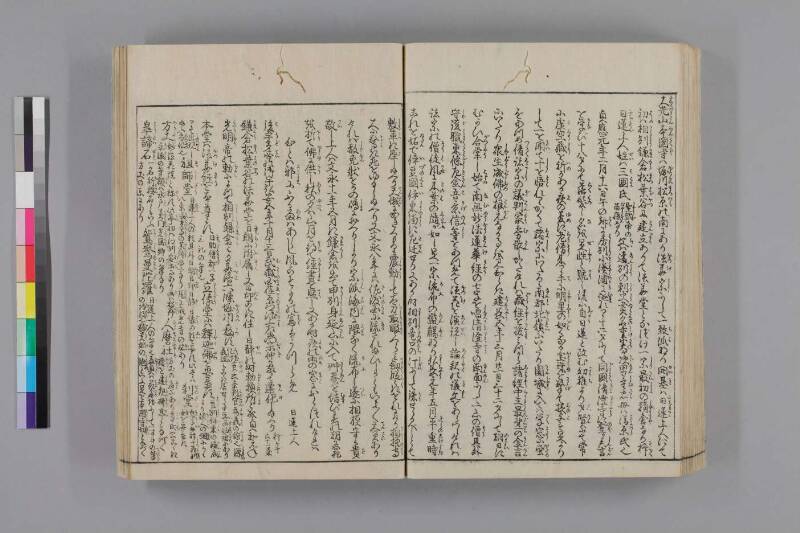
翻刻
大光山本圀寺は堀川松原の南にあり法華宗にして一致派なり開基は日蓮上人にて
初は相州鎌倉松葉谷に建立ありて法華堂となづけ一宗最初の精舎なり抑
日蓮上人姓は三国氏
聖武帝の
苗孫なり
父は遠州の剌史貫名重実が次男重忠母は清原氏也
貞應元年二月十六日午の刻に房州小湊浦に誕れり十二才にして同国清澄寺に登り真言
を学び十八才にて落髪し名を是性と号し後に自日蓮と改む幼稚より才賢にて常
に虚生藏を祈るある夜の夢に老僧来り手に明星の如くなる宝珠を擎(さゝげ)て授与す是より
して一を聞て十を悟れりかくて諸宗にわたり南都北嶺にいたり園城に入ては学窓に蛍
をあつめ倩(つら〳〵)諸宗の議判蒙霧散しかたけれは藏經を檢みづから諸經中王最第一の金言
にいたり衆生成佛の根元なる事を見ひらき建長五年三月廿一日三十二才にして朝日に
むかひ合掌し始て南無妙法蓮華経の七字を唱清澄寺の南面にして一山の僧其外
守護職東條左金吾景信等をあつめて法花を演説し論釈の議文をあらはしけれは
諸宗の僧徒風に木葉の隋が如し是一宗流布の濫觴ぬり弘長元年五月平重時
これを妬て伊豆国伊東海に左迁せり又ある時相州竜口の汀にして誅せらるべしとて
敷革に座し給へり天俄にかきくもり震動して太刀取眼くらみ剱段々にをれたり相模守
大に驚き死をゆるし給へり又文永八年には佐渡国に流され給ひしかともいよ〳〵転載あり
ければ赦免状をかの嶋におくりしより宗派海内に隈なく流布し遂に相模守も貴
敬し上人は文永十一年五月に鎌倉を出て甲州身延山に入て艸菴を結び春の朝に五花
を折て佛に供し秋の夕は三月を待て經書を照し又ある時夜の雨の窓におとつれは
心とは邪にふる雨はあらし風こそよるの客はうつらめ 日蓮上人
後宇多帝の御宇弘安五年十月十三日武蔵国荏原■池上左■宗仲の家にて遷化し給ふり給ふり
行年
六十一歳
鎌倉松葉谷の法華堂を日朗に附属し又日印こゝに住し日静の時勅願所と成貞和元年
光明帝の勅によつて相州鎌倉より華洛六条堀川に移す
此地古は六条判官為義の館也源
義経もこゝに居せし事平家物語にあり
本堂は法華經を本尊とす
日助僧都一字
三礼の筆也
立像堂には釈迦佛を安置す
豆州伊東の海底
より漁人の網にかゝ
りて出現
給ふ霊仏也
祖師堂
日蓮上人の影其外日朗日印日静日像の影を安す此堂は
八条戒光寺の薬師堂なり瓦に戒光寺の銘あり
刹堂
鬼子母神十羅刹那
女を安置す
方丈
妙法花院と称す此亭初は江州安土にあり画は狩野
永徳の筆額は水戸黄門光圀卿の筆なり
人麿社
方丈の■にあり尊氏公こゝに
樓を建観桺亭となづく
皐諦石
一名祈願石ともいふ
方丈の東にあり
鴛鴦曼陀羅
日蓮上人の筆也表具は花色地にして一寸斗の鴛鴦
の地紋也楊貴妃の袍といふ是を本圀寺切となづく
現代語訳
**大光山 本圀寺**
大光山本圀寺は、堀川松原の南にある。法華宗一致派の寺院である。開基は日蓮上人で、最初は相模国鎌倉の松葉谷に建立され、法華堂と名付けられた。これが一宗最初の精舎である。
そもそも日蓮上人の姓は三国氏といい、聖武天皇の御苗孫にあたる。父は遠江国の国司・貫名重実の次男・重忠、母は清原氏である。貞応元年(1222)2月16日の午の刻(正午頃)、房州(安房国)小湊浦にてお生まれになった。12歳にして同国の清澄寺に登り真言を学び、18歳にて落髪し、名を「是性」と号した。後に自ら「日蓮」と改めた。幼いころより才知に優れ、常に虚空蔵菩薩に祈りを捧げていた。ある夜の夢に老僧が現れ、手に明星のような宝珠を捧げて授けた。これより一を聞いて十を悟るようになった。かくして諸宗にわたり、南都(奈良)・北嶺(比叡山)に至り、園城寺(三井寺)に入っては学窓に蛍を集めるほど熱心に学び、つらつらと諸宗の議論を判じたが、霧が散るようには解決しがたかったため、蔵経を検して、みずから諸経の中の王にして最第一の金言に至り、衆生成仏の根元たることを見開いた。建長5年(1253)3月21日、32歳にして朝日に向かい合掌し、初めて「南無妙法蓮華経」の七字を唱えた。清澄寺の南面にて、一山の僧侶やその他の守護職・東条左金吾景信らを集めて法華を演説し、論釈の議文を著したところ、諸宗の僧徒は風に木の葉が随うごとく(帰依した)。これが一宗流布の始まりである。弘長元年(1261)5月、平重時がこれを妬んで、伊豆国伊東の海辺に左遷した。またある時、相模国竜口の汀にて誅せられようとして、敷革(むしろ)に座しておられたところ、空が俄かにかき曇り震動して、太刀を取る者の目がくらみ、剣が段々と折れた。相模守は大いに驚き、死を許し給うた。また文永8年(1271)には佐渡国に流されたが、いよいよ宗の転載(教えの広まり)があったため、赦免状を彼の島に送り、それより宗派は国中に隈なく流布した。ついに相模守も貴敬するに至った。上人は文永11年(1274)5月に鎌倉を出て、甲州身延山に入り草庵を結んだ。春の朝には五花を折って仏に供し、秋の夕べには三つの月を待ちながら経書を照らした。またある時、夜の雨が窓を訪れると、次のように詠んだ。
> 心とは邪(よこしま)にふる雨はあらし風こそ夜の客はうつらめ 日蓮上人
後宇多天皇の御代、弘安5年(1282)10月13日、武蔵国荏原の池上、左〔衛門〕宗仲の家にて遷化なさった。行年六十一歳。
鎌倉松葉谷の法華堂を日朗に付属し、また日印がここに住し、日静の時に勅願所となった。貞和元年(1345)、光明天皇の勅によって相模国鎌倉より京都六条堀川に移した。
> この地はかつては六条判官(源)為義の館であった。源義経もここに居したことが平家物語にある。
**本堂**:法華経を本尊とする。
> 日助僧都による一字三礼の筆である。
**立像堂**:釈迦仏を安置する。
> 豆州(伊豆国)伊東の海底より、漁人の網にかかって出現なさった霊仏である。
**祖師堂**:日蓮上人の影像、その他日朗・日印・日静・日像の影像を安置する。この堂はもともと八条戒光寺の薬師堂であった。瓦に戒光寺の銘がある。
**刹堂**:鬼子母神・十羅刹女を安置する。
**方丈**:妙法花院と称する。この亭は最初は江州(近江国)安土にあった。画は狩野永徳の筆、額は水戸黄門・光圀卿の筆である。
**人麿社**:方丈の〔傍〕にある。尊氏公がここに楼を建て、観柳亭と名付けた。
**皐諦石**:一名・祈願石ともいう。方丈の東にある。
**鴛鴦曼陀羅**:日蓮上人の筆である。表具は花色地にして、一寸ばかりの鴛鴦の地紋である。楊貴妃の袍(ほう)というものであり、これを「本圀寺切」と名付ける。
英語訳
**Daikōzan Honkokuji Temple**
Daikōzan Honkokuji Temple is located to the south of Horikawa Matsubara. It belongs to the Nichiren sect, specifically the Itchi-ha (Unified School). The temple was founded by the Venerable Nichiren, initially built at Matsugayatsu in Kamakura, Sagami Province, and named Hokkedō (Lotus Sutra Hall). This was the first monastery of the Nichiren sect.
Venerable Nichiren's family name was Mikuni, and he was a distant descendant of Emperor Shōmu. His father was Shigetada, the second son of Nuki-no Shigezane, the governor of Tōtōmi Province, and his mother was of the Kiyohara clan. He was born on the 16th day of the 2nd month of Jōō 1 (1222), at the Hour of the Horse (around noon), at Kominato-ura in Bōshū (Awa Province).
At age 12, he climbed to Kiyosumidera Temple in the same province to study Shingon Buddhism. At 18, he shaved his head and took the religious name "Zeshō," which he later changed to "Nichiren." From childhood he was exceptionally gifted, and he constantly prayed to Kokūzō Bosatsu (Ākāśagarbha Bodhisattva). One night, in a dream, an elderly monk appeared carrying a jewel as radiant as the morning star and presented it to him. From that point forward, he could understand ten things from hearing just one. He then traveled widely among various Buddhist schools, visiting Nanto (Nara) and Hokurei (Mount Hiei), and entering Onjōji Temple (Miidera), studying with the same fervor as one who gathers fireflies by the study window. Though he carefully judged the doctrines of the various schools, their arguments proved difficult to clear away like mist. He then searched the scriptures himself, arriving at the supreme golden teaching, the king among all sutras, and came to understand it as the fundamental source of sentient beings' attainment of Buddhahood.
On the 21st day of the 3rd month of Kenchō 5 (1253), at age 32, he faced the rising sun with palms pressed together and chanted for the first time the seven characters "Namu Myōhō Renge Kyō." At the southern face of Kiyosumidera, he gathered the temple's monks, as well as the provincial constable Tōjō Sakon'e Kagenaga and others, to preach the Lotus Sutra and present a written treatise on its doctrines. The monks of other sects followed like leaves in the wind. This was the beginning of the sect's propagation.
In the 5th month of Kōchō 1 (1261), Taira no Shigetoki, out of jealousy, had him exiled to the coast of Itō in Izu Province. At another time, at the shore of Tatsunokuchi in Sagami Province, he was about to be executed, seated upon a straw mat, when suddenly the sky darkened and the earth shook. The executioner's eyes were blinded, and the sword broke into pieces. The Governor of Sagami was greatly alarmed and spared his life. In Bun'ei 8 (1271), he was again exiled to Sado Province, but the spread of his teachings continued to grow. A pardon was sent to that island, and from then on the sect spread throughout the entire country without exception. Eventually, even the Governor of Sagami came to revere him.
In the 5th month of Bun'ei 11 (1274), the Venerable Nichiren left Kamakura and entered Mount Minobu in Kai Province, where he built a thatched hermitage. In spring mornings he would pick flowers to offer to the Buddha; on autumn evenings he would wait for the moonlight to illuminate his scriptures. And once, when night rain came knocking at his window, he composed this verse:
> *As for the heart— the rain falling aslant is a storm, and the wind is the guest of the night, shifting and uncertain.* — Venerable Nichiren
In the reign of Emperor Gouda, on the 13th day of the 10th month of Kōan 5 (1282), he passed away at the residence of Ikegami Saemon Munenaka in Ebara, Musashi Province. He was sixty-one years of age.
The Hokkedō at Matsugayatsu in Kamakura was bequeathed to Nichirō. Nichiin also resided here, and during the time of Nichijō, it became a prayer temple by imperial wish. In Jōwa 1 (1345), by imperial decree of Emperor Kōmyō, the temple was moved from Kamakura in Sagami Province to Rokujō Horikawa in the capital (Kyoto).
> This site was formerly the residence of Rokujō Hangan (Minamoto no) Tameyoshi. That Minamoto no Yoshitsune also resided here is recorded in The Tale of the Heike.
**Main Hall (Hondō):** The Lotus Sutra is enshrined as the principal object of worship.
> Written in the "one-character, three-prostrations" style by the Monk-Bishop Nicchō.
**Standing Image Hall (Ryūzōdō):** A standing image of Shakyamuni Buddha is enshrined.
> This is a sacred Buddha that miraculously appeared from the sea floor off Itō in Izu Province, caught in a fisherman's net.
**Patriarch's Hall (Soshidō):** Portrait images of Venerable Nichiren, as well as Nichirō, Nichiin, Nichijō, and Nicchō, are enshrined. This hall was originally the Yakushi Hall of Kaikōji Temple at Hachijō. The temple name "Kaikōji" is inscribed on the roof tiles.
**Setsu Hall (Satsudō):** Kishimojin (Hāritī) and the Ten Rākṣasī Daughters are enshrined.
**Abbot's Quarters (Hōjō):** Called Myōhōke-in. This pavilion was originally located in Azuchi in Ōmi Province. The paintings are by Kanō Eitoku, and the hanging placard was calligraphed by Mito Kōmon, Lord Mitsukuni.
**Hitomaro Shrine:** Located beside the Abbot's Quarters. Lord Takauji built a tower here, naming it the Kanryūtei (Pavilion for Viewing Willows).
**Sōtai Stone:** Also known as the Prayer Stone. Located to the east of the Abbot's Quarters.
**Oshidori Mandala (Mandala of Mandarin Ducks):** Painted by Venerable Nichiren. The mounting is on a floral-colored ground with a small mandarin duck pattern of about one sun (approx. 3 cm). This is called the "brocade robe of Yang Guifei," and it is designated the "Honkokuji-gire" (Honkokuji fabric/cut).