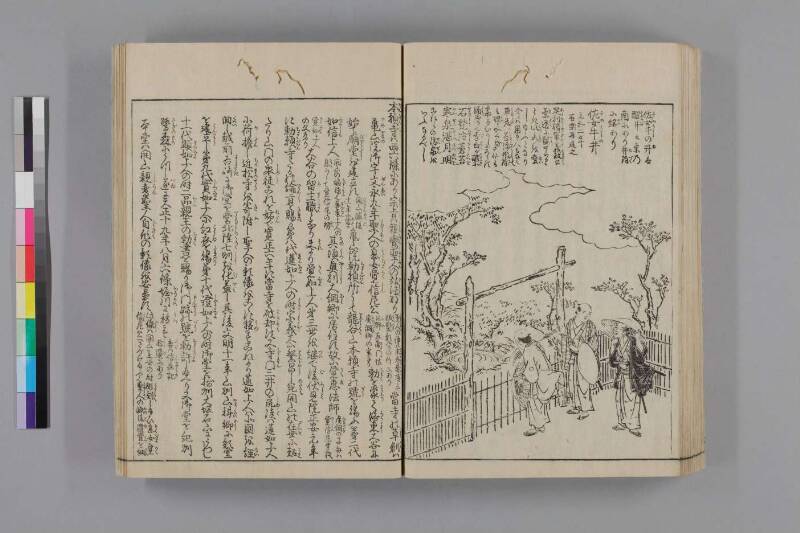
翻刻
佐女牛の井は
醒井五条の
南にあり井筒
に銘あり
佐女牛井
元和二年
石楽再建之
足利将軍義政公
茶道に寵せらるゝ
とき此水を愛
し給ふとなり
今は用る人もなくして
草茂の苔深く井筒
も埋みかくるされとも
泉はむかしにかはらず
涌出る也李白が諺に
石甃冷蒼苔
寒泉湛月清
これらの清泉を
いふなるべし
本願寺は西六條にあり宗旨は親鸞聖人の弘法なり
聖人の傳は末巻華頂山
植髪影堂の所にあり
當寺の草創は
亀山院御宇文永九年聖人の息女覚信尼公
日野左衛門佐
廣綱卿の室なり
勅を蒙て洛東大谷に
始て廟堂を建立す
開山滅後
十一年に當る
亀山院勅願所として龍谷山本願寺の號を賜ふ第二代
如信上人
開山の嫡孫也善鸞上人の
息にして覚信尼の甥
其頃奥州大綱郷に居住す故に覚惠法師
廣綱の子母は
覚信尼第三代
覚如上人
の父なり
大谷の留主職となり夫より覚如上人第三世を継て後伏見院正安元年
に勅願寺たるの綸旨を賜る第八代蓮如上人の時宗義大に繁昌し宛開山の在世に超
たり山門の衆徒これを始て寛正六年に當寺を破却す又寺門三井の衆徒は蓮如上人
に荷担し近松寺を寄附し聖人の影像をこゝに移すこれより蓮如上人は北国を經
回し越前吉崎に御堂を営北陸七州を化益し其後文明十一年山州山科郷に影室
を建立し第九代實如上人に紅衣を賜弟十代證如上人の時御堂を摂州大坂石山にうつし
十一代拳顕如上人の時二品親王の勅書を賜り御門跡の號を勅許し給へり又御堂を紀州
驚森にうつし遂に天正十九年八月六条堀川に移す
委は信長記
拾遺にあり
本堂は開山親鸞聖人自作の影像を安置す
此像は開山在世の時彫刻し給ひ息女覚
信尼公へさづけ給ふ也聖人の滅後遺骨を細
現代語訳
**佐女牛の井(さめうしのい)**
佐女牛の井は、醒井(さめがい)五条の南にある。井筒(いづつ)に銘文がある。
「佐女牛井 元和二年(1616年)、石楽がこれを再建する」
足利将軍義政公が茶道をご寵愛なさっていたとき、この水をたいそうお気に召されたという。今はこの水を使う人もなく、草が茂り苔が深く、井筒も埋もれ隠れてしまっているが、泉は昔と変わらず湧き出ている。李白の言葉に、
「石甃冷蒼苔(石畳は青苔に冷え)
寒泉湛月清(寒の泉は月影を湛えて清らかなり)」
とあるが、これはまさにこのような清らかな泉のことを言っているのであろう。
---
**本願寺**
本願寺は西六条にある。宗旨は親鸞聖人が広められた教えである。聖人の伝記は末巻、華頂山植髪影堂の項に記されている。
当寺の草創は、亀山院の御代、文永九年(1272年)、聖人の息女・覚信尼公(日野左衛門佐廣綱卿の室)が勅を賜り、洛東大谷に初めて廟堂を建立したことに始まる。これは開山(親鸞聖人)の滅後十一年にあたる。
亀山院より勅願所として「龍谷山本願寺」の号を賜った。
**第二代 如信上人**
開山(親鸞聖人)の嫡孫であり、善鸞上人の息子にして覚信尼の甥にあたる。その頃は奥州大綱郷に居住していた。ゆえに覚惠法師(廣綱の子で、母は覚信尼)が第三代覚如上人の父となり、大谷の留守職を務めた。
**第三代 覚如上人**
それより覚如上人が第三世を継ぎ、後伏見院の正安元年(1299年)に勅願寺たることの綸旨を賜った。
第八代・蓮如上人の時代に宗義が大いに栄え、まるで開山在世の頃を超えるほどであった。山門(延暦寺)の衆徒がこれを妬み、寛正六年(1465年)に当寺を破却した。また寺門(園城寺)三井の衆徒は蓮如上人に味方し、近松寺を寄附して聖人の影像をここに移した。これより蓮如上人は北国を巡り、越前吉崎に御堂を営み、北陸七州に教えを広め、その後文明十一年(1479年)に山城国山科郷に影室を建立した。
第九代・実如上人の時に紅衣を賜り、第十代・証如上人の時に御堂を摂州大坂石山に移し、第十一代・顕如上人の時に二品親王の勅書を賜り、御門跡の号を勅許された。また御堂を紀州鷺森に移し、遂に天正十九年(1591年)八月に六条堀川へ移転した(詳しくは『信長記拾遺』にある)。
本堂には開山・親鸞聖人自作の影像が安置されている。この像は開山が在世の時に彫刻され、息女・覚信尼公へお授けになったものである。聖人の滅後、遺骨を細かく……(次頁へ続く)
英語訳
**The Well of Sameushi (Sameushi no I)**
The Well of Sameushi is located to the south of Sameigai (Sameigai), Gojo. There is an inscription on the well curb:
"Sameushi Well — Rebuilt by Ishiraku in the second year of Genna (1616)."
It is said that when the Ashikaga shogun Yoshimasa was deeply devoted to the art of the tea ceremony, he was greatly fond of this water. Today, there is no one left to use it; grasses grow thick and moss runs deep, and the well curb itself is buried and hidden — yet the spring water flows up unchanged from ancient times. Li Bai's verses read:
*"The stone-paved well is cold with green moss,*
*The frigid spring is clear, reflecting the moon."*
These lines must surely be speaking of such pure springs as this one.
---
**Honganji Temple**
Honganji Temple is located in Nishi-Rokujō. Its doctrines are those propagated by the Holy Priest Shinran. The biography of the Holy Priest is recorded in the final volume, in the section on Kajōzan Uehatsukage-dō (the Hall of the Planted Hair).
The founding of this temple dates to the ninth year of Bun'ei (1272), during the reign of Emperor Kameyama, when the Holy Priest's daughter, the Reverend Nun Kakunshinni (wife of Hino Saemon-no-suke Hirotsunakyō), received an imperial order and first erected a memorial hall at Ōtani in the eastern part of Kyoto. This was eleven years after the death of the founder (Shinran).
Emperor Kameyama designated it an imperial prayer temple and bestowed upon it the name "Ryūkoku-zan Honganji."
**Second Generation: Nyoshin Shōnin**
He was the legitimate grandson of the founder (Shinran) — the son of Zennran Shōnin and nephew of Kakushinnni. At that time, he resided in Ōtsuna-gō in Ōshū (northern Japan). Therefore, the priest Kakue (son of Hirotsuna, whose mother was Kakushinni) became the father of the third-generation Kakunyo Shōnin, and served as the administrator in absentia at Ōtani.
**Third Generation: Kakunyo Shōnin**
Kakunyo Shōnin succeeded as the third generation, and in the first year of Shōan (1299), during the reign of retired Emperor Gofushimi, was granted an imperial decree confirming the temple as an imperial prayer temple.
During the time of the eighth-generation Rennyo Shōnin, the sect's teachings flourished greatly, to a degree that even surpassed the era when the founder was still alive. The monks of the mountain gate (Enryakuji) became jealous of this, and in the sixth year of Kansho (1465), they destroyed the temple. The monks of the temple gate (Onjōji/Miidera), however, sided with Rennyo Shōnin, donating the Chikamatsuji Temple and moving the Holy Priest's portrait image there.
From this point, Rennyo Shōnin traveled through the northern provinces, built a hall at Yoshizaki in Echizen, spread his teachings throughout the seven provinces of Hokuriku, and subsequently in the eleventh year of Bunmei (1479) built a portrait hall in Yamashina-gō, Yamashiro Province.
During the time of the ninth-generation Jitsunyo Shōnin, he was granted the red robe (kōe). During the tenth generation, Shōnyo Shōnin, the hall was moved to Ishiyama in Settsu Province (Osaka). During the eleventh-generation Kennyo Shōnin, an imperial document of the Second-Rank Prince was granted and the title of monzeki (gate of the imperial family) was imperially approved. The hall was then moved to Sagimori in Kii Province, and finally in the eighth month of the nineteenth year of Tenshō (1591) it was relocated to Rokujō-Horikawa.
(Further details are found in the *Nobunagaki Shūi*.)
In the main hall, a self-carved portrait image of the founder, Holy Priest Shinran, is enshrined. This image was carved by the founder during his lifetime and was entrusted to his daughter, the Reverend Nun Kakushinni. After the Holy Priest's passing, his remains were finely ground... (continues on the next page)