翻刻
抹して漆に和し彩を潤色せり故に骨同御影と称す座像にして長弐尺五寸餘也又本堂は大岩本
願寺のとき紫宸殿拝領より御堂造は紫宸殿の模形也堂前の髙塀は内裏に同し
南北の脇壇には前住大僧正其外歴代の画像を安す餘間には九字十字の名號
を安す寂如上人の筆也
毎年報恩講七昼夜の法會には
八幅の繪傳壇上にかくる
阿弥陀堂本尊阿弥陀佛は
立像長三尺餘にして春日の作なり脇檀には六高祖聖徳太子法然上人の畫影を
安す
集會所
法會執行の時
僧衆こゝに會す
轉輪蔵
一切経を蔵む額は
寂如上人の筆なり
撞鐘堂
𦾔此
鐘は
太泰広隆寺にありて少納言信西入道の館あり
由縁鐘銘は信長記拾遺に委し
下間氏にありこれ
より薬を出す
唐門
南の築地長辻にあり此の門はいにしへは豊國社にありしなり人物
走獣等の彫物荘厳花美にして希代の奇物なり
虎間
四方に虎
を画
浪間
天井に波を画南の方に車よせあり
聚楽亭よりこゝにうつす
對面所
大廣間ともいふ絵は長谷川了溪
の筆なり前に能舞台あり前に能舞台あり
白書院
小廣間ともいふ画は右に同筆なり
前に能舞台あり
黒書院
画は狩野探幽の
筆なり
其外関睢殿綺春
舘永安館桃仙館等の殿舎髙閣多しといへども繁によつてこれを略す大仲居
臺所をいふ伏見城にありしをこゝにうつす入口の
唐破風に大黒天の像あり三つの俵を踏
滴翠園
集会所の東にありて
名區の十勝あり
高楼を飛雲閣と號す久代秀吉公の時黎楽亭にありしをこゝにうつす額は
さめかい通
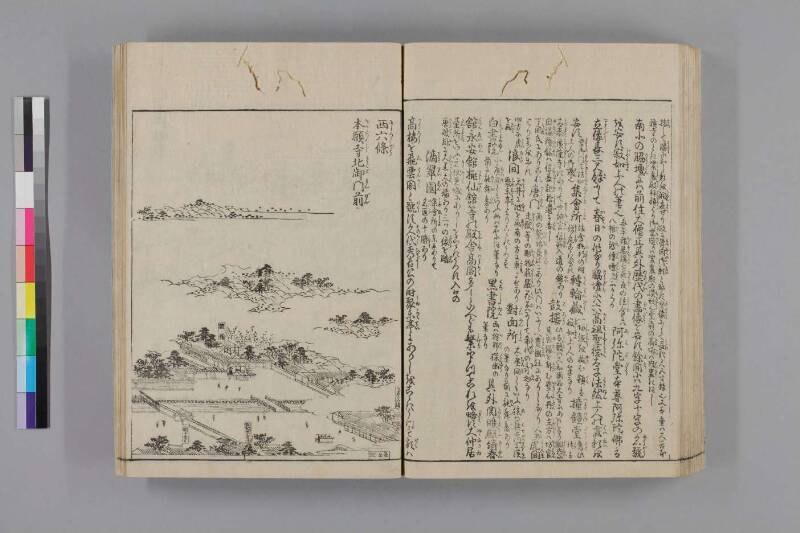
西六條
花屋町
本願寺北御門前
教宗寺
鼓樓
明光寺
現代語訳
(前頁より続き)…遺骨を細かく砕いて漆に混ぜ、彩色で潤色した。それゆえ「骨同御影(こつどうみえい)」と称される。座像で、高さは二尺五寸余りである。また本堂は、大坂本願寺の時代に紫宸殿を拝領したことに由来し、御堂の造りは紫宸殿を模したものである。堂前の高い塀は内裏と同様の様式である。南北の脇壇には前住大僧正およびその他の歴代の画像が安置されている。余間には九字・十字の名号が安置されており、寂如上人の筆によるものである。毎年の報恩講七昼夜の法会には、八幅の絵伝が壇上に掛けられる。
**阿弥陀堂**
本尊の阿弥陀仏は立像で、高さは三尺余りであり、春日(仏師)の作である。脇壇には六高祖・聖徳太子・法然上人の画影が安置されている。
**集会所**
法会を執り行う際、僧衆がここに集まる。
**転輪蔵(てんりんぞう)**
一切経を収蔵する。額は寂如上人の筆によるものである。
**撞鐘堂(しょうしょうどう)**
この鐘はもとは太秦広隆寺にあり、少納言信西入道の館にゆかりのある鐘であった。由緒ある鐘銘については『信長記拾遺』に詳しい。下間氏の管理下に置かれ、ここより(僧侶への)薬が支給される。
**唐門(からもん)**
南の築地長辻にある。この門は古くは豊国社(豊国神社)にあったものである。人物・走獣等の彫物は荘厳華美にして、希代の奇物である。
**虎間(とらのま)**
四方に虎が描かれている。
**浪間(なみのま)**
天井に波が描かれている。南の方に車寄せがある。聚楽亭よりここに移された。
**対面所(たいめんしょ)**
大広間ともいう。絵は長谷川了渓の筆によるものである。前に能舞台がある。
**白書院(しろしょいん)**
小広間ともいう。絵は上記と同じ筆者によるものである。前に能舞台がある。
**黒書院(くろしょいん)**
絵は狩野探幽の筆によるものである。
その他、関睢殿・綺春館・永安館・桃仙館などの殿舎や高閣が多くあるが、繁雑になるためここでは略す。大仲居(台所のことをいう)は伏見城にあったものをここに移したものである。入口の唐破風には大黒天の像があり、三つの俵を踏んでいる。
**滴翠園(てきすいえん)**
集会所の東にあり、名区の十勝(十の優れた景観)がある。
高楼を飛雲閣(ひうんかく)という。豊臣秀吉公の時代に黎楽亭にあったものをここに移した。額は……(次頁へ続く)
---
【境内略図に記された地名・寺院名】
- 醒ヶ井通(さめがいどおり)
- 西六条
- 花屋町
- 本願寺北御門前
- 教宗寺(きょうそうじ)
- 鼓楼(ころう)
- 明光寺(みょうこうじ)
英語訳
(Continued from the previous page) …his remains were finely ground and mixed with lacquer, then colored with pigment. For this reason, the image is called *Kotsudō Miei* ("portrait blended with bones"). It is a seated figure measuring over two shaku five sun in height. Furthermore, the main hall was modeled after the Shishinden (the ceremonial hall of the Imperial Palace), as the original hall at the Osaka Honganji had been granted the actual Shishinden structure. The tall earthen walls in front of the hall are built in the same style as those of the imperial palace. On the side altars to the north and south, portrait images of former head priests, great bishops, and other patriarchs through the generations are enshrined. In the adjoining spaces (yoma), name tablets bearing the nine-character and ten-character nembutsu inscriptions are enshrined, all written by the hand of Jakujo Shōnin. During the annual Hōonkō (memorial service for Shinran), held over seven days and nights, eight scroll paintings of the illustrated biography are hung above the altar.
**Amida Hall (Amida-dō)**
The principal image of Amida Buddha is a standing figure measuring over three shaku in height, the work of the Kasuga (school of sculptors). On the side altars, painted portraits of the Six Patriarchs, Prince Shōtoku, and Hōnen Shōnin are enshrined.
**Assembly Hall (Shūkaijo)**
When religious ceremonies are conducted, the assembled monks gather here.
**Revolving Sutra Repository (Tenrin-zō)**
This structure houses the complete Buddhist canon (Issaikyō). The hanging board (plaque) was written by Jakujo Shōnin.
**Bell Tower (Shōshō-dō)**
This bell was originally at Kōryūji Temple in Uzumasa and was associated with the residence of the lay monk Shinzei (Fujiwara no Michinori), a minor councilor. Details of the bell's history and inscription are found in the *Nobunagaki Shūi*. It is now in the custody of the Shimoma clan, and medicines are distributed from this location.
**Karamon Gate (Chinese-style Gate)**
This gate stands along the long earthen-wall avenue to the south. The gate originally stood at Toyokuni Shrine. Its carvings of figures, running beasts, and other subjects are magnificent and ornate — truly a rare and extraordinary work.
**Tiger Chamber (Tora-no-ma)**
Tigers are painted on all four walls.
**Wave Chamber (Nami-no-ma)**
Waves are painted on the ceiling. A carriage porch is situated to the south. This room was relocated here from the Jurakutei.
**Reception Hall (Taimenjo)**
Also called the Grand Hall (Ōhiroma). The paintings are by the hand of Hasegawa Ryōkei. A Noh stage stands before it.
**White Shoin (Shiro Shoin)**
Also called the Small Hall (Kohiroma). The paintings are by the same hand as the above. A Noh stage stands before it.
**Black Shoin (Kuro Shoin)**
The paintings are by the hand of Kanō Tan'yū.
Beyond these, there are numerous other halls and towers, including the Kannsui-den, Kishun-kan, Eian-kan, Tōsen-kan, and others, but they are omitted here for the sake of brevity. The Great Kitchen (Ōnakai), which is referred to as the kitchen, was relocated here from Fushimi Castle. At the entrance, above the karahafu (cusped gable), there is a figure of Daikokuten, standing atop three bales of rice.
**Tekisui-en Garden**
Located to the east of the Assembly Hall, it features ten celebrated scenic views (jisshō) of a distinguished landscape.
The tall tower structure is called the Hiunkkaku (Flying Cloud Pavilion). It was relocated here from the Reigakutei during the time of Lord Toyotomi Hideyoshi. The plaque reads… (continues on the next page)
---
**Place names and temple names noted in the accompanying site map:**
- Sameigai-dōri (Sameigai Avenue)
- Nishi-Rokujō (West Sixth Avenue area)
- Hanayamachi
- In front of the North Gate of Honganji
- Kyōsōji Temple
- Korō (Drum Tower)
- Myōkōji Temple