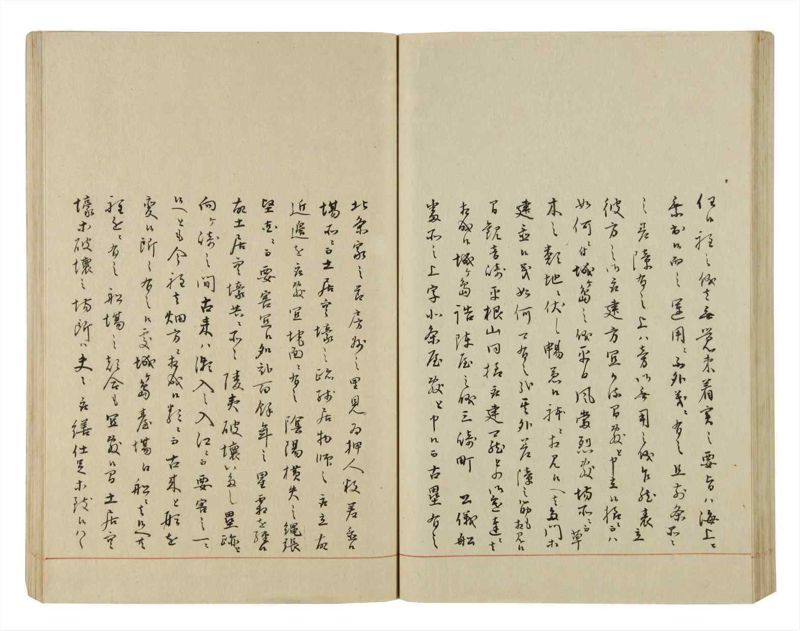
翻刻
任候程之儀者無覚束着実之要旨ハ海上ニ
乗出候而之運用ニ不外義ニ有之且前条品々
之差障有之上ハ旁御無用之儀乍然表立
彼方之御取建方宜かる間敷と申立候様ニ而ハ
如何ニ付城ケ島之儀平日風当烈敷場所ニ而草
木之類地ニ伏し暢兼候体ニ相見候へ者多門等
建置候義如何可有之哉其外差障之筋も相見候
間観音崎平根山同様取建可然との御進達ニ者
相成候城ケ島詰陣屋之儀三崎町 公儀船
番所之上字北条屋敷と申候而古塁有之
北条家之節房州之里見為押人数差置候
場所ニ而土居空壕之跡残居物師之取立故
近辺を取敷宜地面ニ有之陰陽横失之縄張
堅固ニ而要害宜候処弐百余年之星霜を経候
故土居空壕共ニ所々陵夷破壊いたし塁跡と
向ケ崎之間古来ハ瀬入之入江ニ而要害之一ニ
候へとも今程者畑方ニ相成候類ニ而古来と形を
変候所々有之候処城ケ島台場江船ニ者候へ共
程近ニ有之船場之都合も宜敷候間土居空
壕等破壊之場所ハ夫々取繕仕足等致候ハヽ
現代語訳
任せられる程のことは覚束なく、着実な要点は海上に乗り出しての運用に他ならない。また前条に挙げた様々な差し障りがある以上、総じて(多聞台場の建設は)無用のことである。しかしながら、表立って先方(白河藩)の御取り建ての方がよろしくないと申し立てるような形では如何なものかと思われる。したがって、城ケ島については平素から風当たりの烈しい場所であり、草木の類が地に伏して伸び難い様子が見受けられるから、多聞などを建て置くことが如何なものであろうかということ、その他にも差し障りの筋が見受けられるため、観音崎・平根山と同様に取り建てるのが然るべきであるとの御進達(上申)とするのが相当であろう。城ケ島詰陣屋については、三崎町の公儀船番所の上手、北条屋敷と申す場所に古い塁(土塁)があり、北条家の時代に房州の里見氏を押さえるために人数を差し置いた場所であって、土居・空壕の跡が残っている。元々の取り立てであるから、近辺を取り敷くのに宜しい地面があり、陰陽横矢の縄張りが堅固で要害として宜しい場所である。しかし二百余年の星霜を経たために、土居・空壕ともに所々陵夷(崩壊)・破壊しており、塁跡と向ケ崎との間は古来は瀬入りの入江であって要害の一つであったが、今は畑方になるなど、古来と形を変えた所々がある。城ケ島台場へは船ではあるが程近くにあり、船場の都合も宜しいことから、土居・空壕等の破壊した場所はそれぞれ取り繕い、足し(修繕・補足)等を致せば……
英語訳
...anything entrusted to shore-based operations alone cannot be relied upon with confidence; the essential and practical point lies in no other than naval deployment on the open sea. Moreover, given the various obstacles and impediments enumerated in the preceding articles, such construction is altogether unnecessary. Nevertheless, it would not be appropriate to openly declare that the other party's (Shirakawa domain's) proposed construction is ill-advised. Therefore, regarding Jōgashima, since it is a location ordinarily exposed to fierce winds — so fierce that grasses and trees can be seen lying flat against the ground, unable to grow upright — the question of whether constructing tamon-style fortifications there would even be feasible arises naturally. Furthermore, since other impediments are also apparent, a recommendation (shintatsu) should be made to the effect that construction in the same manner as at Kannonsaki and Hiranesan would be appropriate. Regarding the detachment garrison on Jōgashima: at a location called Hōjō Yashiki, situated above the Tokugawa government's ship-inspection station (funabanjo) in Misaki-machi, there exists an old earthwork fortification. This was the very place where, during the time of the Hōjō clan, troops were stationed to hold down the Satomi clan of Bōshū (Awa Province). The traces of earthen ramparts (doi) and dry moats (karabori) remain. Being an original fortification, there is suitable ground in the vicinity for deployment, and the layout featuring angled flanking fire positions (in'yō yokoya) makes for a solid defensive arrangement, well-suited as a stronghold. However, having endured more than two hundred years of time, both the earthen ramparts and dry moats have in many places fallen into ruin and disrepair. The area between the fortification ruins and Mukōgasaki was in ancient times a tidal inlet that served as one of the defensive features, but now it has become farmland, and there are numerous places where the landscape has changed from what it once was. Since the Jōgashima battery is nearby — accessible by boat — and the boat landing arrangements are also favorable, if the damaged sections of the earthen ramparts and dry moats were each repaired and supplemented accordingly...