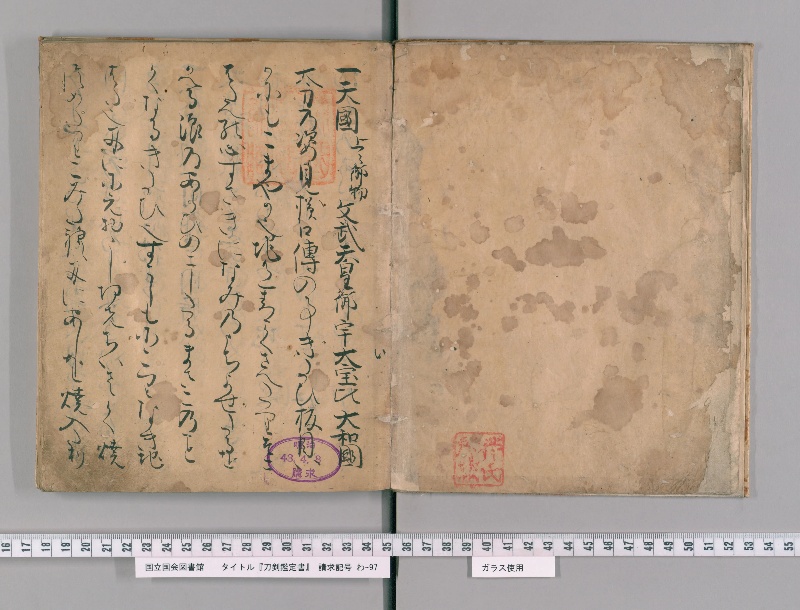
翻刻
一天国《割書:上々御物|》文武天皇御宇大宝比大和国
太刀の姿見様口伝の事きたひ板目い
かにもこまやか也地色青くさへたりそこ
はたへの心すさきになみのうちよせたるを
かへる浪のあらひのこしたるまさこのこと
くなるきたひ也すこしもにこりなき地
はた也刃ににえおゝし切先ちいさく焼
つめたりこみたれ刃にあしを焼入たり
現代語訳
一、天国《割書:上々御物》文武天皇の御代、大宝年間頃、大和国
太刀の姿・見様・口伝の事。鍛えは板目で、いかにも細やかである。地色は青みがかって冴えており、底はたえ(絶え)の心、すさき(洲崎)に波の打ち寄せたるを返る波の洗い残したる真砂のごとくなる鍛えである。少しも濁りなき地はたである。刃に匂いが多く、切先は小さく焼き詰めてある。小乱れ刃に足を焼き入れてある。
英語訳
1. Tenkoku 《Marginal note: Superior Imperial Treasure》 From the reign of Emperor Monmu, around the Taihō era (701-704), Yamato Province
Regarding the shape, appearance, and oral tradition of this tachi sword: The forging is itame-hada (wood-grain pattern), extremely fine. The ground color has a bluish tint and is clear. The底 (bottom) shows the character of絶え (fade), like sand left unwashed by returning waves at a sandy point where waves crash against the shore - such is the forging. The ground metal is completely without cloudiness. The hamon (temper line) has abundant nie (martensitic crystals), the kissaki (point) is small and burned tight. It has komidare-ba (small irregular temper pattern) with ashi (legs/extensions) tempered in.