翻刻
【五百羅漢禅寺のつづき】
海西(かいさい)に飄歴(ひようれき)し豊前国(ふせんのくに)羅漢寺(らかんし)に至(いた)り唐土(もろこし)天台山(てんたいさん)の逆流(きやくりう)並(ならひ)に賢(けん)
順(しゆん)といへる二僧(にそう)一夜(いちや)に造立(さうりふ)せしといへる五百聖者(こひやくしやうしや)の石像(せきさう)を膽礼(せんらい)し【瞻礼のあやまりか】
恭敬(くきやう)日々(ひゝ)に厚(あつ)く其後(そのゝち)潜(ひそか)に五百羅漢(こひやくらかん)の像(さう)を手彫(しゆてう)せんとするの意(こゝろ)
あり帰省(きせい)の日(ひ)鉄眼禅寺(てつけんせんし)果(はた)して其命(そのめい)あるを以(もつて)遂(つひ)に貞享(ちやうきやう)年間 江戸(えと)
に来(きた)り元禄(けんろく)辛未 始(はしめ)て浅草寺(せんさうし)の境内(けいたい)寿松院(しゆしようゐん)に就(つい)て仮屋(かりや)を儲(まう)け
衆人(しゆうしん)をすゝめ羅漢(らかん)の木像(もくさう)を彫刻(てうこく)す興福寺(こうふくし)の鉄牛和尚(てつきうおしやう)衣資(えし)を喜(き)
捨(しや)し一尊(いつそん)を刻(きさ)ましむるといへとも時至(ときいたら)すして施(ほとこし)ある事 微(すくな)くこゝに
歳月(としつき)を歴(へ)たり然(しか)るに同壬申の年大倉前(おほくらまへ)一十六員(いちしふろくゐん)の道俗(たうそく)結盟(きつめい)
補佐(ほさ)す癸酉孟春に至(いた)り五十尊(そん)成(なる)甲戌三月 忝(かたしけなく)も
御国母(おんこくほ)桂昌一位尼公(けいしやういちゐにこう)金(こかね)を賜(たまは)り仏像(ふつさう)造立(さうりふ)の資(たすけ)となし給ふ此時(このとき)
十尊(しつそん)を彫営(てうえい)すしかありしより縁化(えんけ)響(ひゝき)の応(おう)するか如(こと)く施財(せさい)日々(ひゝ)
に多(おほ)く竟(つい)に一十余霜(いちしふよさう)を経(へ)て完(まつた)く本堂(ほんそん)丈六の釈迦仏(しやかふつ)及(およ)ひ
阿羅漢(あらかん)等(とう)すへて五百三千有 余(よ)体(たい)の仏像(ふつさう)縹緲(ひやう〳〵)として現(けん)す其(その)
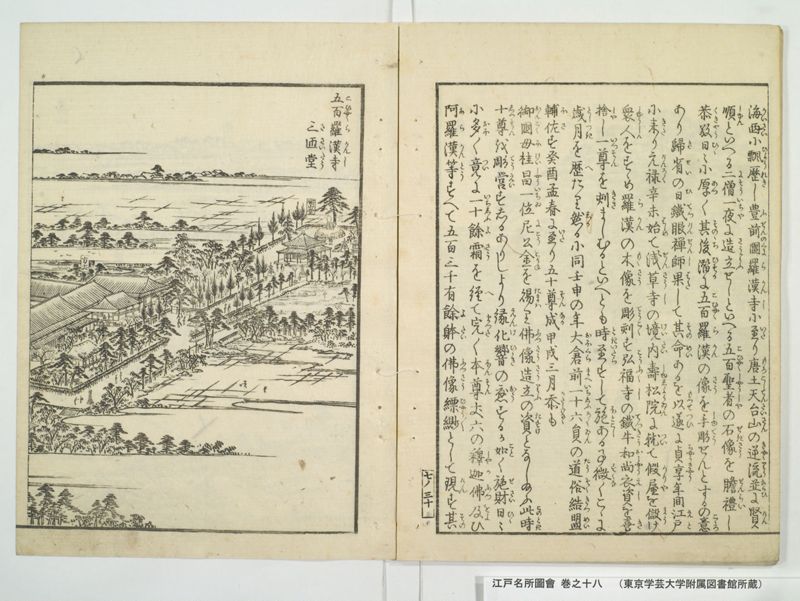
【挿し絵】
五百羅漢寺(こひやくらかんし)
三匝堂(ささいたう)
【図中】
開山堂
方丈
現代語訳
【五百羅漢禅寺のつづき】
海西方面を旅し、豊前国の羅漢寺に至って、唐の天台山の逆流、並びに賢順という二人の僧が一夜で造立したと言われる五百聖者の石像を拝礼し、恭敬の念が日々に厚くなった。その後ひそかに五百羅漢の像を手彫りしようとする意志があった。帰省の日、鉄眼禅師がまさにその命を下したので、ついに貞享年間に江戸に来て、元禄辛未年(1691年)に初めて浅草寺の境内寿松院において仮屋を設け、人々に勧めて羅漢の木像を彫刻した。興福寺の鉄牛和尚が衣服代を喜んで寄付し、一尊を刻ませたけれども、時期が至らずして寄進があることは少なく、ここに歳月を重ねた。しかるに同じ壬申の年、大倉前の十六名の僧俗が結盟して補佐した。癸酉年正月に至って五十尊が完成し、甲戌年三月には、恐れ多くも御国母桂昌一位尼公が金を賜り、仏像造立の資金となし給うた。この時十尊を彫り上げた。このようになってからは縁化が響きに応じるかのように、寄付金が日々多くなり、ついに十数年を経て完全に本尊丈六の釈迦仏及び阿羅漢等、すべて五百三体余りの仏像が雲のようにかすんで現れている。その
【挿絵】
五百羅漢寺
三匝堂
【図中】
開山堂
方丈
英語訳
【Continuation of Gohyaku Rakan Zen Temple】
He traveled westward to the sea and reached Rakan-ji Temple in Buzen Province, where he worshipped the stone statues of the five hundred saints, said to have been created in one night by two monks named Gyakuryu of Mount Tiantai in Tang China and Kenjun. His reverence deepened day by day. Afterwards, he secretly harbored the intention to hand-carve images of the five hundred arhats. On the day of his return home, Zen Master Tetsugen indeed gave him this command, so he finally came to Edo during the Jōkyō era. In the year Genroku Kanoe-Hitsuji (1691), he first set up a temporary building at Jushō-in within the precincts of Sensoji Temple, encouraging people to carve wooden images of arhats. The monk Tetsugyū of Kōfuku-ji Temple gladly donated money for clothing and had one statue carved, but as the time had not yet come, donations were few, and many months and years passed. However, in the same Mizunoe-Saru year, sixteen monks and laypeople from Ōkura-mae formed an alliance to assist. By the first month of Mizunoto-Tori year, fifty statues were completed, and in the third month of Kinoe-Inu year, Her Majesty the Queen Mother Keishō Ichii graciously bestowed gold to serve as funds for creating Buddhist statues. At this time, ten statues were carved. From this point on, as if spiritual connections responded like echoes, donations increased daily, and finally, after more than ten years, the main image of the 16-foot Shakyamuni Buddha and arhats - over 503 Buddhist statues in total - appeared mysteriously like floating clouds.
【Illustration】
Gohyaku Rakan Temple
Sansō Hall (Three-Circuit Hall)
【In the illustration】
Founder's Hall
Abbot's Quarters