翻刻
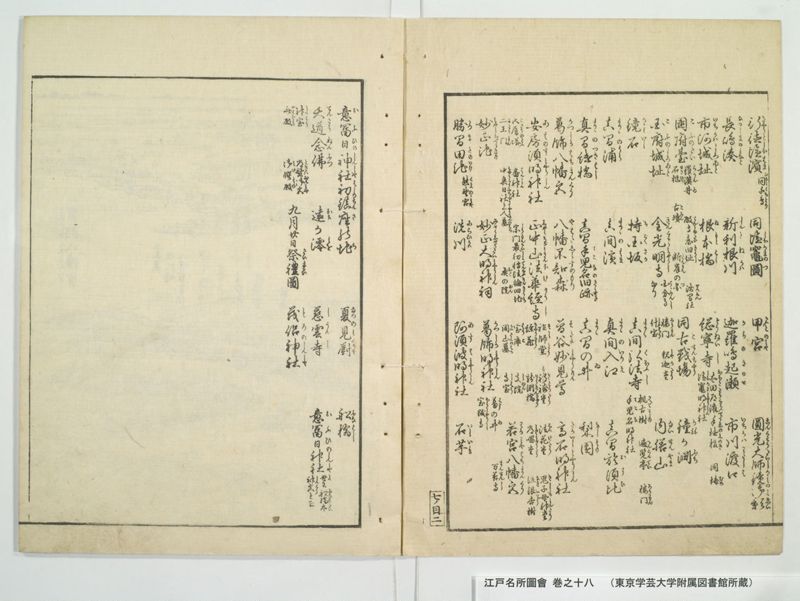
行徳塩浜(きやうと[く]しほはま)《割書:同(おなしく)千鳥(ちとり)| 》 同 塩竃図(しほかまのつ) 甲宮(かふとのみや) 円光大師(ゑんくわうたいし)鏡御影(かゝみのみゑい)
長島湊(なかしまのみなと) 新利根川(しんとねかは) 迦羅鳴起瀬(からめきのせ) 市川渡口(いちかはわたしは)
市河城址(いちかはしろあと) 根本橋(ねもとはし) 総寧寺(そうねいし)《割書:太田道灌(おほたたうくわん)手植榎(てうゑのえのき) 同 梅(むめ)|塩竃明神(しほかまみやうしん)社》
国府台(こふのたい)《割書:羅漢井(らかんゐ) 殿守台旧址(てんしゆたいきうし) 浅間(せんけん)社|石櫃(せきひつ) 古墳(こふん) 断岸(たんかん)の図(つ)》 同 古戦場(こせんちやう) 鐘(かね)か淵(ふち)
国府城址(こふのしろあと) 金光明寺(きんくわうみやうし)《割書:国分寺(こくふんし)|なり》 《割書:楼門(ろうもん) 釈迦堂(しやかたう)|什宝(しふほう)》 内膳山(ないせんやま)
鏡石(かゝみいし) 持国坂(ちこくさか) 真間弘法寺(まゝくほふし)《割書:楓古樹(かへてこしゆ) 遍覧亭(へんらんてい) 楼門(ろうもん)|手児名(てこな)明神社》
真間浦(まゝのうら) 真間浜(まゝのはま) 真間入江(まゝのいりえ) 真間 於須比(おすひ)
真間継橋(まゝのつきはし) 真間 手児名旧跡(てこなのきうせき) 真間(まゝ)の井(ゐ) 梨園(なしその)
葛飾八幡宮(かつしかはちまんくう) 八幡不知森(やはたしらすのもり) 曽谷妙見(そたにみやうけん)尊 高石明神(たかいしみやうしん)社
安房須明神(あはのすみやうしん)社 正中山法華経寺(しやうちゆうさんほけけうし)《割書:祖師堂(そしたう) 祈祷堂(きとうたう) 法花堂(ほつけたう) 鬼子母神堂(きしもしんたう)|経蔵(きやうさう) 竜淵橋(りうゑんきやう) 常唱堂(しやうしやうたう) 泣銀杏(なきいてう)樹》
《割書:五層塔(こさうのたふ) 番神(はんしん)社 宗門最初転法輪旧地(しうもんさいしよてんほふりんきうち) 宝庫(はうこ) 支院(しゐん)|二王門(にわうもん) 中興日祐上人墓(ちゆうかうにちゆうしやうにんのはか) 奥(おく)の院(ゐん) 開山墓(かいさんのはか) 寺宝(しはう)》 若宮八幡宮(わかみやはちまんくう)
妙正池(みやうしやうかいけ) 妙正大明神(みやうしやうたいみやうしん)祠 葛飾明神(かつしかみやうしん)社《割書:葛(くす)の井(ゐ) 万善寺(まんせんし)|宝城寺(ほうしやうし)》
勝間田池(かつまたのいけ)《割書:熊野宮(くまのゝみや)| 》 洗川(あらひかは) 阿須波明神(あすはみやうしん)社 石芋(いしいも)
意富日神社初鎮座(おふひのしんしやはしめちんさ)の地(ち) 夏見厨(なつのみくりや) 船橋(ふなはし)
天道念仏(てんたうねんふつ) 遠(おち)か澪(みを) 慈雲寺(しうんし) 意富日神社(おふひのしんしや)《割書:世(よ)に船橋太(ふなはしたい)|神宮(しんくう)と云》
《割書:神宝(しんはう) 常盤御宮(ときはおんみや)|斎殿(いはひとの) 御饌殿(みけとの)》 九月廿日 祭礼(さいれい)図 茂侶神社(もろのしんしや)
現代語訳
行徳塩浜(塩田での千鳥の風景も含む)、同じく塩竃の図、甲宮、円光大師鏡御影
長島湊、新利根川、迦羅鳴起瀬、市川渡口
市川城址、根本橋、総寧寺(太田道灌手植えの榎と梅、塩竃明神社を含む)
国府台(羅漢井、殿守台旧址、浅間社、石櫃、古墳、断岸の図を含む)、同じく古戦場、鐘ヶ淵
国府城址、金光明寺(国分寺跡、楼門、釈迦堂、什宝を含む)、内膳山
鏡石、持国坂、真間弘法寺(楓の古樹、遍覧亭、楼門、手児奈明神社を含む)
真間浦、真間浜、真間入江、真間於須比
真間継橋、真間手児奈旧跡、真間の井、梨園
葛飾八幡宮、八幡不知森、曽谷妙見尊、高石明神社
安房須明神社、正中山法華経寺(祖師堂、祈祷堂、法華堂、鬼子母神堂、経蔵、竜淵橋、常唱堂、泣銀杏樹を含む)
(五層塔、番神社、宗門最初転法輪旧地、宝庫、支院、二王門、中興日祐上人墓、奥の院、開山墓、寺宝を含む)、若宮八幡宮
妙正池、妙正大明神祠、葛飾明神社(葛の井、万善寺、宝城寺を含む)
勝間田池(熊野宮を含む)、洗川、阿須波明神社、石芋
意富比神社初鎮座の地、夏見厨、船橋
天道念仏、遠ヶ澪、慈雲寺、意富比神社(世に船橋大神宮と呼ばれる)
(神宝、常盤御宮、斎殿、御饌殿を含む)、九月二十日祭礼の図、茂侶神社
英語訳
Gyōtoku Salt Beach (including the scene of plovers at the salt fields), likewise the illustration of salt kilns, Kabuto Shrine, Mirror Portrait of Great Master Enkō
Nagashima Harbor, New Tone River, Karameki Rapids, Ichikawa Ferry Crossing
Ichikawa Castle Site, Nemoto Bridge, Sōneiji Temple (including the enoki and plum trees planted by Ōta Dōkan, and Shiogama Myōjin Shrine)
Kōnodai (including Rakan Well, former site of Tenshudai, Asama Shrine, stone coffin, ancient tomb, and illustration of steep cliff), likewise the ancient battlefield, Kane-ga-fuchi
Kōno Castle Site, Kinkōmyōji Temple (former Kokubun Temple, including the tower gate, Shaka Hall, and temple treasures), Naisen-yama
Mirror Stone, Jikoku Slope, Mama Guhōji Temple (including ancient maple trees, Henran Pavilion, tower gate, and Tekona Myōjin Shrine)
Mama Bay, Mama Beach, Mama Inlet, Mama Osuhi
Mama Tsugi Bridge, Mama Tekona Historic Site, Mama Well, pear orchard
Katsushika Hachiman Shrine, Yawata Shirazu Forest, Sotani Myōken, Takaishi Myōjin Shrine
Awanosu Myōjin Shrine, Shōchūzan Hokekyōji Temple (including Soshi Hall, Prayer Hall, Lotus Sutra Hall, Kishimojin Hall, sutra repository, Ryūen Bridge, Jōshō Hall, and weeping ginkgo tree)
(including five-story pagoda, Banshin Shrine, original site of the first turning of the Dharma wheel for the sect, treasure house, branch temples, Niō Gate, tomb of revival priest Nichiyū, inner sanctuary, founder's tomb, and temple treasures), Wakamiya Hachiman Shrine
Myōshō Pond, Myōshō Daimyōjin Shrine, Katsushika Myōjin Shrine (including Kuzu Well, Mansenji Temple, and Hōshōji Temple)
Katsumata Pond (including Kumano Shrine), Arai River, Asuha Myōjin Shrine, Ishi-imo
Original enshrinement site of Ōhi Shrine, Natsumi Kitchen, Funabashi
Tentō Nembutsu, Ochi-ga-mio, Jiunji Temple, Ōhi Shrine (commonly known as Funabashi Daijingū)
(including sacred treasures, Tokiwa Palace, purification hall, and offering hall), illustration of the September 20th festival, Moro Shrine