翻刻
【東覚寺の続き】
《割書:宿(しゆく)の優娑塞(うはそく)これを聞(きゝ)立出(たちいて)て示(しめ)して云くこれ我笈(わかおひ)の中(うち)に安する所の不動尊(ふとうそん)罰(はつ)したまふ|所ならんと云て即(すなはち)笈(おひ)の前(まへ)にひさまつき漸(やゝ)祈念(きねん)せしに不例(ふしき)に彼(かの)壮夫(さうふ)身体(しんたい)の自由(しゆう)なる》
《割書:事をおほえこゝにおいて語(こ)を発(はつ)する事を得(え)て大に歓喜(くわんき)し且つ(かつ)盗賊(とうそく)なる事を示(しめ)し|其罪(そのつみ)を謝(しや)して永(なか)く良心(りやうしん)にひるかへさむ事 約(やく)し去(さり)ぬ依(よつて)法印これを奇(き)とし其本尊の由縁(ゆへ)》
《割書:を問 優娑塞(うはそく)こたへ云くむかし良弁僧都(らうへんそうつ)相州大山(さうしうおほやま)を開基(かいき)したまふ頃 我(わか)始祖(しそ)其 麓(ふもと)なる|子安村(こやすむら)に住(ちゆう)せしか其時僧都を供奉(くふ)しまゐらせ前路(せんろ)を開通(かいつう)し僧都をして山頂(さんてう)に》
《割書:至らしむこれ相州(さうしう)大山寺の興基(こうき)なり其御僧都 随従(すゐしう)の労(らう)を謝(しや)して此本尊を我(わか)始祖(しそ)|に付属(ふそく)なしたまひ告(つけ)て云く人界(にんかい)の大患(たいくわん)は盗難(とうなん)剣難(けんなん)のふたつに過たるはなし此 霊像(れいそう)を護持(こし)》
《割書:せは永(なか)く汝(なんし)か子孫(しそん)およひ見聞(けんもん)結縁(けちゑん)の輩(ともから)も又 其難(そのなん)を遁(のか)れしめんと云々しかありしより|我家(わかいへ)に相伝(さうてん)せし事今に至りて二十五代なり回国(くはいこく)の間も路中(ろちゆう)危難(きなん)を遁(のか)れし事 屢々(しは〳〵)多》
《割書:かりしもこの霊像の応護(おうこ)による所なりと語けれは法印 深(ふか)く感歎(かんたん)しこの霊像を永く|此地にとゝめ一宇(いちう)を建立(こんりふ)し普(あまね)く衆生(しゆしやう)を結縁(けちゑん)せんと欲(ほつ)し頻(しきり)に此霊像を乞求(こひもと)む》
《割書:優娑塞(うはそく)も終(つい)に其意(そのい)を応(おう)しこの尊像(そんそう)を玄学(けんかく)に付与(ふよ)す玄学(けんかく)直(すく)に一宇(いちう)の香堂(かうたう)を|営(いとな)むて此霊像を安す当寺これなり故(ゆゑ)に世人 盗難除(とうなんよけ)不動尊(ふとうそん)と称(しよう)しまゐらせり》
香取大神宮(かとりたいしんくう) 同所二丁許 乾(いぬゐ)の方にあり 《割書:此地も昔は泰平津かと等(ひと)しく海|にして一の離島(はなれしま)なり亀(かめ)の浮(うか)へるに》
《割書:似(に)たりとて旧名(きうめい)を亀津島(かめつしま)と|唱(とな)へたりといふ》
本社(ほんしや) 祭神(さいしん)経津主命(ふつぬしのみこと) 《割書:下総一宮の|神胴体》 相殿(あひてん) 《割書:建甕槌命(たけみかつちのみこと) 鹿島大神宮|猿田彦命 大杉大神宮》 三座
当社(たうしや)は亀戸村(かめとむら)草創(さう〳〵)よりの勧請(くはんしやう)にして此辺(このへん)第一(たいいち)の古跡(こせき)なりと
いへり 《割書:或説に当社は大職冠(たいしよくわん)鎌足(かまたり)|公の勧請なりといふ》 例祭は毎年六月十四日十五日に修(しゆ)
行(きやう)す旅所(たひしよ)は吾妻森(あつまのもり)より二三十歩東の方 田(た)の中(なか)にあり往古(そのかみ)
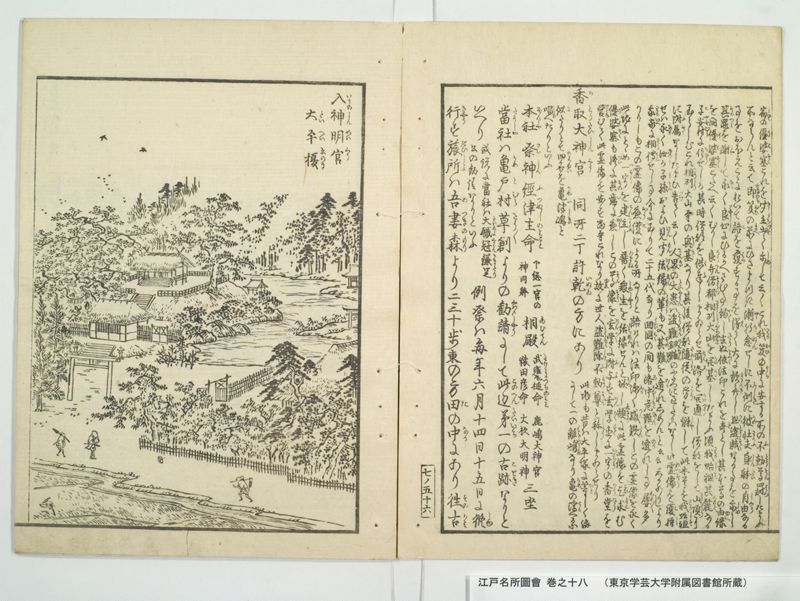
【挿し絵】
入神明宮(いりのしんめいくう)
太平榎(たいへいゑのき)
現代語訳
【東覚寺の続き】
宿の優婆塞(信者)がこれを聞いて立ち出て、「これは我が笈の中に安置している不動尊が罰を与えられた所であろう」と言って、すぐに笈の前にひざまずき、ようやく祈念したところ、不思議にもその壮夫(強盗)は身体の自由を得ることができた。ここにおいて言葉を発することができるようになり、大いに歓喜し、かつ盗賊であることを明かして、その罪を謝罪し、永く良心に立ち返ることを約束して去った。よって法印(玄学)はこれを奇跡として、その本尊の由来を尋ねた。優婆塞が答えて言うには、「昔、良弁僧都が相州大山を開基された頃、我が始祖がその麓の子安村に住んでいた。その時僧都に従って前路を開通し、僧都を山頂に到達させた。これが相州大山寺の興基である。その御僧都が随従の労を謝して、この本尊を我が始祖に付属され、告げて言うには『人界の大患は盗難と剣難の二つに過ぎるものはない。この霊像を護持すれば、永くあなたの子孫および見聞結縁の人々もまたその難を逃れるであろう』と。そのようであったので我が家に相伝したことは今に至って二十五代である。回国の間も路中の危難を逃れたことはしばしば多かったが、これもこの霊像の応護によるものである」と語った。法印は深く感嘆し、この霊像を永くこの地に留め、一宇を建立して広く衆生を結縁させたいと欲し、しきりにこの霊像を乞い求めた。優婆塞もついにその意に応じて、この尊像を玄学に付与した。玄学はすぐに一宇の香堂を営んでこの霊像を安置した。当寺がこれである。故に世人は盗難除け不動尊と称し奉っている。
香取大神宮 同所から二町ほど乾(北西)の方にある。この地も昔は泰平津と等しく海であって、一つの離島であった。亀が浮かんでいるのに似ているとして、旧名を亀津島と唱えたという。
本社 祭神は経津主命(下総一宮の神胴体)、相殿には建甕槌命(鹿島大神宮)、猿田彦命(大杉大神宮)の三座がある。
当社は亀戸村草創よりの勧請であって、この辺り第一の古跡であるという。ある説には当社は大職冠鎌足公の勧請であるという。例祭は毎年六月十四日・十五日に執行する。旅所は吾妻森より二、三十歩東の方、田の中にある。往古は
【挿絵】
入神明宮
太平榎
英語訳
[Continuation of Tōkaku-ji Temple]
The upāsaka (lay devotee) at the inn heard this and came forward, saying, "This must be where the Fudō-son (Acala) enshrined in my backpack box has administered punishment." He immediately knelt before the backpack and earnestly prayed. Mysteriously, the robust man (robber) regained the freedom of his body. At this point he was able to speak, greatly rejoiced, confessed to being a bandit, apologized for his crimes, and promised to permanently return to righteousness before departing. The hōin (Gengaku) considered this miraculous and inquired about the origin of the principal image. The upāsaka replied: "Long ago, when the monk Rōben established Ōyama in Sagami Province, my ancestor lived in Koyasu village at its foot. At that time, he served the monk, opened the path ahead, and enabled the monk to reach the summit. This was the founding of Ōyama-ji Temple in Sagami Province. The reverend monk, in gratitude for the service of accompaniment, entrusted this principal image to my ancestor, saying: 'The great afflictions of the human realm are none other than theft and sword calamities. If you protect this sacred image, your descendants and all those who encounter it through karmic connection will forever escape such disasters.' Since then it has been transmitted in my family for twenty-five generations to this day. During pilgrimages, we have frequently escaped dangers on the road, all due to the protective response of this sacred image." The hōin was deeply moved and wished to permanently enshrine this sacred image in this location, build a temple hall, and widely connect all sentient beings to it, so he earnestly requested the sacred image. The upāsaka finally agreed to his intention and bestowed the sacred statue upon Gengaku. Gengaku immediately built an incense hall and enshrined this sacred image there. This is the current temple. Therefore, people respectfully call it the "Theft-Protection Fudō-son."
Katori Grand Shrine: Located about two chō northwest of the same place. This area was also formerly sea like Taihei-tsu, forming a separate island. Because it resembled a floating turtle, it was formerly called Kametsu-shima (Turtle Harbor Island).
Main Shrine: The enshrined deity is Futsunushi-no-mikoto (the divine body from Shimōsa Ichinomiya). In the joint shrine are three deities: Takemikazuchi-no-mikoto (from Kashima Grand Shrine) and Sarutahiko-no-mikoto (from Ōsugi Grand Shrine).
This shrine is said to be an invocation from the founding of Kameido village and the foremost historical site in this area. According to one theory, this shrine was invoked by Taishokuwan Kamatari. The annual festival is held on June 14th and 15th each year. The temporary shrine is located in the rice fields about twenty to thirty paces east of Azuma-no-mori. In ancient times...
[Illustration]
Iri Shinmei Shrine
Taihei Enoki (Great Peace Hackberry Tree)