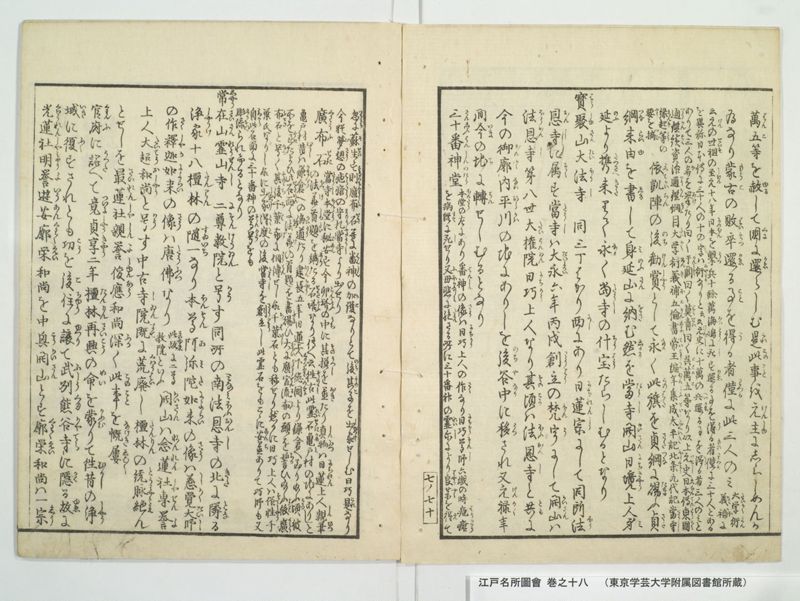
翻刻
【惟康親王蒙古退治旗曼荼羅来由のつづき】
万五(はんこ)等(ら)を赦(ゆる)して還(かゑ)らしむ是(これ)此事(このこと)を元主(けんしゆ)にしらしめんか
為なり蒙古(もうこ)の敗卒(はいそつ)還(かゑ)る事(こと)を得(う)る者 僅(わつか)に此三人のみ 《割書:大学衍(たいかくえん)|義補(きほ)に》
《割書:云 元(けん)の世祖(せいそ)の至元(しけん)十八年 日本(につほん)を撃(うつ)兵十余万 海島(かいとう)に死(し)す還(かゑ)る事を得(う)る者(もの)僅(わつか)に三十人とある|を異称日本伝に三十人の十の字は衍(あやまり)なりと云々 元史(けんし)に十万の兵還(へいかゑ)る事を得(う)る者三人のみと》
《割書:ありて三人の名(な)を挙(あけ)たり曰く于閶(かんしやう)曰く莫青(はくせい)曰く呉万五(こはんこ)等なり以上 元史日本伝(けんしにつほんてん)東国(とうこく)|通鑑(つうかん)続(そく)資治 通鑑(つうかん)綱(こう)目 大学衍義補(たいかくえんきほ)五倫書(こりんしよ)帝王編年集成(ていわうへんねんしふせい)太平記(たいへいき)北条(ほうてう)九代記 当寺(たうし)》
《割書:縁起(えんき)等(とう)の|要(やう)を摘(つむ)》 依(よつて)凱陣(かいちん)の後(のち)勧賞(けんしやう)として永(なか)く此旗(このはた)を貞綱(さたつな)に賜(たま)ふ貞(さた)
綱(つな)来由(らいゆ)を書(しる)して身延山(みのふさん)に納(をさむ)然(しかる)を当寺(たうし)開山(かいさん)日境(にちきやう)上人 身(み)
延(のふ)より携(たつさへ)来(きた)りて永(なか)く当寺(たうし)の什宝(ちうはう)たらしむるとなり
宝聚山大法寺(はうしゆさんたいほうし) 同三丁はかり西(にし)にあり日蓮宗(にちれんしう)にして同所 法(ほう)
恩寺(おんし)に属(そく)す当寺(たうし)は大永(たいえい)六年丙戌 創立(さうりう)の梵宇(ほんう)にして開山(かいさん)は
法恩治(ほうおんし)第八世 大権院日功(たいこんゐんにちかう)上人なり其頃(そのころ)は法恩寺(ほふおんし)と共(とも)に
今の御廓内(おんかくない)平川(ひらかは)の地にありしを後(のち)谷中(やなか)に移(うつ)され又 元禄(けんろく)年
間 今(いま)の地(ち)に転(てん)せしむるとなり
三十番神堂(さんしふはんしんのたう) 《割書:本堂(ほんたう)の左にあり番神(はんしん)の像(さう)は日功(にちこう)上人の作(さく)なり日功尊師(にちかうそんし)六歳の時疱瘡(はうさう)|を病 既(すて)に死(し)せり父母(ふほ)悲(かなしみ)に絶(たえ)さる所に三十番神の霊示(れいし)に良薬(りやうやく)を得(え)て》
《割書:忽(たちまち)に蘇生(そせい)す則(すなはち)広布石(くわうふせき)并に番神(はんしん)の加護(かこ)なりとて後(のち)其(その)子を出家(しゆつけ)せしむ日功 是(これ)なり|今猶 夢想(むさう)の疱瘡(はうさう)の守礼(まもり)当寺(たうし)より出せり》
広布石(くわうふせき) 《割書:当寺(たうし)本堂(ほんたう)に秘安(ひあん)す今 卵塔(らんたふ)の内(うち)に其模(そのうつし)を置(おき)たり真物(しんふつ)は日蓮(にちれん)上人親筆(しんひつ)|の法華首題(ほつけしゆたい)を鐫(ゑり)たる石塔(せきたふ)なり伝へ云 往古(そのかみ)此 霊石(れいせき)亀戸(かめと)村の地にありしと》
《割書:亀戸村 昔(むかし)は鎌倉(かまくら)への海道(かいたう)たり建長(けんちやう)五年日蓮上人 下総国(しもつふさのくに)より鎌倉へ至り給ふ頃(ころ)彼|所を過(すき)たよひ此 石面(せきめん)に法華(ほつけ)の首題を書 賜(たま)ひ大(おほひ)に広宣流布(くわうせんるふ)の願を誓(ちか)ひ給ふ依(よつて)広(くわう)》
《割書:布石(ふせき)と号(なつ)く其後(そのゝち)千葉家(ちはけ)に相伝(さうてん)せし故 千葉石(ちはいし)とも称せり然るに日功上人は俗性(そくしやう)千|葉氏なりし故に出家(しゆつけ)得度(とくと)の後 当寺(たうし)を創立(さうりう)し此霊石をもこゝに安置(あんち)あり功師も又》
《割書:自(みつから)此石面に三十番神の尊号(そんかう)をも|彫添(ゑりそへ)られけるとなり》
常在山霊山寺(しやうさいさんれうせんし) 二尊教院(にそんけうゐん)と号(かう)す同所の南(みなみ)法恩寺(ほふおんし)の北(きた)に隣(とな)る
浄家(しやうけ)十八 壇林(たんりん)の随一(すゐいち)なり本尊(ほんそん)阿弥陀如来(あみたによらい)の像(さう)は慈覚大師(しかくたいし)
の作(さく)釈迦如来(しやかによらい)の像(さう)は唐仏(たうふつ)なり 《割書:此故(このゆゑ)に二尊|教院といふ》 開山(かいさん)は念蓮社専誉(ねんれんしやせんよ)
上人 大超和尚(たいてうおしやう)と号(かう)す中古 寺院(しゐん)既(すて)に荒廃(くはうはい)し壇林(たんりん)の統脈(とうみやく)絶(たえ)ん
とせしを最蓮社親誉俊応(さいれんしやしんよしゆんおう)和尚 深(ふか)く此事(このこと)を慨(なけき)屢(しは〳〵)
官府(くわんふ)に訟(うつた)へて竟(ついに)貞享(しやうきやう)二年 壇林(たんりん)再興(さいこう)の命(めい)を蒙(かふむ)りて往昔(むかし)の浄(しやう)
域(いき)に復(ふく)すされとも功(こう)を後住(こちゆう)に譲(ゆつり)て武州(ふしう)熊谷寺(くまかやてら)に隠(かく)る故(ゆゑ)に
光蓮社明誉遊安廓栄(くわうれんしやみやうよいうあんかくえい)和尚を中 興(こう)開山(かいさん)とす廓栄(くわくえい)和尚は一 宗(しう)
現代語訳
【惟康親王蒙古退治旗曼荼羅来由の続き】
万五(はんこ)らを赦免して帰国させた。これは、この事を元の皇帝に知らせるためである。蒙古の敗残兵で帰国することができた者は、わずかにこの三人のみであった。《注:大学衍義補によると》
《注:元の世祖の至元十八年、日本を攻撃した兵十余万が海島で死に、帰国できた者はわずかに三十人とあるが、異称日本伝では三十人の「十」の字は誤りであるという。元史には十万の兵で帰国できた者は三人のみとある》
《注:三人の名前が挙げられている。于閶(うしょう)、莫青(ばくせい)、呉万五(ごばんこ)らである。以上、元史日本伝、東国通鑑、続資治通鑑、綱目、大学衍義補、五倫書、帝王編年集成、太平記、北条九代記、当寺縁起等の要点を摘録した》
そのため、勝利の後、恩賞として永くこの旗を貞綱に賜った。貞綱は来歴を記して身延山に納めた。しかし当寺の開山日境上人が身延より持参して、永く当寺の宝物とするに至ったのである。
宝聚山大法寺 同所から三丁ばかり西にあり、日蓮宗で同所の法恩寺に属する。当寺は大永六年丙戌年創立の寺院で、開山は法恩寺第八世大権院日功上人である。その頃は法恩寺と共に今の御廓内平川の地にあったが、後に谷中に移され、また元禄年間に今の地に移転したという。
三十番神堂 《注:本堂の左にあり、番神の像は日功上人の作である。日功尊師が六歳の時疱瘡を患い、既に死んだが、父母が悲しみに絶えない中、三十番神の霊示によって良薬を得て》
《注:たちまち蘇生した。これは広布石と番神の加護であるとして、後にその子を出家させた。日功がそれである。今も夢想の疱瘡の守りが当寺より出されている》
広布石 《注:当寺本堂に秘蔵されている。今、卵塔の内にその模写を置いてある。真物は日蓮上人親筆の法華首題を刻んだ石塔である。伝えによると、往古この霊石は亀戸村の地にあったという》
《注:亀戸村は昔は鎌倉への街道であった。建長五年、日蓮上人が下総国より鎌倉へ向かわれた頃、その場所を通り、この石面に法華の首題を書き賜い、大いに広宣流布の願を誓われた。よって広布石と号する》
《注:その後千葉家に相伝されたため、千葉石とも称された。しかし日功上人は俗姓千葉氏であったため、出家得度の後、当寺を創立し、この霊石もここに安置した。功師もまた自らこの石面に三十番神の尊号をも彫り添えられたという》
常在山霊山寺 二尊教院と号す。同所の南、法恩寺の北に隣接する浄土宗十八檀林の随一である。本尊阿弥陀如来の像は慈覚大師の作、釈迦如来の像は唐仏である。《注:この故に二尊教院という》開山は念蓮社専誉上人大超和尚と号す。中古、寺院が既に荒廃し、檀林の統脈が絶えようとしたのを、最蓮社親誉俊応和尚が深くこの事を嘆き、しばしば官府に訴えて、ついに貞享二年、檀林再興の命を受けて往昔の清浄な境内に復したが、功を後住に譲って武州熊谷寺に隠居した。そのため光蓮社明誉遊安廓栄和尚を中興開山とする。廓栄和尚は一宗の...
英語訳
[Continuation of the Origin of Prince Koreyasu's Mongol Repulsion Flag Mandala]
Banko and the others were pardoned and allowed to return home. This was done to inform the Yuan emperor of these events. Among the defeated Mongol soldiers, only these three men were able to return home. <<Note: According to the Daigaku Engi-ho>>
<<Note: In the 18th year of Zhiyuan under Emperor Shizu of Yuan, over 100,000 soldiers attacking Japan died on the sea islands, and only thirty were said to have returned home, but according to the Isho Nihon-den, the character "ten" in "thirty" is an error. The Yuan History states that among 100,000 soldiers, only three were able to return>>
<<Note: The names of the three are given: Yu Chang, Mo Qing, and Wu Banko. The above is excerpted from the essential points of Yuan History's Japan Chronicle, Tokoku Tsukan, Continued Comprehensive Mirror for Aid in Governance, Gangmu, Daigaku Engi-ho, Gorin-sho, Imperial Chronological Collection, Taiheiki, Hojo Nine Generations Chronicle, and this temple's origin records>>
Therefore, after the victory, this flag was permanently granted to Sadatsuna as a reward. Sadatsuna recorded its history and deposited it at Mount Minobu. However, the founding priest Nichikyo of our temple brought it from Minobu to become a permanent treasure of our temple.
Hoshuyama Daiho-ji Temple: Located about three cho west of the same area, it belongs to the Nichiren sect and is affiliated with Hoon-ji Temple in the same location. This temple was founded in the 6th year of Taiei (1526), year of hinoe-inu, and its founding priest was Daikennin Nichiko, the eighth head priest of Hoon-ji. At that time, it was located together with Hoon-ji in the Hirakawa area within the current castle grounds, but was later moved to Yanaka, and then relocated to its present site during the Genroku period.
Sanjubanshin Hall <<Note: Located to the left of the main hall, the statues of the protective deities were created by Nichiko. When Master Nichiko was six years old, he contracted smallpox and had already died, but while his parents were overcome with grief, through divine revelation from the Thirty Guardian Deities, they obtained effective medicine>>
<<Note: He immediately revived. This was considered the protection of the Kofu Stone and the guardian deities, so later they had their child become a monk. This was Nichiko. Even now, dream-inspired smallpox amulets are distributed from this temple>>
Kofu Stone <<Note: Secretly enshrined in the main hall of this temple. Now a copy is placed inside the egg-shaped pagoda. The original is a stone pagoda carved with the Lotus Sutra title in Nichiren's own handwriting. According to tradition, this sacred stone was originally located in Kameido Village>>
<<Note: Kameido Village was formerly on the highway to Kamakura. In the 5th year of Kencho (1253), when Saint Nichiren traveled from Shimousa Province to Kamakura, he passed through that place and wrote the Lotus Sutra title on this stone surface, making a great vow for the widespread propagation of the teaching. Hence it is called the Kofu Stone>>
<<Note: Later it was handed down through the Chiba family, so it was also called the Chiba Stone. However, since Nichiko was originally of the Chiba clan, after his ordination and entry into the priesthood, he founded this temple and also enshrined this sacred stone here. Master Nichiko also carved the sacred names of the Thirty Guardian Deities on this stone surface>>
Jozaizan Ryosen-ji Temple: Also called Nison-kyo-in. Located south of the same area, adjacent to the north of Hoon-ji, it is one of the eighteen Jodo sect seminaries. The statue of Amida Buddha is the work of Jikaku Daishi, and the statue of Shakyamuni Buddha is a Tang dynasty Buddha. <<Note: For this reason it is called Nison-kyo-in>> The founding priest was Nenrensha Sen'yo, also called Taicho Osho. In medieval times, the temple had already fallen into ruin and the seminary lineage was about to be severed, when Sairensha Shin'yo Shun'o deeply lamented this situation and repeatedly petitioned the government, finally receiving permission in the 2nd year of Jokyo (1685) to restore the seminary to its former pure state. However, he yielded the achievement to his successor and retired to Kumagai Temple in Musashi Province. Therefore, Korensha Myo'yo Yu'an Kakuei was made the restoration founder. Kakuei was a member of the sect...