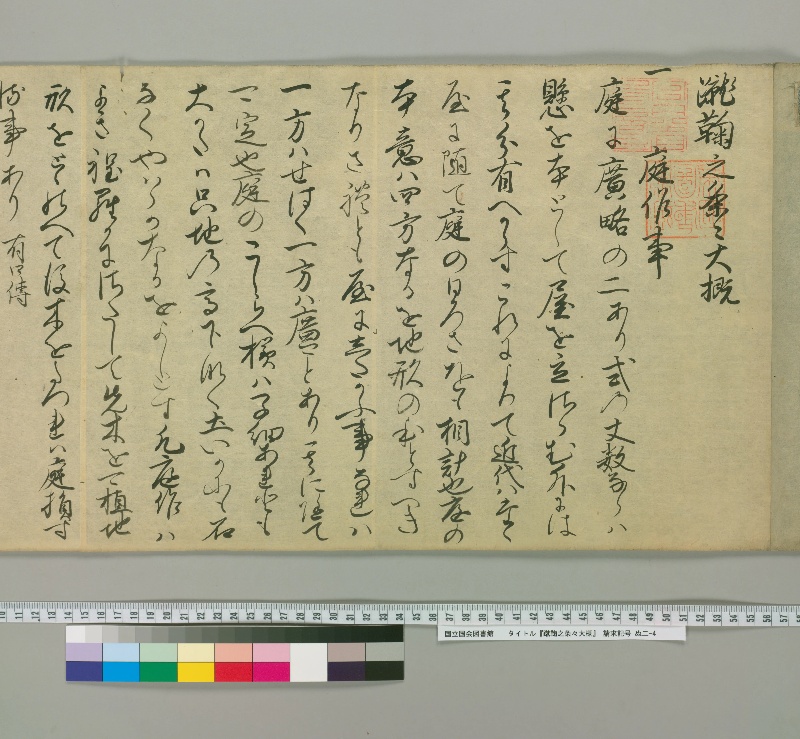
翻刻
蹴鞠之条々大概
一 庭作事
庭に広略の二あり式の丈数ならは
懸を本として屋を立さらむ外には
其分有へからすこれによつて近代はたゝ
屋に随て庭のひろさをも相計也庭の
本意は四方なるを地形の本とすへき
なりされとも屋にしたかふ事なれは
一方はせはく一方は広とあり其に随て
可定也庭のこしらへ様は子細あれとも
大かたは只地の高下なく土いかにも石
なくやはらかなるをよしとす凡庭作は
よき程らひにさたして先木を可植地
形をとゝのへて後木をたつれは庭損す
る事あり 有口伝
現代語訳
蹴鞠の条々大概
一、庭作事
庭には広いものと狭いものの二種類がある。正式な寸法であれば、懸(木)を基準として屋敷を建てる以外には、その区分があるべきではない。これによって近世では、ただ屋敷に応じて庭の広さをも相応に計算している。庭の本来の意図は四方形であることを地形の基本とすべきである。しかしながら屋敷に従うことであるから、一方は狭く一方は広いということがある。それに従って決定すべきである。庭の作り方には細かな決まりがあるけれども、大体はただ地面の高低がなく、土がどのような状態でも石がなく柔らかであることを良しとする。およそ庭作りは適当な程度に決定して、まず木を植えるべきである。地形を整えてから後に木を立てれば、庭を損なうことがある。口伝あり。
英語訳
General Outline of Kemari Rules and Regulations
1. Garden Construction
There are two types of gardens: spacious and narrow. According to proper dimensions, aside from building the residence with the kake (trees) as the foundation, there should be no such distinction. Therefore, in recent times, the size of the garden is calculated accordingly based simply on the residence. The original intention for gardens is that being square should be the foundation of the ground layout. However, since it must conform to the residence, one side may be narrow while another is wide. It should be determined according to these circumstances. Although there are detailed rules for garden construction, generally it is good if the ground has no elevation differences and the soil is soft without stones, regardless of its condition. In general, garden construction should be decided upon to a reasonable degree, and trees should be planted first. If you level the terrain first and then plant the trees afterward, it may damage the garden. There is oral tradition regarding this.