翻刻
【巻下八丁裏】
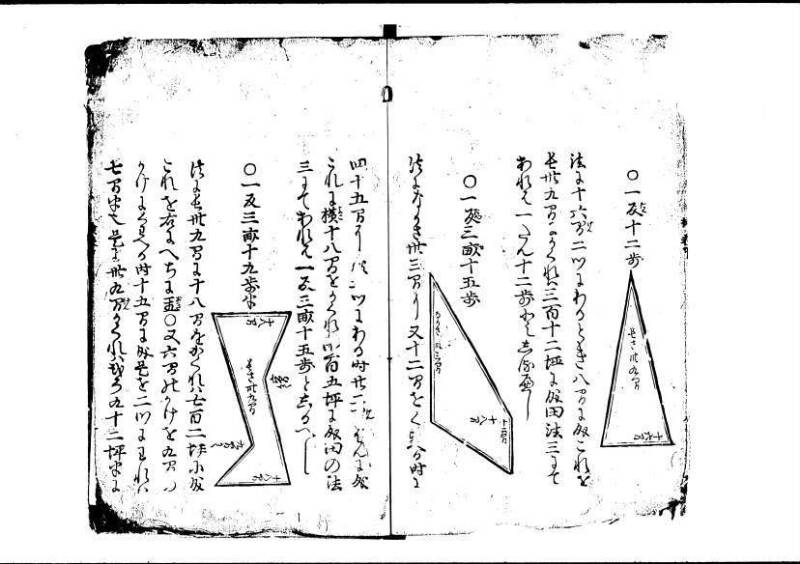
【二等辺三辺形の図---図の中、中央やや上部に】 長さ卅九間
【底辺に沿って横向きに】 十六間
【図の上に】 ○一/反(たん)十二歩
法に十六/間 (けん)二つにわるとき八間に成これを
長卅九間にかくれは三百十二坪に成田法三にて
われは一たん十二歩としるへし
【左右の辺が平行な四辺形---右辺に沿って】 十二間
【左辺に沿って】 なかさ三十三間
【右辺の上端から横向きに】 十八間
【図の上に】 ○一/反(たん)三/畝(せ)十五歩
法になかさ卅三間に又十二間をくわへる時に
【巻下九丁表】
四十五間に成〓つにわる時廿二/〓(けん)はんに成
これに/横(よこ)十八間をかくれ〓四百五坪に成田の法
三にてわれは一反三畝十五歩としるへし
【長方形から向かい合う三辺形を除いた図---図の中、中央に】 長さ卅九間
【上辺と下辺に沿って横向きにそれぞれ】 十八間,十八間
【右辺から欠けている部分の頂点から外側に横向きに】 六間かく
【左辺から欠けている部分の頂点から外側に横向きに】 九間かく
【図の上に】 ○一反三畝十九歩半
法に長卅九間に十八間をかくれは七百二坪に成
これを右にへちに/置 (をき)○又六間のかけを九間の
かけにくわへる時十五間に成是を二つにわれは
七間半也是に卅九/間(けん)かくれは弐百九十二坪半に
現代語訳
【巻下 八丁裏】
【二等辺三角形の図:図の中央やや上部に「長さ三十九間」、底辺に沿って横向きに「十六間」。図の上に「○一反十二歩」】
(計算法)十六間を二つに割ると八間になる。これを長さ三十九間に掛けると三百十二坪になる。田地の法「3」で割ると、一反十二歩とわかる。
---
【左右の辺が平行な四辺形(平行四辺形):右辺に沿って「十二間」、左辺に沿って「長さ三十三間」、右辺の上端から横向きに「十八間」。図の上に「○一反三畝十五歩」】
(計算法)長さ三十三間にさらに十二間を加えると、
---
【巻下 九丁表】
四十五間になる。二つに割ると二十二間半になる。これに横十八間を掛けると四百五坪になる。田地の法「3」で割ると、一反三畝十五歩とわかる。
---
【長方形から向かい合う二つの三角形を除いた六角形の図:図の中央に「長さ三十九間」、上辺と下辺に沿ってそれぞれ横向きに「十八間」「十八間」、右辺から欠けている部分の頂点から外側に横向きに「六間かく(角)」、左辺から欠けている部分の頂点から外側に横向きに「九間かく(角)」。図の上に「○一反三畝十九歩半」】
(計算法)長さ三十九間に十八間を掛けると七百二坪になる。これを右に別に置いておく。○また、六間の角(かく)を九間の角に加えると十五間になる。これを二つに割ると七間半になる。これに三十九間を掛けると二百九十二坪半に(なる)。
英語訳
[Volume 2 (下巻), Folio 8, Verso]
[Figure of an isosceles triangle: "length 39 ken" written near the center slightly above middle; "16 ken" written horizontally along the base. "○ 1 tan, 12 bu" written above the figure.]
Method: Divide 16 ken by two to get 8 ken. Multiply this by the length of 39 ken to get 312 tsubo. Divide by 3, the standard divisor for rice paddies, to get 1 tan, 12 bu.
---
[Figure of a parallelogram (quadrilateral with two parallel sides): "12 ken" along the right side; "length 33 ken" along the left side; "18 ken" horizontally from the upper end of the right side. "○ 1 tan, 3 se, 15 bu" written above the figure.]
Method: Add 12 ken to the length of 33 ken to get
---
[Volume 2 (下巻), Folio 9, Recto]
45 ken. Divide this by two to get 22 ken and a half. Multiply this by the width of 18 ken to get 405 tsubo. Divide by 3, the standard divisor for rice paddies, to get 1 tan, 3 se, 15 bu.
---
[Figure of a hexagon formed by removing two opposing triangular corners from a rectangle: "length 39 ken" in the center of the figure; "18 ken" and "18 ken" written horizontally along the upper and lower sides respectively; "6 ken corner (kaku)" written horizontally outward from the vertex of the notch on the right side; "9 ken corner (kaku)" written horizontally outward from the vertex of the notch on the left side. "○ 1 tan, 3 se, 19 bu and a half" written above the figure.]
Method: Multiply the length of 39 ken by 18 ken to get 702 tsubo. Set this aside. ○ Next, add the 6-ken corner to the 9-ken corner to get 15 ken. Divide this by two to get 7 ken and a half. Multiply this by 39 ken to get 292 tsubo and a half.