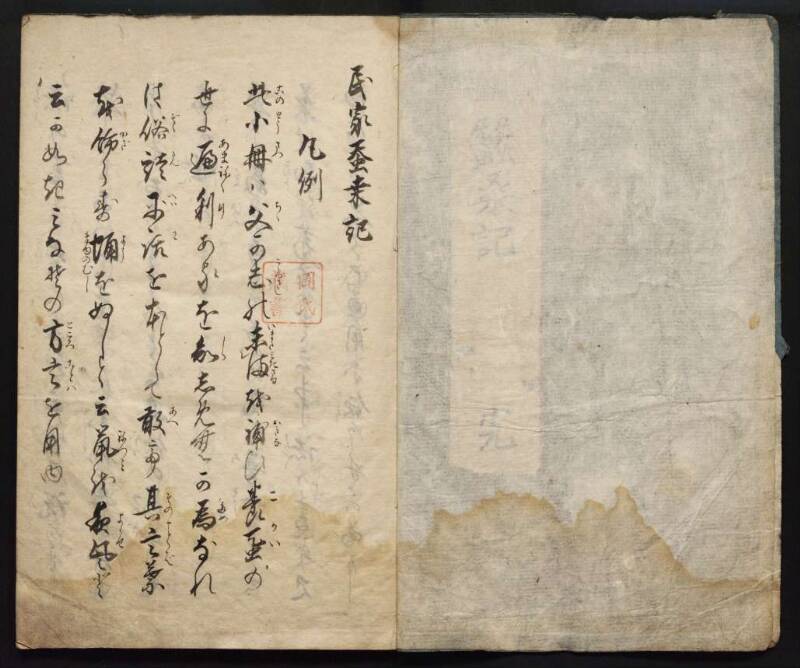
翻刻
【右丁】
【白紙】
【左丁】
民家蚕桑記
凡例
此(この)小冊(せうさつ)は父(ちゝ)か志(こゝろさし)の《振り仮名:未_レ満|いまたみたさる》を補(おきな)ひ養蚕(こかい)の
世に遍(あまねく)利(り)あるを知(しら)しめむか為(ため)なれ
は俗談(ぞくたん)平話(へいわ)を本として敢(あへ)て其(その)言葉(ことば)
を 飾(かざ)らす蛹(よう|まゆのむし)をぬしと云 鼠(ねつみ)を夜風(よかせ)と
云か如きみなその方言(ところことは)を用ゆ
現代語訳
【右丁】
【白紙】
【左丁】
民家蚕桑記
凡例
この小冊子は父の志がまだ満たされていないのを補い、養蚕が
世に広く利益をもたらすことを知らしめるためのものである
ので、俗談平話を基本として、あえてその言葉を
飾らない。蛹を「まゆのむし」と言い、鼠を「夜風」と
言うように、みなその土地の方言を用いる。
英語訳
【Right Page】
【Blank】
【Left Page】
Records of Sericulture in Common Households
General Principles
This small booklet serves to fulfill my father's unfulfilled aspirations and to
make known to the world the widespread benefits of sericulture.
Therefore, it is based on common folk tales and plain speech, and I dare not
embellish the language. Just as we call pupae "mayu no mushi" (silkworm in cocoon) and
mice "yokaze" (night wind), we use the local dialects throughout.