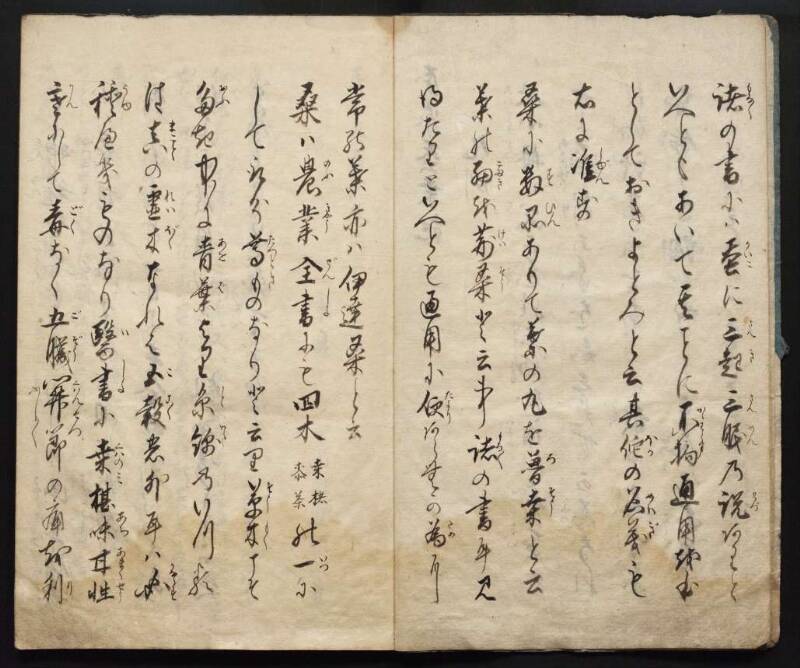
翻刻
【右丁】
諸(もろ〳〵)の書には蚕(かいこ)に三起(さんき)三眠(さんめん)の説(せつ)ありと
いへともあいて其ことに《振り仮名:不_レ拘|かゝわらす》通用を本
としておきよとみと云其 佗(ほか)の名義(めいぎ)も
右に准(じゆん)す
桑に数品(すひん)ありて葉の丸を魯桑(ろそう)と云
葉の細(こまき)を荊桑(けいそう)と云事 諸(もろ〳〵)の書に見
得たりといへとも通用に便(たより)あらむか為(ため)に
【左丁】
常の葉亦は伊達桑と云
桑は農業全書(のふきやうぜんしよ)にも四木《割書:桑楮|桼茶》の一(いつ)に
して取分 尊(たつとき)ものなりと云り草木(そうもく)こそ
多(おふ)き中に青葉(あをば)より糸綿(いとわた)のいつる
は真(まこと)の霊木(れいぼく)なれは五穀(ここく)の外には必(かならす)
種(うゆ)へきものなり医書(いしよ)に桑椹(くはのみ)味(あち)甘(あまく)性(せう)
寒(かん)にして毒(どく)なく五臓(ごぞう)関節(くはんせつ|ふし〳〵 )の痛を利(り)
現代語訳
【右丁】
諸々の書物には蚕に三起三眠の説があると
言われているが、そのことにはこだわらず、一般的な用法を基本
として「おきよとみ」と言う。その他の名称も
右に準ずる。
桑には数種類あって、葉の丸いものを魯桑と言い、
葉の細いものを荊桑と言うことは、諸々の書物に見
られるが、一般的な用法に便利であるために
【左丁】
普通の葉または伊達桑と言う。
桑は農業全書にも四木(桑・楮・漆・茶)の一つで
あって、とりわけ尊いものであると言われている。草木は
多い中で、青葉から糸綿が出る
のは真の霊木であるから、五穀の外には必ず
植えるべきものである。医書に「桑椹(桑の実)は味が甘く、性質が
寒性で毒がなく、五臓と関節の痛みに効く」
英語訳
【Right Page】
Various books mention theories of "three awakenings and three sleepings" (sanki sanmen)
regarding silkworms, but without being bound by such matters, we base our work on
common usage and call them "okiyotomi." Other terminology
follows the same principle.
There are several varieties of mulberry: those with round leaves are called roso (Lu mulberry),
and those with narrow leaves are called keiso (thorny mulberry), as can be found
in various books, but for the convenience of common usage
【Left Page】
we call ordinary leaves "Idate mulberry."
Mulberry is listed in the Complete Agricultural Manual as one of the four trees (mulberry, paper mulberry,
lacquer, and tea), and is said to be particularly precious. Among the many
plants and trees, the one that produces silk thread from green leaves
is truly a sacred tree, so it must necessarily be
planted in addition to the five grains. Medical texts state that "mulberry fruit has a sweet taste, cold
nature, is non-toxic, and benefits the five organs and relieves joint pain."