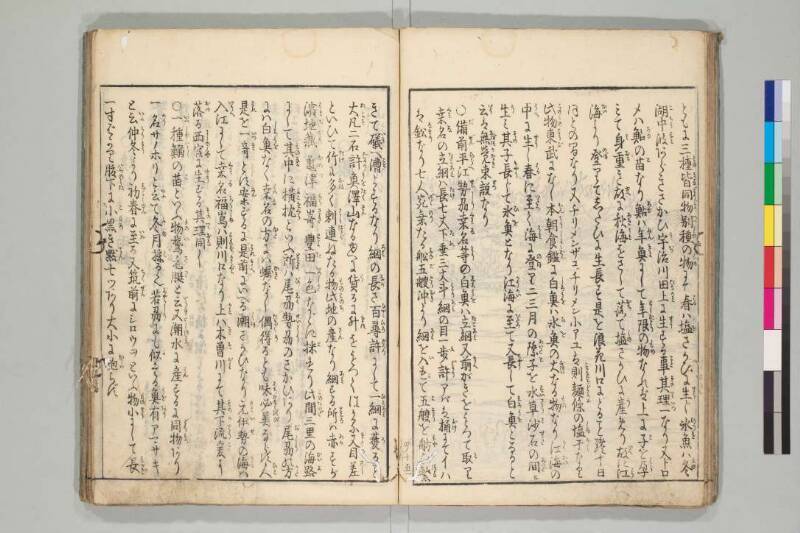
翻刻
【右丁】
ともに三種( しゆ)皆(みな)同物(どうぶつ)別種(へつしゆ)の物(もの)にて春(はる)は塩(しほ)さかひに生(せう)じ氷魚(ひうを)は冬(ふゆ)
湖中(こちう)波(なみ)あらきさかひ宇治川(うぢ )田上(たなかみ)に生(せう)する事(こと)其理(そのり)一(いつ)なり又ドロ
メは鮎(あゆ)の苗(こ)なり鮎(あゆ)は年魚(ねんきよ)にして年限(としかぎり)の物(もの)なれば上に子(こ)を孕(はら)
みて身重(みおも)き故(ゆへ)に秋(あき)海(うみ)をさして落(おち)て塩(しほ)さかひに産(う)めり故(ゆへ)に江(こう)
海(かい)より登(のぼ)りてしたひに生長す是を浪花川口にとること纔十日
ほとの間なり又チリメンザコ。チリメン小アユは則(すなはち)麺條(どろめ)の塩干(しほほし)なり
此物(このもの)東武(とうぶ)になし本朝食鑑(ほんてうしよくかん)に白魚(しろうを)は氷魚(ひを)の大(おほい)なる物(もの)なり江海(かうかい)の
中(うち)に生(せう)し春(はる)に至(いたつ)て海(うみ)に登(のほ)り二三月の際(あいた)子(こ)を水草(すいさう)沙石(させき)の間(あいだ)に
生(う)み其子(その )長(ちやう)じて氷魚(ひを)となり江海(かうかい)に至(いたつ)て又 長(ちやう)して白魚(しろうを)となると
云(いう)は無覚束(おぼつかなき)説(せつ)なり
○備前平江(びぜんひらへ)勢州桑名(せいしうくわな)等(とう)の白魚(しろうを)は立網(たてあみ)又 前(まへ)がきをもつて取(と)り
桑名(くわな)の立網(たてあみ)は長(たけ)七丈 下垂(たれ)三丈 斗(はかり)網(あみ)の目 一歩( ふ)許(ばかり)アバは桶(おけ)にてイハ
は鉛(なまり)なり七人 宛(づゝ)乗(のり)たる船(ふね)五艘(ごさう)沖(おき)より網(あみ)を入(い)れて五艘(ごそう)を舫(もや)ひ繋(つな)
【右丁】
きて礒(いそ)へ漕(こぎ)よするなり網(あみ)の長(なが)さ百尋(ひやくひろ)許(ばかり)にして一網(ひとあみ)に獲(う)ること
大凡(およそ)二石 許(ばかり)魚(うを)沢山(たくさん)なるゆへに貨(う)るに升(ます)をもつてはかる又(また)目差(めさし)
といひて竹(たけ)に多(おほ)く刺連(さしつら)ねたる物(もの)此地(このち)の産(さん)なり網(あみ)する所(ところ)は赤(あか)すが
浜地蔵(はまぢぞう)亀津(かめつ)福崎(ふくさき)豊田(とよた)一色(いつしき)などに採(と)れり此間(このあいだ) 三里の海路(かいろ)
にして其中(そのなか)横枕(よこまくら)といふ所(ところ)は尾州(びしう)勢州(せいしう)のさかひあり尾州(びしう)の方(かた)
には白魚(しろうを)なく桑名(くはな)には蠣(かき)なし偶(たま〳〵)得(う)るとも味(あち)必(かならず)美(び)ならず人(ひと)
是(これ)を一奇(いつき)とす案(あん)ずるに是(これ)前(まへ)にいへる潮(しほ)さかひなり元(もと)伊勢(いせ)の海(うみ)は
入江(いりへ)にして桑名(くわな)福島(ふくしま)は則(すなはち)川口(かわぐち)なり上(かみ)は木曽川(きそがわ)にて其(その)下流(かりう)爰(こゝ)に
落(おつ)る西宮(にしのみや)に生(せう)ずる其理(そのり)同(おな)し
○一種(いつしゆ)鰯(いわし)の苗(こ)といふ物(もの)鵞毛脡(いささ)と云(いう)又(また)潮水(しほみつ)に産(さん)するに同物(どうふつ)あり
一名( めう)サノホリと云(いふ)て冬月(ふゆ)採(と)る也 若州(じやくしう)にも似(に)たる魚(うを)有(あり)アマサキ
と云(いふ)仲冬(ちうとう)より初春(しよしゆん)に至(いた)る又 筑前(ちくぜん)にシロウヲといふ物(もの)小(せう)にして長(ながさ)
一寸ばかり腹下(はらのした)に小黒(こくろ)き黙(てん)#1七ッあり大小に拘(かゝは)らず
現代語訳
【右丁】
これら三種はみな同じ物の別種であって、春は塩水と淡水の境界に発生し、氷魚は冬に湖中の波の荒い境界や宇治川、田上に発生することは、その理由は同じである。またドロメは鮎の稚魚である。鮎は年魚といって一年限りの魚であるから、上流で子を孕んで身重になった故に、秋に海をさして下って塩水と淡水の境界で産卵する。そのため江海から上って次第に成長する。これを浪花の川口で捕ることはわずか十日ほどの間である。またチリメンザコ、チリメン小アユはすなわちドロメの塩干しである。
この魚は江戸にはない。本朝食鑑に「白魚は氷魚の大きなものである。江海の中に生じ、春に至って海に上り、二三月の際に子を水草や砂石の間に産み、その子が成長して氷魚となり、江海に至ってまた成長して白魚となる」とあるのは根拠のない説である。
○備前平江や勢州桑名などの白魚は立網またはまえがきによって捕り、桑名の立網は高さ七丈、垂れ三丈ばかり、網の目は一歩ばかり、アバは桶でイワは鉛である。七人ずつ乗った船五艘が沖から網を入れて五艘を舫い繋いで磯へ漕ぎ寄せる。網の長さは百尋ばかりで、一網で獲ることは大凡二石ばかり。魚が沢山なので売るのに升を使って量る。また目差といって竹に多く刺し連ねたものはこの地の産物である。網する所は赤須賀、浜地蔵、亀津、福崎、豊田、一色などで捕れる。この間は三里の海路で、その中の横枕という所は尾州と勢州の境界がある。尾州の方には白魚がなく、桑名には牡蠣がない。たまたま獲れても味は必ず美味ではない。人はこれを一つの奇異なこととしている。考えるに、これは前に言った潮の境界である。元来伊勢の海は入江で、桑名・福島はすなわち川口である。上は木曽川でその下流がここに落ちる。西宮に生ずるのと同じ理由である。
○一種に鰯の稚魚という魚で鵞毛脡(いささ)といい、また潮水に産するものに同じ魚があり、一名サノホリといって冬月に捕る。若州にも似た魚がありアマサキといい、仲冬より初春に至る。また筑前にシロウヲという魚は小さくて長さ一寸ばかり、腹の下に小さな黒い点が七つあり、大小に関わらず[以下続く]
英語訳
[Right page]
These three types are all different varieties of the same fish. In spring they appear at the boundary between salt and fresh water, and ice fish (hiu-wo) appear in winter at the turbulent boundaries of lakes and in the Uji River and Tanakami - the principle is the same for all. Dorome are juvenile ayu (sweetfish). Since ayu are annual fish that live only one year, when they become heavy with spawn in the upper reaches, they descend toward the sea in autumn and spawn at the salt-fresh water boundary. Therefore they ascend from rivers and seas and gradually grow. These are caught at the river mouths of Naniwa for only about ten days. Chirimen-jako and chirimen-ko-ayu are dried and salted dorome.
This fish does not exist in Edo. The Honcho Shokkan states that "whitebait are large ice fish that live in rivers and seas, ascend to the sea in spring, spawn among water plants and sand and stones in the second and third months, and their offspring grow into ice fish, then ascend to rivers and seas and grow further into whitebait," but this is an unreliable theory.
○ Whitebait from Bizen Hirae, Sesshu Kuwana and other places are caught with standing nets or mae-gaki. Kuwana's standing nets are seven jo high and hang down about three jo, with net mesh of about one bu. The aba are tubs and the iwa are lead weights. Five boats with seven men each set the nets from offshore, moor the five boats together, and row toward the shore. The nets are about one hundred hiro long, and one net catches about two koku. Since there are so many fish, they are sold by measuring with masu (measures). Mezashi, made by stringing many fish on bamboo, are products of this region. The netting locations include Akasuga, Hama-jizo, Kametsu, Fukusaki, Toyota, and Isshiki. This spans three ri of sea route, and in the middle at a place called Yokomakura is the boundary between Bishu and Sesshu. On the Bishu side there are no whitebait, and in Kuwana there are no oysters. Even if occasionally caught, the taste is never good. People consider this one marvel. Upon reflection, this is the tidal boundary mentioned earlier. Originally the Ise Sea is an inlet, and Kuwana and Fukushima are river mouths. Above is the Kiso River whose downstream waters flow here. The principle is the same as for those produced in Nishinomiya.
○ One type called sardine fry is known as gamo-sho (isasa), and there is also the same fish that spawns in tidal waters, called by one name Sanohori, caught in winter months. In Wakashu there is also a similar fish called Amasaki, from mid-winter to early spring. Also in Chikuzen there is something called Shiro-uwo that is small, about one sun long, with seven small black spots under the belly, regardless of size [continues...]