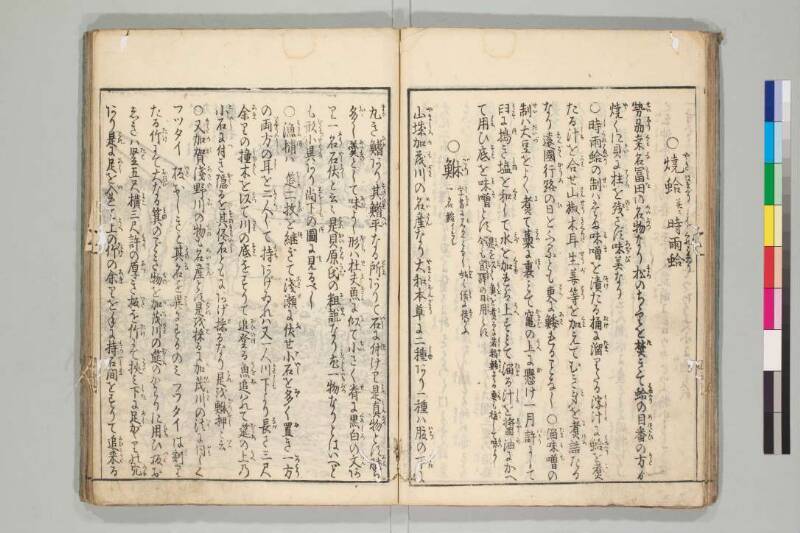
翻刻
【右丁】
○焼蛤(やきはまぐり)《割書:并に|》時雨蛤(しくれはまぐり)
勢州(せいしう)桑名(くわな)富田(とみた)の名物(めいぶつ)なり松(まつ)のちゝりを焚(た)きて蛤(はまくり)の目番(めつかひ)の方(かた)より
焼(や)くに貝(かい)に柱(はしら)を残(のこ)さず味(あぢ)美(び)なり
○時雨蛤(しくれはまぐり)の制(せい)は《振り仮名:たま味噌| みそ》を漬(つけ)たる桶(おけ)に溜(たま)りたる浮汁(うきしる)に蛤(はまくり)を煮(に)
たる汁(しる)を合(あわ)せ山椒(さんせう)木耳(きくらげ)生姜(せうが)等(とう)を加(くわ)えてむき身(み)を煮詰(につめ)たる
なり遠国(ゑんごく)行路(かうろ)の日(ひ)をふるとも更(さら)に鯘(あさ)れることなし○ 溜味噌(たまみそ)の
制(せい)は大豆(だいづ)をよく煮(に)て藁(わら)に裹(つゝ)みて竃(かまど)の上(うへ)に懸(か)け一月 許(ばかり)にして
臼(うす)に搗(つ)き塩(しほ)を和(くわ)して水(みづ)を加(くわゆ)れば上(うへ)すみて溜(たま)る汁(しる)を醤油(しやうゆ)にかへ
て用(もち)ひ底(そこ)を味噌(みそ)とす《割書:是(これ)を以(もつ)て魚(うを)を煮(に)るに若(もし)稍(やゝ)鯘(あされ)たる魚(うを)も復(ふく)して味(あち)よし|今(いま)も官駅(くわんえき)の日用(にちよう)とす》
○鮴(ごり)《割書:字書(ししよ)に見(み)ることなし姑(しばら)く俗(ぞく)に従(したがふ)|一名 鯼《割書:イシフシ》》
山城(やましろ)加茂川(かもがわ)の名産(めいさん)なり大和本草(やまとほんざう)に二種( しゆ)あり一種は腹(はら)の下(した)に
【左丁】
丸(まる)き鰭(ひれ)あり其鰭(そのひれ)平(へい)なる所(ところ)ありて石(いし)に付(つ)けり是(これ)真物(しんぶつ)とす膩(あぶ)ら
多(おゝ)し羹(あつもの)として味(あぢ)よく形(かたち)は杜夫魚(とふぎよ)に似(に)て小(ちい)さく脊(せ)に黒白(くろしろ)の文(もん)あ
り一名( めう)石伏(いしふし)と云々 是(これ)貝原氏(かいはらうぢ)の粗説(そせつ)なり尤(もつとも)一物(いちぶつ)なりとはいへど
も形(かたち)小異(せうゐ)あり尚(なを)下(しも)の図(ず)に見(み)るべし
○漁捕(きよほ)は筵(むしろ)二枚( まい)を継(つ)ぎて浅瀬(あさせ)に伏(ふ)せ小石(こいし)を多(おゝ)く置(お)き一方(いつはう)
の両方(りやうはう)の耳(みゝ)を二人(ふたり)して持(もち)あげゐれは又一人 川下(かわしも)より長(なが)さ三尺
余(あま)りの撞木(しゆもく)を以(もつ)て川(かわ)の底(そこ)をすりて追登(おひのほ)る魚(うを)追(お)はれて筵(むしろ)の上(うへ)の
小石(こいし)に付(つ)き隠(かく)るを其侭(そのまゝ)石(いし)ともにあげ採(と)るなり是(これ)を鮴押(ごりおし)と云(いふ)
○又(また)加賀(かが)浅野川(あさのかは)の物(もの)も名産(めいさん)とす是(これ)を採(と)るに加茂川(かもかわ)の法(はう)に同(おな)しく
フツタイ《振り仮名:板おしき|いた 》と其名(そのな)を異(こと)にするのみフツタイは割(わ)り
たる竹(たけ)にて大(おほひ)なる箕(みの)のごとき物(もの)を加茂川(かもかわ)の筵(むしろ)のかわりに用(もち)ひ《振り仮名:板お|いた 》
しきは竪(たて)五尺 横(よこ)三尺 許(はかり)の厚(あつ)き板(いた)を竹(たけ)にて挟(はさ)み下(した)に足(あし)がゝりの穴(あな)
あり是(これ)に足(あし)を入(い)れて上(うへ)の竹(たけ)の余(あま)りを手に持(もち)石間(いしま)をすりて追来(おひきた)る
現代語訳
【右丁】
○焼蛤(やきはまぐり)《割書:并に|》時雨蛤(しくれはまぐり)
勢州桑名・富田の名物である。松の散りを燃やしてハマグリの蝶番の方から焼くと、貝に柱を残さず、味が美味である。
○時雨蛤の製法は、玉味噌を漬けた桶に溜まった浮き汁にハマグリを煮た汁を合わせ、山椒・木耳・生姜などを加えてむき身を煮詰めたものである。遠国への旅路で日数が経っても全く腐敗することがない。
○玉味噌の製法は、大豆をよく煮て藁に包んで竈の上に掛け一ヶ月ばかりしてから臼で搗き、塩を和して水を加えると上澄みして溜まった汁を醤油の代わりに用い、底のものを味噌とする。《割書:これを使って魚を煮ると、もしやや腐りかけた魚でも元に戻って味が良い|今でも宿駅の日用品として使っている》
○鮴(ごり)《割書:字書には見当たらない。とりあえず俗称に従う|一名 鯼《割書:イシフシ》}}
山城加茂川の名産である。大和本草によると二種あり、一種は腹の下に
【左丁】
丸い鰭があり、その鰭の平らな所があって石に付く。これを真物とする。脂が多く、吸い物として味が良く、形は杜夫魚に似て小さく、背に黒白の模様がある。一名石伏という云々。これは貝原氏の大まかな説である。もっとも同じ魚だとはいえ、形に小さな違いがある。なお下の図を見るべきである。
○漁獲法は、筵二枚を継いで浅瀬に伏せ、小石を多く置き、一方の両端を二人で持ち上げ、もう一人が川下より長さ三尺余りの撞木を使って川底を擦って追い上る。魚は追われて筵の上の小石に付いて隠れるのを、そのまま石と共に上げて捕るのである。これを鮴押しという。
○また加賀浅野川のものも名産とする。これを採るのに加茂川の方法と同じく、フツタイ《振り仮名:板おしき》とその名を異にするだけ。フツタイは割った竹で大きな箕のような物を、加茂川の筵の代わりに用い、板おしきは縦五尺・横三尺ばかりの厚い板を竹で挟み、下に足がかりの穴がある。これに足を入れて上の竹の余りを手に持ち、石間を擦って追い来たる。
英語訳
[Right page]
○ Grilled Clams (yaki-hamaguri) and Drizzle Clams (shigure-hamaguri)
These are specialties of Kuwana and Tomita in Sesshu. Pine needles are burned and the clams are grilled from the hinge side, leaving no muscle attached to the shell, and the taste is excellent.
○ The preparation of drizzle clams involves combining the floating liquid that accumulates in tubs where tama-miso has been pickled with the broth from boiled clams, adding Japanese pepper, wood ear mushrooms, ginger, etc., and simmering the shelled meat until concentrated. Even on long journeys to distant provinces, they never spoil.
○ The preparation of tama-miso involves boiling soybeans well, wrapping them in straw, hanging them above the stove for about a month, then pounding them in a mortar, mixing with salt and adding water. The clear liquid that rises and accumulates on top is used instead of soy sauce, and the bottom portion becomes miso. [Side note: When fish are cooked with this, even slightly spoiled fish is restored and tastes good | Even today it is used as a daily necessity at post stations]
○ Gori (a type of goby) [Side note: Not found in character dictionaries, temporarily following popular usage | Also called Ishifushi]
This is a specialty of the Kamo River in Yamashiro. According to the Yamato Honzo, there are two types. One type has
[Left page]
round fins under the belly, with flat parts on those fins that attach to stones. This is considered the genuine type. It is rich in fat, tastes good as soup, resembles the tofugyo but is small, with black and white patterns on the back. Also called ishifushi, etc. This is a rough explanation by Kaibara-shi. Although they are indeed the same fish, there are small differences in form. One should refer to the diagram below.
○ The fishing method involves joining two mats, laying them in shallow water, placing many small stones on them, with two people holding up both ends of one side, while another person uses a wooden mallet over three shaku long from downstream to scrape the river bottom and drive the fish up. The fish, when chased, attach to and hide among the small stones on the mats, and are caught by lifting them up together with the stones. This is called gori-oshi (gori pushing).
○ Those from the Asano River in Kaga are also considered a specialty. The method of catching them is the same as the Kamo River method, differing only in name - called "Futai" (woven basket) and "Ita-oshiki" (board pusher). The Futai is made of split bamboo like a large winnowing basket, used instead of the Kamo River mats. The Ita-oshiki is a thick board about five shaku long and three shaku wide clamped with bamboo, with footholds underneath. One puts their feet in these holes, holds the excess bamboo above with their hands, and scrapes between the stones to drive the fish forward.