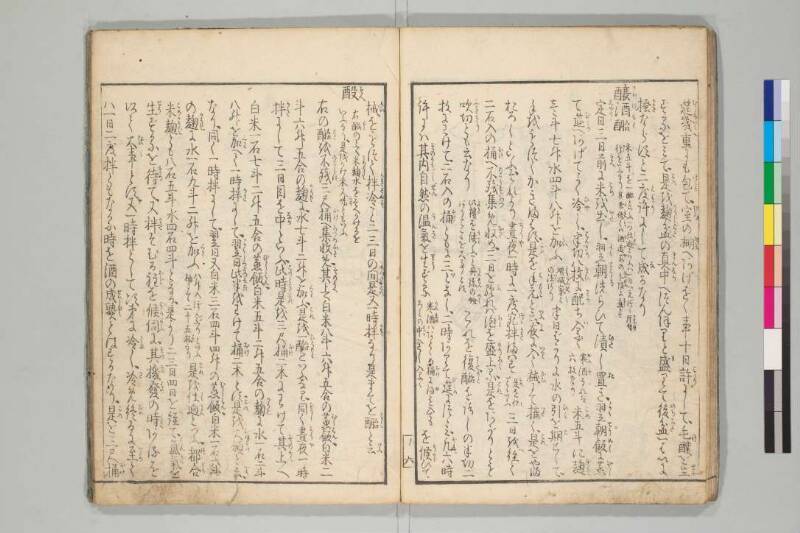
翻刻
【右丁】
筵(むしろ)幾重(いくへ)にも包(つゝみ)て。室(むろ)の棚(たな)へあげをく事十日/許(はかり)にして。毛醭(け)を生(せう)
ずるをみて。是(これ)を麹盆(かうじぶた)の真中(まんなか)へつんほりと盛(も)りて後(のち)盆(ふた)一はいに
掻(かき)ならすこと二/度(と)許(はかり)にして成(な)るなり
《振り仮名:醸酒■|さけのもと》《割書:米五斗を一■といふ一ツ仕逈(しまい)といふは一日一元づゝ斤付(かたづけ)|行(ゆく)をいふなり其/余(よ)倍々(はい〳〵)は酒造家(さかや)の分限(ぶんげん)に応(おう)ず》
定(しやう)日三日/前(まへ)に米(こめ)を出(いた)し。翌朝(よくてう)洗(あ)らひて漬(ひた)し置(お)き。翌朝(よくてう)飯(めし)に蒸(むし)
て筵(むしろ)へあげてよく冷(ひや)し。半切(はんきり)八/枚(まひ)に配(わか)ち入(い)るゝ《割書:寒酒(かんしゆ)なれば|六枚なり》米(こめ)五斗に麹(かうじ)
壱斗七升水四斗八升を加(くは)ふ《割書:増減(さうけん)家々(いえ〳〵)|の法(はう)あり》半日ばかりに水の引(ひく)を期(こ)として。
手をもつてかきまはす。是(これ)を手元(てもと)と云(いふ)。夜(よ)に入(いり)て械(かひ)にて摧(くだ)く。是(これ)をやま
おろしといふ。それより昼夜(ちうや)一時に一度/宛(づゝ)拌(かき)まはす《割書:是(これ)を仕(し)|ごとゝいふ》三日を経(へ)て
二石入の桶(おけ)へ不残(のこさず)集(あつ)め収(おさ)め。三日を経(ふ)れば泡(あわ)を盛上(もりあぐ)る。是(これ)をあがりとも
吹切(ふききり)とも云なり《割書:此(この)機(き)を候(うかゞ)ふこと丹練(たんれん)の妙(めう) |ありてこゝを大事とす》これを復(また)。■(もと)をろしの半切二
枚にわけて。二石入の桶(おけ)ともに三ツとなし。二時ありて筵(むしろ)につゝみ。凡(およそ)六時
許には其内(そのうち)自然(しぜん)の温気(うんき)を生(せう)ずる《割書:寒酒(かんしゆ)はあたゝめ桶(おけ)に湯(ゆ)を入ても|ろみの中(なか)へきし入るゝ》を候(うかゞ)ひて
【左丁】
械(かい)をもつて拌(かき)冷(さます)こと二三日の間(あいた)。是(これ)又一時/拌(かき)なり是まてを■(もと)と云(いふ)
酘(そへ)《割書:右■(もと)の上へ米麹(こめこうし)水をそへかけるを|いふなり。是をかけ米又/味(あぢ)ともいふ》
右の■(もと)を不残(のこらす)三尺/桶(おけ)へ集(あつめ)収(おさ)め。其上(そのうえ)へ白米八斗六升五合の蒸飯(むしはん)。白米二
斗六升五合の麹(かうじ)に。水七斗二升を加(くわ)ふ。是(これ)を《振り仮名:一■|ひともと》といふなり。同(おなし)く昼夜(ちうや)一時
拌(かき)にして三日目を中(なか)といふ。此時(このとき)是(これ)を三尺/桶(おけ)二本にわけて其(その)上(うへ)へ
白米一石七斗二升五合の蒸飯(むしはん)。白米五斗二升五合の麹(かうじ)に水一石二斗
八升を加(くわ)へて一時/拌(かき)にして。翌日(よくじつ)此(この)半(なかば)をわけて桶(おけ)二本とす。是(これ)を大頒(おほわけ)と云(いう)。
なり。同く一時拌にして。翌日又白米三石四斗四升の蒸飯(むしはん)。白米一石六斗
の麹(かうじ)に水一石九斗二升を加(くわ)ふ《割書:八升入ぼんぶりといふ|桶にて二十五/杯(はい)なり》是(これ)を仕逈(しまい)といふ。都合(つがう)
米(こめ)麹(かうじ)とも八石五斗水四石四斗となる。是より二三日四日を経(へ)て。氲気(うんき)を
生(せう)ずるを待(まつ)て。又/拌(かき)そむる程(ほど)を候伺(うかがふ)に。其(その)機発(きはつ)の時(とき)あるを
以て大事(たいし)とす。又一時拌として次第に冷(さま)し。冷(さ)め終(おは)るに至(いたり)て
は一日二度拌ともなる時を酒の成熟(せいじゆく)とはするなり。是(これ)を三尺/桶(おけ)
#1
現代語訳
筵で幾重にも包んで、室の棚に上げておくこと十日ほどで、毛(カビ)が生えるのを見て、これを麹盆の真中にこんもりと盛って、その後盆一杯にかき均すこと二度ほどして完成する。
【酒のもと】米五斗を一仕込みという。一つ仕舞いというのは一日一元ずつ片付けていくことをいう。その他倍々は酒造家の分限(資力)に応じる。
定日の三日前に米を出し、翌朝洗って浸けておき、翌朝飯に蒸して筵に上げてよく冷まし、半切八枚に分けて入れる(寒酒なら六枚である)。米五斗に麹一斗七升、水四斗八升を加える(増減は家々の方法がある)。半日ほどで水が引くのを期として、手でかき回す。これを手元という。夜になって櫂でくだく。これを山おろしという。それから昼夜一時間に一度ずつかき回す(これを仕事という)。三日経って二石入りの桶に残らず集めて収める。三日経つと泡が盛り上がる。これを上がりとも吹き切りとも言う(この機を窺うことに熟練の妙があり、ここを大事とする)。これをまた元おろしの半切二枚に分けて、二石入りの桶と共に三つとなし、二時間ほどして筵に包み、およそ六時間ほどにはその内自然の温気が生じる(寒酒は温め桶に湯を入れてもろみの中へ差し入れる)のを窺って、
櫂でかき回して冷ますこと二三日の間、これもまた一時間ごとにかき回す。ここまでを元という。
【酘】右の元の上へ米麹、水を添えかけることをいう。これをかけ米又は味ともいう。
右の元を残らず三尺桶へ集めて収め、その上へ白米八斗六升五合の蒸し飯、白米二斗六升五合の麹に、水七斗二升を加える。これを一元という。同じく昼夜一時間ごとにかき回して三日目を中という。この時これを三尺桶二本に分けて、その上へ白米一石七斗二升五合の蒸し飯、白米五斗二升五合の麹に水一石二斗八升を加えて一時間ごとにかき回し、翌日この半分を分けて桶二本とする。これを大分けという。同じく一時間ごとにかき回して、翌日また白米三石四斗四升の蒸し飯、白米一石六斗の麹に水一石九斗二升を加える(八升入りぼんぶりという桶で二十五杯である)。これを仕舞いという。合計米麹ともに八石五斗、水四石四斗となる。これから二三日四日経って、温気が生じるのを待って、またかき回し始める程を窺うに、その機発の時があるので大事とする。また一時間ごとにかき回して次第に冷まし、冷め終わるに至っては一日二度かき回すようになる時を酒の成熟とするのである。これを三尺桶で
英語訳
Wrap it in several layers of straw mats and place it on shelves in the fermentation room for about ten days. When mold grows, pile it up in the center of the koji tray, then spread it evenly across the entire tray about twice to complete the process.
【Sake starter】Five to of rice is called one brewing batch. "One finishing" means processing one batch per day. Multiples depend on the brewery's financial capacity.
Three days before the set date, take out the rice. The next morning, wash and soak it. The following morning, steam it into rice, place it on straw mats to cool well, and divide it into eight half-kiri containers (six containers for winter sake). Add one to and seven sho of koji and four to and eight sho of water to five to of rice (each household has its own method of adjustment). After about half a day when the water is absorbed, stir it by hand. This is called "temoto." At night, crush it with a paddle. This is called "yamaoroshi." From then on, stir it once every hour day and night (this is called "work"). After three days, collect and store everything in two-koku capacity tubs. After three days, foam rises up. This is called either "agari" or "fukikiri" (there is a skilled art in watching for this moment, and this is considered crucial). Divide this again into two half-kiri containers from the moto-oroshi, making three containers total with the two-koku tub. After about two hours, wrap in straw mats, and in about six hours natural heat will develop inside (for winter sake, put hot water in warming tubs and insert into the moromi).
Stir and cool with paddles for two to three days, again stirring every hour. Everything up to this point is called "moto."
【Soe】This refers to adding rice koji and water on top of the above moto. This is also called "kake-rice" or "aji."
Collect all of the above moto into three-shaku tubs. On top, add steamed rice of eight to, six sho, five go of white rice, koji made from two to, six sho, five go of white rice, plus seven to and two sho of water. This is called "hitomoto." Similarly, stir every hour day and night, and the third day is called "naka." At this time, divide this into two three-shaku tubs and add steamed rice from one koku, seven to, two sho, five go of white rice, koji from five to, two sho, five go of white rice, plus one koku, two to, eight sho of water. Stir every hour, and the next day divide this in half to make two tubs. This is called "oowake." Similarly, stir every hour, and the next day add steamed rice from three koku, four to, four sho of white rice, koji from one koku, six to of white rice, plus one koku, nine to, two sho of water (this equals twenty-five cups in eight-sho capacity tubs called "bonburi"). This is called "shimai." In total, this becomes eight koku, five to of rice and koji combined, and four koku, four to of water. After two to four more days, wait for heat to develop, then watch for the right time to begin stirring again. There is a crucial moment for this, so it is considered very important. Continue stirring every hour and gradually cool. When cooling is complete and stirring becomes twice daily, this marks the maturation of the sake. This is done in three-shaku tubs.