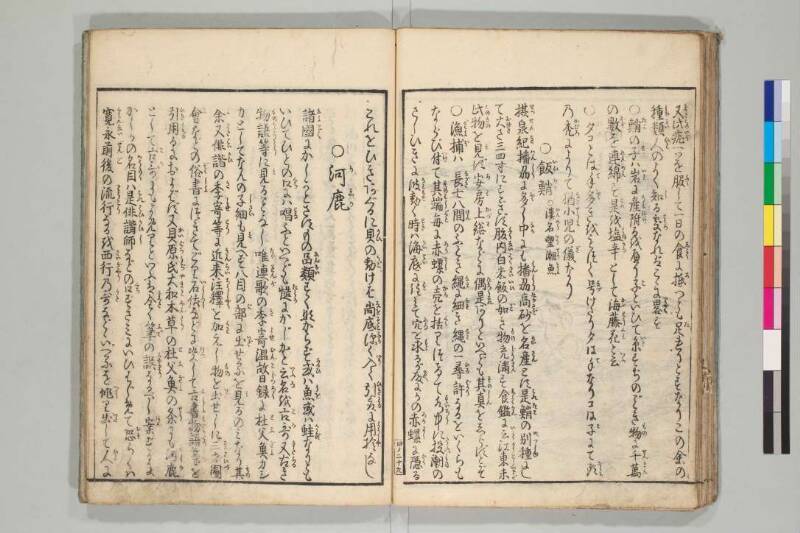
翻刻
【右丁】
又(また)此(この)疣(いぼ)一つを服(ふく)して一日の食(しよく)に抵(あ)つとも足(た)れりとすなりこの余の
種類(しゆるい)人(ひと)のよく知(し)る処(ところ)なればこゝに略(りやく)す
○鮹(たこ)の子(こ)は岩(いわ)に産附(うみつけ)るをへり子(こ)といひて糸(いと)すぢのごとき物(もの)に千万(せんまん)
の数(かず)を連綿(れんめん)す是(これ)を塩辛(しほから)として海藤花(かいとうくわ)と云(いふ)
○タコとは手(て)多(おゝ)きをもつて号(なづ)けたりタは手(て)なりコは子(こ)にて頭(かしら)
の禿(かむろ)によりて猶(なを)小児(せうに)の儀(ぎ)なり
○飯鮹(いひたこ)《割書:○漢名(かんめう)望潮魚(はうてうきよ)|》
摂(せつ)泉(せん)紀(き)播(はん)州(しう)に多(おゝ)く中(なか)にも播州(はんしう)高砂(たかさご)を名産(めいさん)とす是(これ)鮹(たこ)の別種(べつしゆ)にし
て大(おほき)さ三四寸にすぎず腹内(ふくない)白米飯(はくまいいひ)の如(ごと)き物(もの)充満(じうまん)す食鑑(しよくかん)に云(いわく)江東(かうとう)未(いまだ)
此物(このもの)を見(み)ず安房(あわ)上総(かづさ)などに偶(たま〳〵)是(これ)ありといへども其真(そのしん)をしらずとぞ
○漁捕(ぎよほ)は長(ながさ)七八間( けん)のふとき縄(なわ)に細(ほそ)き縄(なわ)の一尋( ひろ)許(ばかり)なるをいくらも
ならび付(つけ)て其端(そのはし)毎(ごと)に赤螺(あかにし)の殻(から)を括(くゝ)りつけて水中(すいちう)に投(たうす)潮(しほ)の
さしひきに波(なみ)動(うご)く時(とき)は海底(かいてい)に住(す)みて穴(あな)を求(もと)るが故(ゆへ)にかの赤螺(あなにし)に隠(かく)る
【左丁】
これをひきあぐるに貝(かひ)の動(うご)けば尚(なを)底(そこ)深(ふか)く入(いり)て引取(ひきとる)に用捨(ようしや)なし
○河鹿(かしか)
諸国(しよこく)にかしかとさすもの品類(ひんるい)すくなからず或(あるひ)は魚(うを)或は蛙(かわず)なりとも
いひてひとの口(くち)には唱(とな)ふといへども慥(たしか)にかじかと云(いふ)名(な)を古哥(こか)又(また)古(ふる)き
物語(ものかたり)等(とう)に見(み)ることなし唯(たゞ)連歌(れんが)の季寄(きよせ)温故日録(おんこじつろく)に杜父魚(とふきよ)カシ
カとしてなんの仔細(しさい)も見(み)へず八目の部(ぶ)に出(いだ)せるを見(み)るのみなり其(その)
余(よ)又(また)俳諧(はいかひ)の季寄(きよせ)等(とう)に近来(きんらい)注釈(ちうしやく)を加(くわ)えし物(もの)を出(いだ)せしに三才図(さんさいづ)
会(え)などの俗書(ぞくしよ)につきてごり石伏(いしふし)などに決(けつ)して古書物語(こしよものかたり)等(とう)を
引用(ひきもちゆ)るにおよばず又 貝原氏(かいばらうぢ)大和本草(やまとほんさう)の杜父魚(とふぎよ)の条(せう)にも河鹿(かしか)
として古哥(こか)にもよめりといふは全(まつた)く筆(ふで)の誤(あやまり)なるべし案(あん)ずるに
かしかの名目(めうもく)は是(これ)俳諧師(はいかひし)などの口(くち)ずさみにいひはじめて恐(おそ)らくは
寛永(くはんゑい)前後(ぜんご)の流行(りうこう)なるを西行(さいぎやう)の哥(うた)などゝいへるを作(つく)り出(いた)して人(ひと)に
現代語訳
【右丁】
また、この疣(イボ)一つを食べれば一日分の食事に十分足りると言われている。その他の種類については人々がよく知るところであるから、ここでは省略する。
○タコの卵は岩に産みつけたものを「へり子」といい、糸筋のような物に何千何万もの数が連なっている。これを塩辛にしたものを「海藤花(かいとうか)」という。
○「タコ」という名は手が多いことから付けられた。「タ」は手であり、「コ」は子であって、頭が禿(かぶろ)のように丸いことから、さらに小児の様子に似ているということである。
○飯蛸(いいだこ)《割書:○漢名:望潮魚(ぼうちょうぎょ)》
摂津・和泉・紀伊・播磨などの国に多く、中でも播州高砂が名産地とされる。これはタコの別種であって、大きさは三、四寸を超えず、腹の中に白米の飯のような物が充満している。「食鑑」によると、江東ではまだこのものを見たことがなく、安房・上総などにたまにあるとはいうが、その本物かどうかは分からないとのことである。
○漁獲方法は、長さ七、八間の太い縄に、細い縄を一尋(ひろ)ほどのものをいくつも並べて付け、その端ごとに赤螺(アカニシ)の貝殻を括り付けて水中に投じる。潮の満ち引きで波が動く時は、イイダコは海底に住んでいて穴を求めるため、かの赤螺の中に隠れる。
【左丁】
これを引き上げると、貝が動いてもさらに奥深くに入り込んで、引き取るのを厭わない。
○河鹿(かじか)
諸国で「かじか」と指すものの種類は少なくない。ある者は魚であるとも、また蛙(カエル)であるとも言って、人々の口には唱えられているとはいえ、確かに「かじか」という名を古歌や古い物語などに見ることはない。ただ連歌の季寄(きよせ)である「温故日録」に、杜父魚(とふぎょ)を「カシカ」として載せているが、特に詳しい説明もなく、八目の部(ぶ)に出されているのを見るのみである。その他、俳諧の季寄などで近頃注釈を加えて出版されたものにも、「三才図会」などの通俗書に基づいて、ごり・石伏(いしぶし)などに決めつけていて、古書や物語などを引用するには及んでいない。また貝原氏の「大和本草」の杜父魚の条にも「河鹿」として古歌にも詠まれているというのは、全く筆の誤りであろう。考えるに、「かじか」という名称は俳諧師などが口ずさむうちに言い始めたもので、おそらくは寛永前後に流行したものを、西行の歌などと称して作り出して人々に
英語訳
**[Right Page]**
It is also said that consuming just one of these bumps (warty protrusions) is sufficient to substitute for a full day's meals. The other varieties are well known to people and will therefore be omitted here.
○ Octopus eggs attached to rocks are called "heriko," and countless thousands upon thousands are strung together like threads. When salted and preserved, this preparation is called "kaitōka" (海藤花).
○ The name "tako" (octopus) was given because it has many hands (te). "Ta" means hand (te), and "ko" means child; moreover, because the head is smooth and round like a shaved child's head (kaburogashira), it further resembles a small child.
○ Webfoot Octopus (Iidako) 《Side note: Chinese name: Bōchōgyo (望潮魚)》
Found in abundance in Settsu, Izumi, Kii, and Harima provinces, with Takasago in Harima Province being particularly renowned as a production center. This is a distinct variety of octopus, no larger than three or four sun, and its abdomen is filled with a substance resembling cooked white rice. According to the "Shokkan" (食鑑), this creature has never been seen in the Kantō region (Kōtō), and while it is occasionally said to appear in Awa and Kazusa provinces, the authenticity of those sightings is uncertain.
○ The fishing method involves a thick rope seven or eight ken in length, to which many thin ropes of about one hiro each are attached in a row. A shell of the red spiral snail (akanishi) is tied to each end of the thin ropes, and the whole apparatus is cast into the water. When the waves stir with the ebb and flow of the tide, the iidako, which dwell on the seafloor seeking holes, hide themselves inside the akanishi shells.
**[Left Page]**
When these are pulled up, the octopus burrows even deeper into the shell as it moves and holds on without hesitation when retrieved.
○ Kajika (River Sculpin / Japanese Tree Frog)
Across the various provinces, the number of things called "kajika" is not small. Some say it is a fish, others say it is a frog, and while these claims circulate on people's lips, one cannot in fact find the name "kajika" in ancient poems or old tales. The only reference is in the seasonal almanac (kiyose) for renga poetry, "Onko Nichiroku," which lists the sculpin (tobugyo/杜父魚) as "kashika," but without any particular explanation, appearing merely in the section on "eight-eyed" creatures. In addition, recently published annotated editions of haiku seasonal almanacs have relied on popular compilations such as the "Sansai Zue" to definitively identify kajika as the goby (gori) or stone-loach (ishibushi), without bothering to cite ancient texts or tales. Furthermore, the entry on "tobugyo" (杜父魚) in Kaibara's "Yamato Honzō" (大和本草), which states that the word "kajika" appears in ancient poetry, is almost certainly an error of the brush. Upon reflection, the name "kajika" appears to have been coined through the improvisational utterances of haiku poets, and was likely a term that became fashionable around the Kan'ei era (1624–1644), but was then fabricated and attributed to poems by the poet Saigyō, spreading to the people...