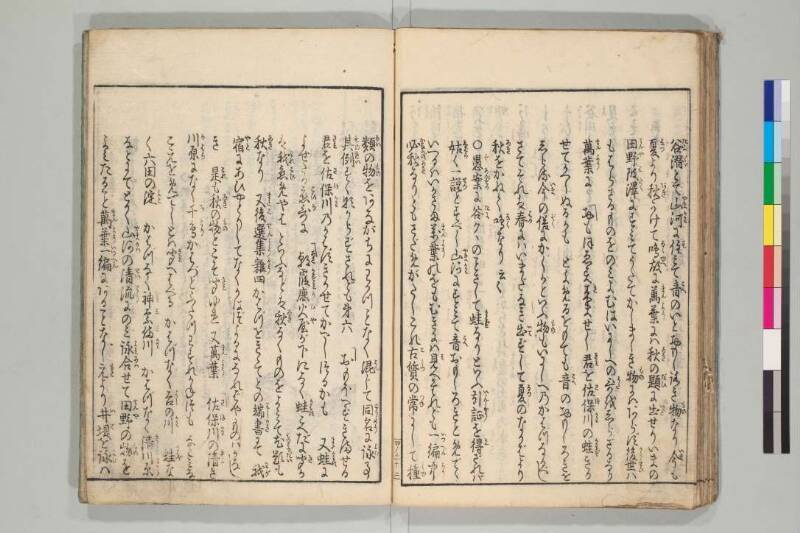
翻刻
【右丁】
谷潜(たにくゞ)#1とて山河(やまかわ)に住(す)みて音(こへ)のいとおもしろき物(もの)なり今(いま)も
夏(なつ)より秋(あき)かけて鳴(なく)故(ゆへ)に萬葉(まんよう)には秋(あき)の題(だひ)に出(いだ)せりいまの
田野(てんや)陂沢(はたく)#2にすみてうたてかしましき物(もの)にはあらず後世(かうせひ)は
もはらさるものをのみよむはいにしへの哥(うた)をしらざるなり
萬葉(まんよう)に 〽おもほゑす来(き)ませし君(きみ)を佐保川(さほかわ)の蛙(かわず)きか
せてかへしぬるかも とよめるをもても音(こへ)のおもしろきを
しらる今(いま)の俗(ぞく)にかしかといふ物(もの)もいにしへのかわづなるべし
さてそれは春(はる)にはいまだなき出(いて)ずして夏(なつ)のなかばより
秋(あき)をかねて鳴(なく)なり云々
○愚案(ぐあんずる)に谷(たに)クヽのことさして蛙(かわず)なりといふ引証(いんしやう)を得(え)ざれば
姑(しばら)く一説( せつ)とすべし山河(やまかわ)にすみて音(こへ)おもしろきとめでゝ
いへるはいかさま萬葉(まんよう)のをもむきには見(み)へたれども一編(いつへん)中(ちう)
必(かならず)秋(あき)なりともさだめがたしこれ古質(こしつ)の常(つね)にして種(しゆ)
【左丁】
類(るい)の物(もの)をあながちにわかつことなく混(こん)じて同名(とうめう)に詠(よむ)事
其例(そのれい)すくなからずされども㐧六 〽おもほへずきませる
君(きみ)を佐保川(さほかわ)のかはずきかせてかへしつるかも 又(また)蛙(かわす)に
よせたる恋哥(こひか)に 〽朝霞(あさかすみ)鹿火屋(かひや)が下になく蛙(かはす)こへだに聞(き)か
は我(われ)恋(こひ)めやは といふなどは秋(あき)なくものをよみて尤(もつとも)題(だい)も
秋(あき)なり 又(また)後選集(こせんしう)雑四(そう )かはづをきゝてとの端書(はしかき)にて 我(わが)
宿(やと)にあひやとりしてなくかはづよるになればやものはかなし
き 是(これ)も秋(あき)の物(もの)とこそ聞(きこ)ゆれ又 萬葉(まんよう) 〽佐保川(さほかわ)の清(きよ)き
川原(かはら)になく千鳥(ちとり)かはづとふたつわすれかねつも なとみな
こえをめでしとは聞(きこ)へはべる かはづなく《振り仮名:吉の川|よし かわ》 蛙(かわづ)な
く六田の淀(よと) かわづなく神奈備川(かみなみかわ) かわづなく清川原(きよきかはら)
なとにてとかく山河(やまかは)の清流(せいりう)にのみ詠合(よみあは)せて田野(てんや)の物(もの)を
よみたること萬葉(まんよう)一編(いつへん)にあることなし元(もと)より井堤(いて)を詠(よむ)は
現代語訳
【右丁】
(前ページより続く)「谷潜(たにくぐり)」(注1)と称して、山川に棲み、その声がまことに趣深い生き物である。今日でも夏から秋にかけて鳴くため、『万葉集』では秋の題として詠み出されているのである。今日の田野(田畑の野)や陂沢(はたく)(注2)に棲んで、うるさく騒がしい生き物のことではない。後世の人々がもっぱら(うるさい田の)蛙のみを詠むのは、いにしえの歌を知らないからである。
『万葉集』に、
「おもほえず 来ませし君を 佐保川の 蛙聞かせて かへしぬるかも」
(思いがけずもおいでになったあなたを、佐保川の蛙の声を聞かせながら、お帰ししてしまったことだよ)
と詠まれているのを見ても、その声の趣深さが知られる。今日の俗に「かしか」と呼ばれるものも、いにしえの「かわず」に他ならないであろう。さて、それ(かしか)は春にはまだ鳴き出さず、夏の中頃から秋にかけて鳴くのである。(云々)
○愚案ずるに、「谷潜(たにくぐり)」のことをとくに蛙であると言う引証(根拠)を得ないので、しばらくは一説としておくべきである。山川に棲んで声が趣深いと賞賛して言っているのは、なるほど『万葉集』の趣旨には見えるけれども、(万葉集の)一編の中で(鳴く季節が)必ずしも秋と定めがたい。これは古(いにしえ)の質朴な(叙述の)常として、種
【左丁】
類の物をあえて区別することなく混同して同じ名で詠むことの例は少なくない。それでも、第六(巻)の、
「おもほえず 来ませる君を 佐保川の かはず聞かせて かへしつるかも」
また、蛙に寄せた恋歌に、
「朝霞 鹿火屋が下に 鳴く蛙 声だに聞かば 我恋めやは」
(朝霞の中、鹿火屋(かびや)の下に鳴く蛙の声さえ聞くことができれば、私はこんなにも恋い焦がれているであろうか)
などというのは、秋に鳴くものを詠んでおり、題もやはり秋である。
また、『後撰集』雑四(ざつし)、「蛙を聞きて」との詞書(ことばがき)のもとに、
「我が宿に あひやどりして 鳴く蛙 夜になればや ものはかなしき」
(わが家に共に宿って鳴く蛙よ、夜になるとやはり、ものかなしいことだ)
これもまた秋のものとして聞こえる。
また、『万葉集』に、
「佐保川の 清き川原に 鳴く千鳥 かはづとふたつ 忘れかねつも」
(佐保川の清らかな川原に鳴く千鳥と蛙と、その二つが忘れられないことよ)
などとあるのも、すべて(蛙の)声を愛でてのこととして聞こえる。
「かはづ鳴く 吉の川(よしのかわ)」、「蛙鳴く 六田の淀(むつたのよど)」、「かわづ鳴く 神奈備川(かみなびかわ)」、「かわづ鳴く 清き川原」などのように、いずれも山川の清流にのみ組み合わせて詠まれており、田野(田畑の野)のものとして詠まれたことは、『万葉集』一編の中には一切ない。もとより「井堤(いで)」を詠むのは……(次ページへ続く)
英語訳
**[Right Page]**
(Continuing from the previous page) Known as the "*tanikuguri*" (valley-lurker) (Note 1), this is a creature that lives in mountain streams and has a most fascinating voice. Since it cries even today from summer through autumn, it is presented under the topic of autumn in the *Man'yōshū*. This is not the creature that lives in fields and marshes (*hataku*) (Note 2) and cries in an unpleasant, noisy manner. That later generations compose poems exclusively about (noisy, paddy-field) frogs shows that they do not know the poetry of antiquity.
In the *Man'yōshū*:
"*Omohoezu / kimaseshi kimi wo / Sahogawa no / kawazu kikasete / kaeshinu ru kamo*"
(You came to visit unexpectedly; having let you hear the frogs of the Saho River, I have let you return home—alas!)
Even from this poem alone, one can appreciate how charming the voice of this creature is. What is commonly called "*kashika*" today must be none other than the "*kawazu*" of antiquity. Furthermore, this creature does not yet begin to cry in spring, but cries from mid-summer through autumn. (And so forth.)
○ In my humble opinion, since I have not been able to obtain definitive proof that the "*tanikuguri*" specifically refers to a frog, I shall for the time being treat this as one theory. That it is praised for living in mountain streams and having a fascinating voice does indeed appear to accord with the spirit of the *Man'yōshū*; however, it is difficult to determine from the anthology as a whole that this creature necessarily belongs to autumn. It is the common practice in ancient, unadorned (literary style) not to deliberately distinguish between
**[Left Page]**
different species, but rather to mix them together under the same name—and examples of this are not few. Nonetheless, the poem in Book Six:
"*Omohoezu / kimaseru kimi wo / Sahogawa no / kawazu kikasete / kaeshitsuru kamo*"
and also among the love poems composed with the frog as their subject:
"*Asakasumi / kabiyadoga shita ni / naku kawazu / koe dani kikaba / ware koi me ya wa*"
(If only I could hear the voice of the frog crying beneath the deer-fire hut in the morning mist, would I be tormented by such longing?)
—these are poems that take as their subject a creature that cries in autumn, and their topic is indeed autumn.
Furthermore, in the *Gosen'shū*, under the heading of "Miscellaneous, Part Four" (*Zatsu-shi*), with the preface "On Hearing Frogs":
"*Waga yado ni / ai yadori shite / naku kawazu / yoru ni nareba ya / mono wa kanashiki*"
(O frog that shares a lodging with me at my dwelling and cries—is it because night has fallen that things feel so melancholy?)
This too can be understood as referring to an autumn creature.
Also, in the *Man'yōshū*:
"*Sahogawa no / kiyoki kawara ni / naku chidori / kawazu to futatsu / wasure kanetsumu*"
(The plovers crying on the clear riverbanks of the Saho River, and the frogs—these two things I cannot forget.)
—all of these, too, are clearly expressions of admiration for the (frog's) voice.
Phrases such as "frogs crying at the Yoshino River," "frogs crying at the Mutsuta shallows," "frogs crying at the Kaminabi River," and "frogs crying on the clear riverbanks" consistently appear paired exclusively with clear mountain-stream settings; nowhere in the entire *Man'yōshū* is the creature composed of in connection with paddy fields or wild plains. Naturally, to compose a poem about "Ide" (the well-bank)... (continues on the next page)