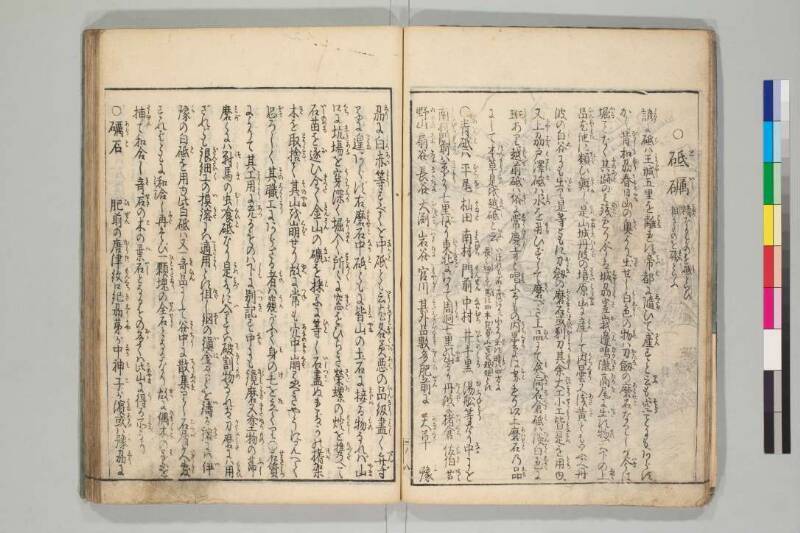
翻刻
【右丁】
○砥礪(といし)《割書:精(こまか)なるものを砥(し)といひ|粗(あら)きものを礪(れい)といふ》
諺(ことはさ)に砥(と)は王城(わうじやう)五里を離(はな)れす。帝都(ていと)に随(したが)ひて。産(さん)すと云(いふ)も。空(そら)ことにもあらす
かし。昔(むかし)和州(わしう)春日山(かすがやま)の奥(おく)より。出(いだ)せし白色(はくしよく)の物(もの)は刀剣(かたな)の磨石(あわせと)なりしが。今(いま)は
掘(ほる)ことなく其(その)跡(あと)のみ残(のこ)れり。今は城州(じやうしう)嵯峨(さが)辺(へん)鳴瀧(なるたき)高尾(たかを)に出(いだ)す物(もの)。天下の上(じやう)
品(ひん)尤(もつとも)他(た)に類(たぐ)ひ鮮(すくな)し。是(これ)山城(やましろ)丹波(たんば)の境原山(さかいはらやま)に産(さん)して。内曇(うちくもり)又/浅黄(あさき)ともいふ。又丹
波の白谷(しれ)にも出(いだせ)り是等ともに刀剣(かたな)の磨石(あわせと)或(あるひは)剃刀(かみそり)其余(そのよ)大工(たいこう)小工(せうこう)皆(みな)是(これ)を用(もち)ゆ。
又/上州(じやうしう)戸沢砥(とさはと)は。水(みつ)を用(もち)ひずして磨(とく)べき上/品(ひん)にて。参河(みかわ)名倉砥(なくらと)は淡白色(たんはくしよく)に
斑(またら)#1あり。越前砥(ゑちぜんと)は俗(そく)に常慶寺(じやうけんじ)と唱(とな)ふるもの。内曇(うちくもり)には劣(おと)れり以上/磨石(あはせと)の品(しな)
にして本草(ほんざう)是(これ)を越砥(ゑつし)と云(いふ)《割書:いつれも。石に皮(かは)あり。山より出(いだ)す時(とき)は。四方に|長(なが)く切(きり)りて馬(むま)に四本/宛(づゝ)。負(お)ふ寸を。規矩(きく)とす》
○青砥(あおと)は平尾(ひらを)杣田(そまた)南村(みなむら)門前(もんせん)中村(なかむら)井手黒(いでのくろ)湯船(ゆふね)等(とう)なり中(なか)にも
南村(みなむら)門前(もんせん)は京(きよう)より七里ばかり東北(ひかしきた)にありて周廻(まはり)七里の山(やま)なり丹波(たんば)に猪倉(いのくら)佐伯(さいき)芦(あし)
野山(のやま)扇谷(あふきたに)長谷(なかたに)大渕(おほぶち)岩谷(いわたに)宮川(みやかわ)其外(そのほか)品数(ひんすう)多(おゝし)肥前(ひぜん)に天草(あまくさ)予(よ)
【左丁】
州(しう)に白(しろ)赤(あか)等(とう)すべてを中砥(なかと)とも云(いう)尤(もつとも)各(おの〳〵)美悪(びあく)の品級(ひんきう)尽(こと〳〵)く弁(べん)ず
るに遑(いとま)あらず右/磨石(あわせと)中砥(なかと)ともに皆(みな)山(やま)の土石に接(まじは)る物(もの)なれば山(やま)
口(くち)に坑場(しきあな)を穿(うかち)深(ふか)く堀入(ほりいり)て《振り仮名:所々|ところ〳〵》に窓(まど)をひらき栄螺(さゞゐ)の燈(ともし)を携(たづさ)へて
石苗(いしのつる)を逐(お)ひ全(まつた)く金山(きんさん)の礦(まぶ)を採(と)るに等(ひと)し石(いし)尽(つき)ぬればかの榰(つか)架
木(き)を取捨(とりすて)て其山(そのやま)を崩(くず)せり故(ゆへ)に常(つね)も穴中(あなのなか)崩(くず)るべきやうに見へて
恐(おそ)ろしく其(その)職工(しよくこう)にあらざる者(もの)は窺(うか)がふて身(み)の毛(け)を立(た)てり○石質(せきしつ)
によりて其/工用(こうよう)に充(あつ)るものは下(しも)に別記(へつき)す中(なか)にも鏡磨(かゞみとぎ)又(また)塗物(ぬりもの)の節(ふし)
磨(みが)くには対馬(つしま)の虫喰砥(むしくひと)なり是(これ)水(みづ)に入(い)りては破割物(わるゝもの)なれば刀磨(かたなとぎ)には用(もちひ)
ざれども銀細工(ぎんさいく)の模鎔(いかた)には適用(てきよう)とす但(たゞ)し網(あみ)の鎮金(いは)などを鋳(い)る鎔(かた)には伊(い)
予(よ)の白/砥(と)を用ゆ此白砥は又一/奇品(きひん)にして谷中(こくちう)に散集(ちりあつま)りし石屑(こつぱ)久敷(ひさしく)
すればともに和合( |とちつき)し再(ふた)たび一顆塊(ひとかたまり)の全石(せんせき)となるなり故(ゆへ)に偶(たま〳〵)木(こ)の葉(は)を
插(さしはさん)#2て和合し奇石(きせき)の木(こ)の葉(は)石(いし)となるもの多(おゝ)くは此(この)山(やま)に得(う)る所(ところ)なり
○礪石(あらと) 肥前(ひぜん)の唐津(からつ)紋口(もんくち)紀州(きしう)茅(かや)が中(なか)神子(みこ)が浜(はま)或(あるひ)は予州(よしう)に
現代語訳
## 砥礪(といし)
※細かいものを「砥(し)」といい、粗いものを「礪(れい)」という
諺に「砥は王城五里を離れず」とあり、帝都に従って産出するというのも、まったく根拠のないことでもない。昔、大和国(奈良)の春日山の奥から産出した白色のものは刀剣の仕上げ砥であったが、今は採掘することなく、その跡のみが残っている。今は山城国(京都)の嵯峨あたり、鳴瀧・高尾に産出するものが天下一の上品であり、他に類するものが少ない。これは山城と丹波の境原山に産するもので、「内曇(うちくもり)」また「浅黄(あさぎ)」ともいう。また丹波の白谷にも産出する。これらはいずれも刀剣の仕上げ砥、あるいは剃刀(かみそり)、その他大工・小工(さまざまな職人)がみなこれを用いる。
また上野国(群馬)の戸沢砥は、水を用いずに研ぐことができる上品であり、三河国(愛知)の名倉砥は淡白色に斑紋がある。越前砥は俗に「常慶寺(じょうけんじ)」と称するもので、内曇には劣る。以上が仕上げ砥の品種であり、本草書ではこれを「越砥(えっし)」という。
※いずれも石に皮(外皮)があり、山から出す時は四方に長く切って、馬に四本ずつ負わせる寸法を規矩(基準)とする。
○青砥(あおと)は平尾・杣田・南村・門前・中村・井手黒・湯船などである。中でも南村・門前は京都より七里ほど東北にあり、周囲七里の山である。丹波には猪倉・佐伯・芦野山・扇谷・長谷・大渕・岩谷・宮川、その他品数が多い。肥前(佐賀・長崎)に天草、予州(愛媛)に白・赤など、
---
すべてを「中砥(なかと)」ともいう。それぞれ品質の良し悪しの等級はことごとく説明するには暇がない。上記の仕上げ砥・中砥はともにみな山の土石に接して存在するものなので、山の入り口に坑場(採掘場)を穿ち、深く掘り入って所々に窓(換気口)を開き、栄螺(さざえ)の灯りを携えて石の脈(石苗)を追い、まったく金山の鉱(坑道)を採るのと同じである。石が尽きれば、あの支柱・架け木を取り捨てて、その山を崩す。それゆえ、常に穴の中が崩れそうに見えて恐ろしく、その職工でない者は覗いて身の毛がよだつほどである。
○石の性質によって、その用途に充てるものは以下に別記する。中でも鏡磨き、また塗物(漆器)の節(継ぎ目部分)を磨くには、対馬の虫喰砥(むしくいと)を用いる。これは水に入れると割れてしまうものなので、刀磨きには用いないが、銀細工の鋳型には適している。ただし、網の錘(いわ)などを鋳る鋳型には伊予(愛媛)の白砥を用いる。この白砥はまた一種の珍品であって、谷の中に散り集まった石屑が、長い時間をかけてともに和合し、再び一塊の完全な石となるものである。それゆえ、たまたま木の葉を挟んで和合し、奇石として「木の葉石」となるものは、多くはこの山で得られるものである。
○礪石(あらと) 肥前(佐賀・長崎)の唐津・紋口、紀州(和歌山)の茅が中・神子が浜、あるいは予州(愛媛)に
英語訳
## Whetstones (Toishi)
※Fine-grained ones are called "shi (砥)" and coarse ones are called "rei (礪)"
There is a saying that "whetstones are never found more than five ri from the royal capital," and the claim that they are produced in accordance with the imperial capital is not entirely without basis. In ancient times, the white stone extracted from deep within Mt. Kasuga in Yamato Province (present-day Nara) was used as a finishing whetstone for swords, but now it is no longer quarried, leaving only traces behind. Today, the finest whetstones in the land come from the area around Saga in Yamashiro Province (present-day Kyoto), specifically from Narutaki and Takao, and there are few elsewhere to compare with them. These are produced at Sakaihara-yama on the border of Yamashiro and Tanba provinces, and are called "uchikumori (inner haze)" or "asagi (light blue-green)." They are also produced at Shirotani in Tanba Province. All of these are used as finishing whetstones for swords, razors, and by carpenters and craftsmen of all kinds.
The Tozawa whetstone from Kōzuke Province (present-day Gunma Prefecture) is a high-quality stone that can be used for sharpening without water. The Nagura whetstone from Mikawa Province (present-day Aichi Prefecture) has a pale white color with mottled patterns. The Echizen whetstone, commonly called "Jōkenji," is inferior to the uchikumori. The above are all varieties of finishing whetstones (awaseto), referred to in herbal encyclopedias as "etsushi (Y越砥)."
※All of these stones have an outer skin (rind). When extracted from the mountain, they are cut into long rectangular pieces and loaded onto horses four stones at a time — this measure serves as the standard unit.
○ Green whetstones (aoto) come from Hirao, Somata, Minamimura, Monzen, Nakamura, Ide no Kuro, Yufune, and other places. Among these, Minamimura and Monzen are located about seven ri northeast of Kyoto in a mountain with a circumference of seven ri. In Tanba Province, there are many varieties from Inokura, Saiki, Ashinoyama, Ōgitani, Nagatani, Ōbuchi, Iwatani, Miyakawa, and many others. In Hizen Province (present-day Saga/Nagasaki), there is Amakusa; in Yōshū (Iyo Province, present-day Ehime), there are white and red varieties...
---
All of these are also called "medium whetstones (nakato)." The grades of quality for each are so numerous that there is no leisure to describe them all in full. Both the finishing whetstones and medium whetstones described above are found embedded in the rock and soil of mountains, so a pit (quarry) is dug at the mountain entrance, bored deep inside, and ventilation windows are opened at various points. Workers carry oil lamps made from turban shells (sazae) and follow the veins of stone — the operation is entirely comparable to mining ore in a gold mine. When the stone is exhausted, the supporting timbers and framework are removed and the mountain itself is collapsed. For this reason, the interior of the tunnels always appears ready to cave in, making it terrifying, and those who are not experienced workers in this trade shudder at the mere sight of it.
○ Items to be listed below correspond to stones suited to various uses according to their qualities. Among them, for polishing mirrors and for smoothing the joints of lacquerware, the "worm-eaten whetstone" (mushikuito) of Tsushima Island is used. Since this stone cracks when immersed in water, it cannot be used for polishing swords, but it is well suited for molds used in silver-crafting. However, for casting molds for net sinkers, the white whetstone of Iyo Province (Ehime Prefecture) is used. This white whetstone is itself a remarkable curiosity: stone chips scattered and accumulated in valleys gradually coalesce over a long period of time to form a single complete stone once again. It is therefore quite common to find curiosities such as "leaf stones" — stones formed when a leaf happened to be sandwiched between the stone chips as they bonded together — and most of these are found in this mountain.
○ Coarse whetstones (arato) From Karatsu and Monguchi in Hizen Province (present-day Saga/Nagasaki), from Kayaganaka and Mikogahama in Kishū (present-day Wakayama), and from Yōshū (Iyo Province, present-day Ehime)...