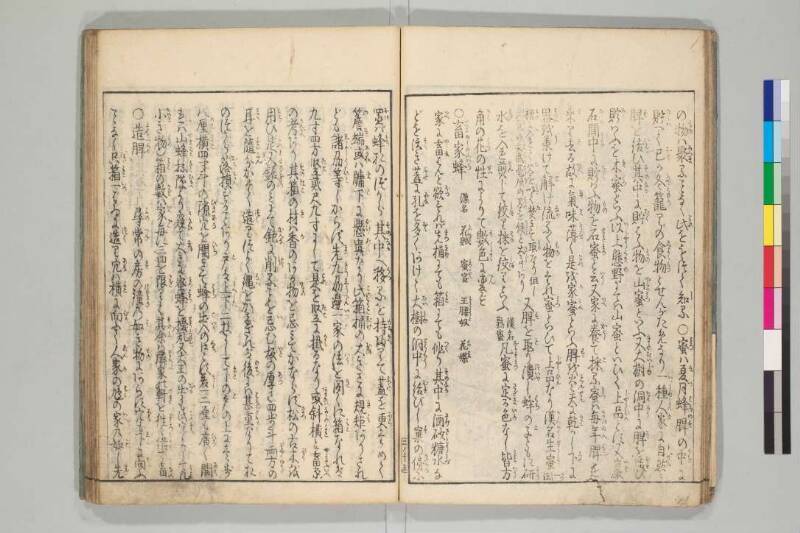
翻刻
【右丁】
の物(もの)は聚(あつま)ることなく此(これ)をもつて知(し)る○蜜(みつ)は夏月(なつ)蜂脾(はちのす)の中(うち)に
貯(たくは)へて己々(おの〳〵 )冬籠(ふゆこもり)りの食物(しよくもつ)とせんがためなり一種(いつしゆ)人家(しんか)に自然(しぜん)に
脾(す)を結(むす)ひ其中(そのなか)に貯(たく)はふ物(もの)を山蜜(やまみつ)といふ又(また)大樹(たいじゆ)の洞中(たうちう)に脾(す)を結(むす)ひ
貯(たく)はふを木蜜(きみつ)といふ以上(いじやう)熊野(くまの)にては山蜜といひて上品(じやうひん)とす又/巌(いわ)
石(ほ)間中(のうち)に貯(たく)はふ物(もの)を石蜜(せきみつ)と云(いう)又/家(いへ)に養(かう)て採(と)る蜜(みつ)は毎年(まひねん)脾(す)を
采(と)り去(さ)る故(ゆへ)に気味(きみ)薄(うす)く是(これ)を家蜜(かみつ)といふ脾(す)を炎天(えんてん)に乾(かわ)かし下(した)に
器(うつは)を承(う)けて解(と)け流(なが)るゝ物(もの)をたれ蜜(みつ)といひて上品(じやうひん)なり漢名(かんめう)生蜜(せうみつ)《割書:一(いつ)|法(はう)》
《割書:槽(ふね)に入(い)れて火(ひ)を以(もつ)て焚(た)きて取(とる)なり但し|火気(くわき)の文武(ふんふう)毫厘(かうり)の間(あいた)を候(うかゞふ)こと大事(たいじ)あり》又/脾(す)を取(と)り潰(ついや)し蜂(はち)の子(こ)ともに研(すり)
水(みづ)を入(い)れ煎(せん)じて絞(しほ)り採(とる)を絞(しぼ)りといふ《割書:漢名|熟蜜》凡(およそ)蜜(みつ)に定(さだま)る色(いろ)なし皆(みな)方(はう)
角(かく)の花(はな)の性(せい)によりて数色(すしよく)に変(へん)ず
○畜家蜂(いへにやしのふはち) 《割書:漢名 花賊(くはそく) 蜜宦(みつくはん) 王腰奴(わうようと) 花媒(くははい) |》
家(いへ)に畜(やしな)はんと欲(ほつ)すれば先(まつ)桶(おけ)にても箱(はこ)にても作(つく)り其中(そのなか)に酒(さけ)砂糖水(さとうみづ)な
どを沃(そゝ)き蓋(ふた)に孔(あな)を多(おゝ)くあけて大樹(たいしゆ)の洞中(とうちう)に結(むす)びし巣(す)の傍(かたはら)に
【左丁】
置(おけ)ば蜂(はち)おのづから其中(そのなか)へ移(うつ)るを持帰(もちかへ)りて蓋(ふた)を更(あら)ためて
簷端(のき)或(あるひ)は牗下(まと)に懸置(かけおく)なり此(この)箱桶(はこおけ)の大(おほ)きさに規矩(きく)ありされ
ども諸州(しよしう)等(ひと)しからず先(まつ)九州(きうしう)辺(へん)一家(いつか)の法(はう)を聞(き)くに箱(はこ)なれば
九寸四方/竪(たて)弐尺九寸にして是(これ)を竪(たて)に掛(かく)るなり或(あるひは)斜横(なゝめよこ)と畜家(やしなふいへ)
の考(かんがへ)あり其(その)箱(はこ)の材(き)は香(か)のある物(もの)を忌みてかならず松(まつ)の古/木(ぼく)を
用(もち)ひ是(これ)又(また)鋸(のこぎり)のみにて銫(かんな)に削(けづ)ることを忌(い)む板(いた)の厚(あつ)さ四歩斗/両方(りやうはう)の
耳(みゝ)を随分(ずいぶん)かたく造(つく)りつよく縄(なは)をかけざれば後(のち)には甚(はなはた)重(おもく)なりてお
のづから落(おち)損(そん)ずることあり戸(と)は上下(うえした)二枚にして下(した)の戸(と)の上に壱歩
八/厘(りん)横(よこ)四寸斗の隙穴(ひまあな)を開(ひら)きて蜂(はち)の出入(ていり)の口(くち)とす若(もし)一二/厘(りん)も広(ひろ)く開(あく)
れば山蜂(やまはち)抔(なと)隙(ひま)より窺(うかがひ)て大(おほ)きに蜜蜂(みつはち)を擾乱(せうらんす)又大王の出(いづる)にも此(この)穴(あな)よりして凡(およそ)
小(ちいさ)き物(もの)也/箱(はこ)の数(かず)は家毎(いへごと)に三四を限(かぎ)りて其余(そのよ)は隣家(りんか)の軒(のき)を往(ところ)々(〳〵)借(かり)て畜(やしなふ)
○造脾(すをつくる) 尋常(よのつね)の房(す)の鐘(つりかね)の如(こと)き物(もの)にあらず穴(あな)も下(した)に向(むか)ふ
ことなく只(たゞ)箱(はこ)一(いつ)はゐに造(つく)り穴(あな)は横(よこ)に向(むか)ふて人家(じんか)の鳩(はと)の家(いへ)の如(こと)し先(まづ)
現代語訳
の物は集まることなく、これをもって知る。蜜は夏月、蜂の巣の中に貯えて、おのおの冬籠りの食物とせんがためなり。一種、人家に自然に巣を結び、その中に貯える物を山蜜という。また大樹の洞中に巣を結び貯えるを木蜜という。以上、熊野にては山蜜といって上品とす。また巌石の間中に貯える物を石蜜という。また家に養って採る蜜は、毎年巣を採り去る故に気味薄く、これを家蜜という。巣を炎天に乾かし、下に器を受けて解け流るる物をたれ蜜といって上品なり。漢名は生蜜《一法:槽に入れて火をもって焚きて取るなり。但し火気の文武、毫厘の間を窺うこと大事あり》。また巣を取り潰し、蜂の子とともに研り、水を入れ煎じて絞り採るを絞りという《漢名:熟蜜》。凡そ蜜に定まる色なし。皆、方角の花の性によりて数色に変ず。
○畜家蜂《漢名:花賊、蜜宦、王腰奴、花媒》
家に畜わんと欲すれば、先ず桶にても箱にても作り、その中に酒砂糖水などを注ぎ、蓋に孔を多く開けて、大樹の洞中に結びし巣の傍に置けば、蜂おのずからその中へ移るを持ち帰りて、蓋を改めて軒端あるいは窓下に懸け置くなり。この箱桶の大きさに規矩ありされども、諸州等しからず。先ず九州辺一家の法を聞くに、箱なれば九寸四方、竪二尺九寸にして、これを竪に掛くるなり。あるいは斜横と畜家の考えあり。その箱の材は香のある物を忌みて、必ず松の古木を用い、これまた鋸のみにて、鉋に削ることを忌む。板の厚さ四歩ばかり、両方の耳を随分かたく造り、強く縄をかけざれば、後には甚だ重くなりて、おのずから落ち損ずることあり。戸は上下二枚にして、下の戸の上に一歩八厘、横四寸ばかりの隙穴を開きて、蜂の出入りの口とす。若し一二厘も広く開ければ、山蜂など隙より窺って、大きに蜜蜂を擾乱す。また大王の出ずるにも、この穴よりして、凡そ小さき物なり。箱の数は家毎に三四を限りて、その余は隣家の軒をところどころ借りて畜う。
○造脾 尋常の房の鐘の如き物にあらず。穴も下に向かうことなく、ただ箱一杯に造り、穴は横に向かうて人家の鳩の家の如し。先ず
英語訳
...the things do not gather together, and by this we understand. Honey is stored in the honeycomb during summer months, with each bee preparing food for their winter retreat. One type naturally builds nests in human dwellings, and the honey stored within is called "mountain honey." That which is stored in nests built in the hollows of large trees is called "tree honey." In Kumano, the above-mentioned is called mountain honey and is considered top quality. That which is stored among rock crevices is called "stone honey." Honey collected from bees raised at home has a weak flavor because the combs are harvested every year; this is called "domestic honey." When combs are dried in the blazing sun with containers placed below to catch what melts and flows out, this is called "dripping honey" and is of superior quality. The Chinese name is "raw honey" {{Alternative method: Put in a trough and extract by burning with fire. However, it is crucial to carefully monitor the strength of the fire, even to the smallest degree}}. Also, when combs are crushed together with bee larvae, ground up, boiled with water and squeezed to extract, this is called "pressed honey" {{Chinese name: cooked honey}}. Generally, honey has no fixed color but changes to various colors depending on the nature of flowers from different directions.
○Domestic Bees {{Chinese names: flower thief, honey servant, royal waist slave, flower matchmaker}}
If one wishes to keep them at home, first make either a bucket or box, pour sugar water or sake into it, make many holes in the lid, and place it near nests built in tree hollows. The bees will naturally move into it, which can then be brought home. Change the lid and hang it under the eaves or below windows. Though there are standards for the size of these boxes and buckets, they are not uniform across all provinces. According to one method heard from a family in Kyushu, if using a box, it should be nine sun square and two shaku nine sun tall, hung vertically. Some households consider hanging them diagonally or horizontally. For the box material, fragrant wood is avoided, and old pine wood must be used. Also, only sawing is used, avoiding planning with a plane. The board thickness is about four bu, with both ear sections made quite sturdy and strongly bound with rope, or else they will become very heavy later and naturally fall and break. There are two doors, upper and lower, with a gap of one bu eight rin by about four sun horizontal opened above the lower door as an entrance for the bees. If opened even one or two rin wider, mountain bees and others will peer through the gap and greatly disturb the honey bees. Even when the queen emerges, it is through this hole, and it is generally quite small. The number of boxes is limited to three or four per household, with the remainder borrowed from neighbors' eaves here and there.
○Comb Construction: Not like ordinary combs resembling bells. The cells do not face downward but are built to fill the entire box, with cells facing horizontally like pigeon houses in human dwellings. First...