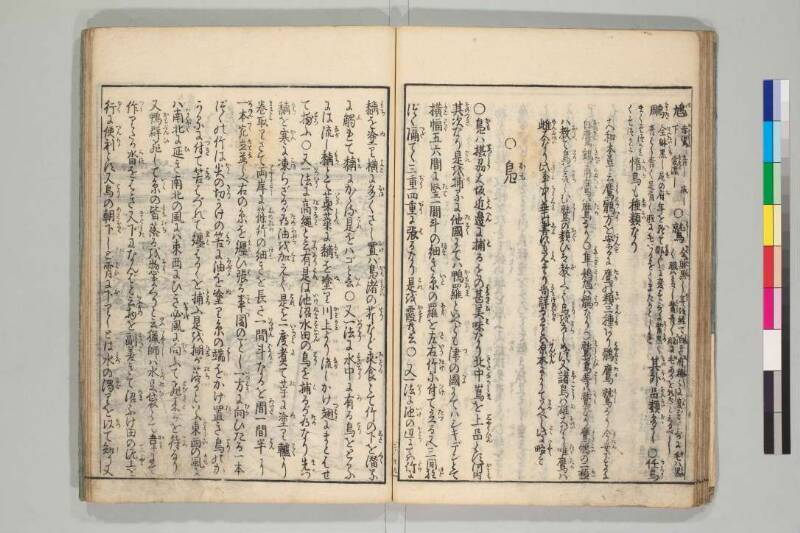
翻刻
【右丁】
鳩(ば)《割書:赤治鳥(あかさしば) 青- 底-|下- 裳濃(すそご)-》○鷲(わし)《割書:全体(せんたい)黒し年(とし)を経て白(しろ)き府(ふ)種々(しゆ〳〵)に変(へん)ず哥に毛(け)は黒(くろ)|く眼は青く觜(はし)青く脛(あし)に毛(け)あるを鷲(わし)としるべし》
鵰(くまたか)《割書:全体(せんたい)黒(くろ)く尾(を)の府(ふ)年を経(へ)て様(さま)〴〵に変す哥に觜(はし)黒(くろ)く|青ばし青く足青く脛に毛あるをくまたかとしれ》其外(そのほか)品類(ひんるい)多(おゝ)し○任鳥(つふり)
《割書:まくそつかみ|くそつかみ》惰鳥(よたか)も種類(しゆるい)なり
大和本草云/鷹鶻方(ようこつはう)を案(あんず)るに鷹(たか)の類(るい)三種(さんしゆ)あり鶻(はやぶさ)鷹(たか)鷲(わし)なり今(いま)案(あん)ずるに
白鷹(おほたか)鷂(はいたか)角鷹(くまたか)は鷹(たか)なり○隼(はやぶさ)鶆鳩(さしは)は鶻(こつ)なり○鷲(わし)鳶(とび)等(とう)は鷲(わし)なり鷹鶻(ようこつ)の二/類(るい)
は教(おしへ)て鳥(とり)を取(とら)しむ鷲(わし)の類(たぐ)ひは教(お)しへて鳥(とり)を取(とら)しめず又/諸鳥(しよてう)は雄(お)大(おほひ)なり唯(たゞ)鷹(たか)は
雌(めん)大(おほい)なり此事(このこと)中華(ちうくわ)の書(しよ)にも見(みへ)たり尚(なを)詳(つまひらか)なることは原本(げんぽん)によりて見(みる)べし此(こゝ)に略(りやく)す
○ 鳧(かも)
○ 鳧(かも)は摂州(せつしう)大坂/近辺(きんへん)に捕(と)るもの甚(はなはた)美味(ひみ)なり北中島(きたなかしま)を上品(じやうひん)とす河内(かわち)
其次(そのつぎ)なり是(これ)を捕(と)るに他国(たこく)にては鴨羅(かもあみ)といへども津(つ)の国(くに)にてはシキデンとて
横幅(よこはゞ)五六間に竪(たて)一間斗の細(ほそ)き糸(いと)の羅(あみ)を左右(さいう)竹(たけ)に付(つけ)て立(たつ)る又三間/程(ほど)
づゝ隔(へだ)てゝ三/重(ぢう)四/重(ぢう)に張(は)るなり是(これ)を霞(かすみ)共云○又一/法(はう)に池(いけ)の辺(ほとり)にては竹(たけ)に
【左丁】
黐(もち)を塗(ぬ)り横(よこ)に多(おほ)くさし置(おけ)ば鳧(かも)渚(みぎは)の芹(せり)など求食(あさる)とて竹の下(した)を潜(くゝ)る
に触(ふ)れて黐(もち)にかゝる是(これ)をハゴと云(いふ)○又/一法(いつはう)に水中(すいちう)に有(あ)る鳥(とり)をとる
には流(なが)し黐(もち)とて藁蘂(わらしべ)に黐(もち)を塗(ぬ)り川上(かわかみ)より流(なが)しかけ翅(つばさ)にまとはせ
て捕(とら)ふ○又/一法(いつはう)に高縄(たかなわ)と云(いふ)有(あり)是(これ)は池(いけ)沼(ぬま)水田(すいでん)の鳥(とり)を捕(と)るが為(ため)なり先(ま)づ
黐(もち)を寒(かん)に凍(こほ)らざるが為(ため)油(あぶら)を加(くわ)えて是(これ)を一度(いちど)煮(に)て荢(お)#1に塗(ぬ)り轤(わく)に
巻取(まきと)りさて両岸(りやうきし)に篠竹(しのたけ)の細(ほそ)きを長さ一間(いつけん)斗(ばかり)なるを間(あいだ)一間/半(はん)に
一本(いつほん)宛(づゝ)立並(たてな)らべ右の糸を纏(まと)ひ張(は)る事(こと)図(づ)のごとし一方(いつはう)に向(むか)ひたる一本
づゝの竹は尖(かと)の切(きり)かけの筈(はづ)に油(あぶら)を塗(ぬ)り糸の端(はし)をかけ置(お)き鳥(とり)のか
かるに付(つき)て筈(はづ)はづれて纏(まと)はるゝを捕(とら)ふ是を棚(たな)が落(おち)るといふ東西(とうざい)の風(かぜ)に
は南北(なんぼく)に延(ひ)き南北の風には東西にひき必(かならず)風に向(むか)ふて飛来(とびきた)るを待(まつ)なり
又/鴨(かも)群飛(ぐんひ)して糸(いと)の皆(みな)落(おち)るを惣(そう)まくりと云(いふ)猟師(りやうし)は水足袋(みづたび)とて韋(かわ)にて
作(つく)りたる沓(くつ)をはき又下(またした)になんばと云(いふ)物(もの)を副差(そへは)きて沼(ぬま)ふけ田の泥上(でいじゃう)を
行(ゆく)に便利(べんり)とす又/鳥(とり)の朝(あさ)下(おり)しと宵(よひ)に下(お)りしとは水(みづ)の濁(にご)りを以(もつ)て知(し)り又
現代語訳
【右丁】
鳩(赤治鳥・青・底・下・裳濃など)○鷲(全体が黒く、年を経て白い部分が種々に変化する。歌にあるように毛は黒く、眼は青く、嘴は青く、脛に毛があるのを鷲と知るべし)
熊鷹(全体が黒く、尾の部分が年を経て様々に変化する。歌にあるように嘴は黒く、青嘴は青く、足は青く、脛に毛があるのを熊鷹と知れ)その他品類は多い。○ツブリ(マクソツカミ、クソツカミ)、ヨタカも種類である。
大和本草によれば、鷹鶻方を調べるに、鷹の類は三種ある。鶻・鷹・鷲である。今調べるに、
オオタカ・ハイタカ・クマタカは鷹である。○ハヤブサ・サシハは鶻である。○ワシ・トビ等は鷲である。鷹鶻の二類は教えて鳥を取らせる。鷲の類は教えて鳥を取らせない。また諸鳥は雄が大きいが、ただ鷹は雌が大きい。この事は中華の書にも見える。なお詳しいことは原本によって見るべし。ここでは略す。
○鴨
○鴨は摂州大阪近辺で捕るものが甚だ美味である。北中島を上品とする。河内がその次である。これを捕るのに他国では鴨網と言えども、津の国ではシキデンといって、横幅五六間に縦一間ほどの細い糸の網を左右の竹に付けて立てる。また三間程ずつ隔てて三重四重に張るのである。これを霞とも言う。○また一法に池の辺では竹に
【左丁】
鳥黐を塗り横に多く差し置けば、鴨が水際の芹などを求めて食べようとして竹の下を潜るときに触れて鳥黐にかかる。これをハゴと言う。○また一法に水中にいる鳥を取るには、流し黐といって藁茎に鳥黐を塗り、川上より流しかけて翅に絡ませて捕らえる。○また一法に高縄というものがある。これは池沼水田の鳥を捕るためである。まず鳥黐が寒さに凍らないために油を加えてこれを一度煮て糸に塗り、枠に巻き取る。さて両岸に篠竹の細いもので長さ一間ほどのものを間隔一間半に一本ずつ立て並べ、右の糸を巻いて張ることは図の通りである。一方に向いた一本ずつの竹は先の切りかけの筈に油を塗り、糸の端をかけ置き、鳥がかかるにつけて筈が外れて絡まるのを捕らえる。これを棚が落ちると言う。東西の風には南北に延き、南北の風には東西に引き、必ず風に向かって飛来するのを待つのである。
また鴨が群れて飛んで糸が皆落ちるのを総まくりと言う。猟師は水足袋といって革で作った沓を履き、また股下になんばというものを副えて履いて、沼深けや田の泥上を行くに便利とする。また鳥が朝下りしたか宵に下りしたかは水の濁りをもって知り、また
英語訳
[Right page]
Doves (Red Sashiba, Blue, Bottom, Lower, Susogo, etc.) ○Eagles (entirely black, with white parts changing in various ways over the years. As the song says, the feathers are black, eyes are blue, beak is blue, and having feathers on the shins identifies it as an eagle)
Golden Eagle (entirely black, with tail parts changing in various ways over the years. As the song says, the beak is black, blue beak is blue, feet are blue, and having feathers on the shins identifies it as a golden eagle). There are many other varieties. ○Tsuburi (also called Makusotsukami, Kusotsukami), and Nightjars are also species.
According to the Yamato Honzō, examining the Takakotsu-hō (treatise on hawks and falcons), there are three types of hawks: Kotsu (falcons), Taka (hawks), and Washi (eagles). Upon current examination:
Goshawks, Sparrowhawks, and Golden Eagles are hawks. ○Peregrine falcons and Sashiha are falcons. ○Eagles, Kites, etc. are eagles. The two categories of hawks and falcons can be trained to catch birds. Eagles cannot be trained to catch birds. Also, among all birds, males are larger, but only among hawks are females larger. This fact also appears in Chinese texts. For more details, refer to the original text. Here it is abbreviated.
○Ducks
○Ducks caught near Osaka in Settsu Province are extremely delicious. Those from Kitanakashima are considered top quality. Kawachi is next best. To catch these, while other provinces call it "duck nets," in Tsu Province it's called "Shikiden" - fine thread nets about 5-6 ken wide and 1 ken tall attached to bamboo poles on both sides. They are also set up in three or four layers with about 3 ken spacing between them. This is also called "kasumi" (mist nets). ○Another method at pond edges involves coating bamboo with
[Left page]
bird lime and placing many horizontally. When ducks dive under the bamboo while foraging for water parsley and other plants at the water's edge, they touch and get caught in the bird lime. This is called "Hago." ○Another method for catching birds in water uses "flowing lime" - coating straw stems with bird lime and floating them from upstream to entangle in the birds' wings and capture them. ○Another method called "takanawa" (high rope) is for catching birds in ponds, marshes, and rice fields. First, oil is added to prevent the bird lime from freezing in cold weather, then it's boiled once and applied to thread, wound onto frames. Fine bamboo poles about 1 ken long are set up along both banks at 1.5 ken intervals, with the thread wound and stretched as shown in the diagram. The bamboo poles facing one direction have oil applied to notched tips where thread ends are hooked. When birds get caught, the notches release and they become entangled for capture. This is called "the shelf falling." For east-west winds, nets are extended north-south; for north-south winds, east-west, always waiting for birds flying into the wind.
When flocks of ducks fly and all the threads fall, it's called "sō-makuri" (total haul). Hunters wear "mizu-tabi" (water socks) made of leather, and also wear something called "nanba" underneath for convenience when walking on muddy pond bottoms and rice field mud. Whether birds landed in the morning or evening can be determined by water turbidity, and also