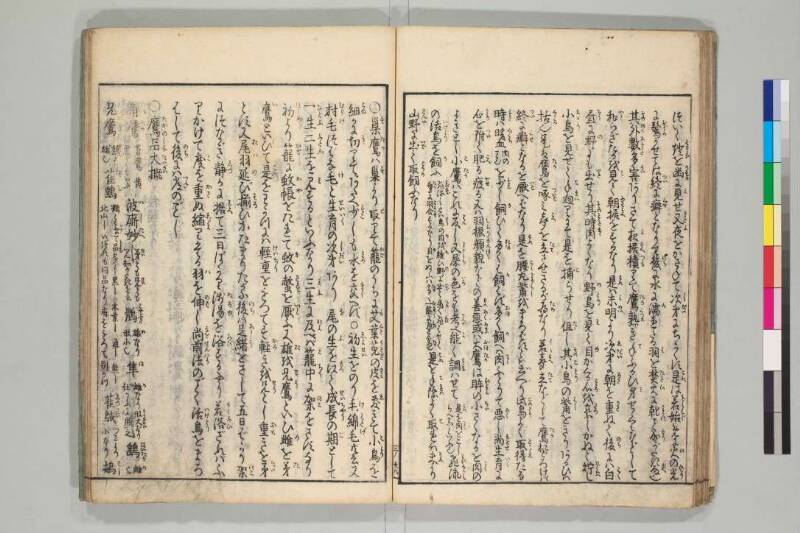
翻刻
【右丁】
ついて燈(ともしひ)を幽(かすか)に見(み)せ又(また)夜(よ)をかさねて次第(しだい)にちかくす是(これ)は若(もし)始(はじ)めに火(ひ)の光(ひかり)
に驚(おどろ)かせては終(つい)に癖(くせ)となりて後(のち)に水に濡(ぬ)れたる羽(は)を焚火(たきひ)に乾(かわかす)こと成(なり)がたき故(ゆえ)也
其外(そのほか)数多(あまた)害(かい)ありさて夜据(よすへ)積(つも)りて鷹(たか)熟(くつろ)ぎ手(て)ふるひ身(み)せゝりなどして
和(やわ)らぎたるを見(み)て朝据(あさすへ)をするなり是(これ)は未明(みめい)より次第(しだい)に朝(あさ)を重(かさ)ねて後(のち)には白(はく)
昼(ちう)に野(の)にも出(いた)せり其時(そのとき)肉(にく)よくなり野鳥(のとり)を見(み)て目(め)かくる心(こゝろ)を察(さつ)しかねて貯(たくはへ)し
小鳥(ことり)を見(み)せて手廻(てまは)りにて是を捕(と)らせり但(たゝ)し其(その)小鳥(ことり)の觜(はし)をきりあるひは
括(くゝる)也是は鷹(たか)を啄(ついば)み声(こへ)を立(たて)させさるが為(ため)なり若(もし)声(こへ)立(たて)などして鷹(たか)おどろけば
終(つい)に癖(くせ)となるを厭(いと)へばなり是(これ)を腰丸(こしまる)觜(はし)をまろばすとは云(い)へり此(この)鳥(とり)よく取得(とりえ)たる
時(とき)は暖血(ぬくち)《割書:肉の|こと也》を少(すこ)し飼(か)ひて多(おほ)くは飼(か)はず多(おほ)く飼(か)へは肉(にく)ふとりて悪(あし)し尚(なを)《振り仮名:生育|せ□#1いく》に
心(こゝろ)を附(つけ)て肥(こへ)る痩(やせ)る又は羽振(はふり)顔貌(かんほう)などの善悪(せんあく)或(あるい)は大鷹(おほたか)は眸(ひとみ)の小(ちい)さくなるを肉(にく)の
よきとし小鷹(こたか)はこれに反(はん)し又(また)屎(うち)の色(いろ)をも考(かんが)へ能(よ)く調(とゝな)はせて《割書:是(これ)を肉(にく)をこし|らへるといふ也》飛流(とびなかし)
の活鳥(いけとり)を飼(か)ふ《割書:飛流(とびなが)しとは鳥(とり)の目(め)を縫(ぬ)ひ野(の)に出(いで)て高(たか)く飛(とび)はせて|鷹(たか)に羽合(はあわせ)するなり目(め)をぬふは高(たか)く一筋(ひとすし)に飛(とば)さん為(ため)也》是(これ)を手際(てきは)よく取(と)れは夫(それ)より
山野(さんや)に出(いで)て取飼(とりか)ふなり
【左丁】
○巣鷹(すたか)は巣(す)より取(と)りて籠(かご)のうちに艾葉(もくさ)兎(うさぎ)の皮(かわ)を敷(し)きて小鳥(ことり)を
細(こま)かに切(き)りてあたへ少(すこ)しも水(みづ)を交(まじ)へず○初生(しよせい)をのり毛(け)綿毛(わたげ)共云又
村毛(むらけ)つばな毛(け)と生育(せいいく)の次第(しだい)あり尾(を)の生(ふ)を以(もつ)て成長(せいちやう)の期(ご)として
一生(ひとふ)二生(ふたふ)を見(み)するといふなり三生(みふ)に及(およ)べば籠中(こちう)に架(ほこ)をさすなり
初(はしめ)より籠(かご)に蚊帳(かや)をたれて蚊(か)の螫(さす)を厭(いと)ふ又/雄(お)を兄鷹(せう)といひ雌(め)を弟(た)
鷹(い)といひて是(これ)をわかつには軽重(けいぢう)をもつてす軽(かろ)きを兄(せう)とし重(おも)きを弟(たい)
とす又/尾羽(おは)延(の)び揃(そろ)ひかたまりたる後(のち)は足緒(あしを)をさして五日ばかり架(ほこ)
につなぎ静(しづ)かに据(すへ)て三日ばかり浅湯(ぬるゆ)を浴(あび)するふに若(もし)浴(あび)ざればふ
りかけて度(と)を重(かさ)ぬ縮(しゞま)りたる羽(は)を伸(のば)し尚(なを)前法(せんはう)のごとく活鳥(いけとり)をまろ
はして後(のち)には常(つね)のごとし
○鷹品(たかのしな)大概(たいがい)
角鷹(おほたか)《割書:蒼鷹 黄|鷹ともいふ》波廝妙(はしたへ)《割書:弟(たい)とも兄(けい)とも|見知(みしり)がたきを云》鶻(はやぶさ)《割書:雄(お)なり|形小也》隼(ほ)《割書:雌(め)なり形(なり)大(おほひ)なり|仕(つ)かふに用(これを)_レ之(もちゆ)》鷂(はいたか)《割書:雌(め)|也》
兄鷹(このり)《割書:鷂(はいたか)の|雄(お)也》萑鷂(つみ)《割書:𪄄とも書(かき)て品(しな)多し黒- 木葉- 通- 熊-|北山- いづれも同品なり府をもつて別かつ》萑鳶(ゑつさい)《割書:つみより|小なり》鶆(さし)
現代語訳
【右丁】
続いて燈火を微かに見せ、また夜を重ねて次第に近づける。これは、もし始めに火の光に驚かせてしまうと、ついには癖となって、後に水に濡れた羽を焚火で乾かすことが困難になるためである。その他にも数多くの害がある。さて、夜据を積み重ねて鷹が慣れ、手振りや身震いなどをして和らいだのを見て、朝据をするのである。これは明け方より次第に朝を重ねて、後には真昼に野にも出す。その時に肉質がよくなり、野鳥を見て獲物を狙う心を察しかねて、蓄えておいた小鳥を見せて手回りでこれを捕らせる。ただし、その小鳥の嘴を切るか、あるいは括る。これは鷹を突いたり声を立てさせないためである。もし声を立てたりして鷹が驚けば、ついには癖となるのを嫌うからである。これを腰丸、嘴を丸くすると言う。この鳥をよく捕らえた時は、温血(肉のこと)を少し与えて、多くは与えない。多く与えれば肉が太って悪い。なお生育に心を付けて、肥る痩せる、また羽振りや顔貌などの善悪、あるいは大鷹は瞳の小さくなるのを肉のよいものとし、小鷹はこれに反し、また糞の色をも考えてよく調和させて(これを肉をこしらえるという)、飛び流しの活鳥を与える(飛び流しとは鳥の目を縫い、野に出て高く飛ばせて鷹に羽合わせすることである。目を縫うのは高く一筋に飛ばすためである)。これを手際よく捕れば、それより山野に出て取り飼うのである。
【左丁】
○巣鷹は巣より取って籠の中に艾葉や兎の皮を敷いて、小鳥を細かく切って与え、少しも水を交えない。○初生をのり毛、綿毛とも言い、また村毛、つばな毛と生育の段階がある。尾の生えるのをもって成長の時期として、一生二生を見るという。三生に及べば籠中に架を差すのである。
初めより籠に蚊帳を垂れて蚊が刺すのを嫌う。また雄を兄鷹と言い、雌を弟鷹と言って、これを分かつには軽重をもってする。軽いのを兄とし、重いのを弟とする。また尾羽が延び揃い固まった後は、足緒を差して五日ばかり架に繋ぎ、静かに据えて三日ばかり浅湯を浴びる。もし浴びなければふりかけて度を重ねる。縮まった羽を伸ばし、なお前法のごとく活鳥を丸くして、後には常のごとし。
○鷹品大概
大鷹(蒼鷹・黄鷹ともいう)、ハシタカ(弟とも兄とも見分けがたいものをいう)、鶻(雄なり、形小なり)、隼(雌なり、形大なり、仕かうに用いる)、ハイタカ(雌なり)、兄鷹(ハイタカの雄なり)、ツミ(𪄄とも書いて品多し。黒・木葉・通・熊・北山、いずれも同品なり。府をもって別かつ)、エツサイ(ツミより小なり)、サシ
英語訳
[Right page]
They continue by showing dim lamplight and gradually bringing it closer over successive nights. This is because if they startle the bird with bright light at first, it becomes a permanent habit, making it difficult later to dry wet feathers by a fire. There are many other harmful effects as well. After accumulating night-perching sessions and seeing that the hawk has become accustomed, showing hand gestures and body shaking in a relaxed manner, they perform morning perching. This involves gradually extending morning sessions starting from before dawn, and later taking them out to fields even in broad daylight. At this time the meat quality improves, and unable to assess the bird's hunting instincts when seeing wild birds, they show stored small birds and have the hawk catch them nearby. However, they cut or tie the small bird's beak. This is to prevent it from pecking the hawk or making noise. If it makes noise and startles the hawk, they dislike it becoming a permanent habit. This is called "rounding the waist" or "rounding the beak." When the bird catches well, they feed it a little warm blood (meaning meat), but not much. Too much feeding makes the meat fat and poor quality. They pay attention to growth, considering whether it's gaining or losing weight, the quality of its wing condition and facial features. For large hawks, small pupils indicate good meat quality; for small hawks it's the opposite. They also consider the color of droppings to maintain good balance (this is called "preparing the meat"), and provide live birds for flight training (flight training involves sewing the bird's eyes shut, taking it to fields to fly high, and having the hawk engage with it. Sewing the eyes is to make it fly high in a straight line). If they can catch this skillfully, they then take them to mountains and fields for hunting.
[Left page]
○Nest hawks are taken from nests and kept in cages lined with mugwort leaves and rabbit fur, fed finely cut small birds with no water mixed in. ○The initial plumage is called sticky down or cotton down, and there are growth stages including patchy down and scattered down. The growth of tail feathers marks the maturation period, observed as first molt and second molt. At the third molt, a perch is placed in the cage.
From the beginning, mosquito netting is hung over the cage to prevent mosquito bites. Males are called elder hawks and females are called younger hawks, distinguished by weight. Light ones are called elder, heavy ones younger. After tail feathers have grown long and formed properly, leg cords are attached and the bird is tied to a perch for about five days, perched quietly, then bathed in lukewarm water for about three days. If it won't bathe, water is sprinkled repeatedly. The contracted feathers are stretched, and following the previous method with live birds rounded up, afterwards it becomes normal.
○Hawk varieties overview
Goshawk (also called gray hawk, yellow hawk), Hashitaka (those difficult to distinguish as male or female), Gyrfalcon (male, small form), Peregrine falcon (female, large form, used for hunting), Sparrowhawk (female), Elder hawk (male sparrowhawk), Tumi (also written as 𪄄, many varieties: black, wood-leaf, common, bear, north mountain - all same species, distinguished by locality), Etsusai (smaller than Tumi), Sashi