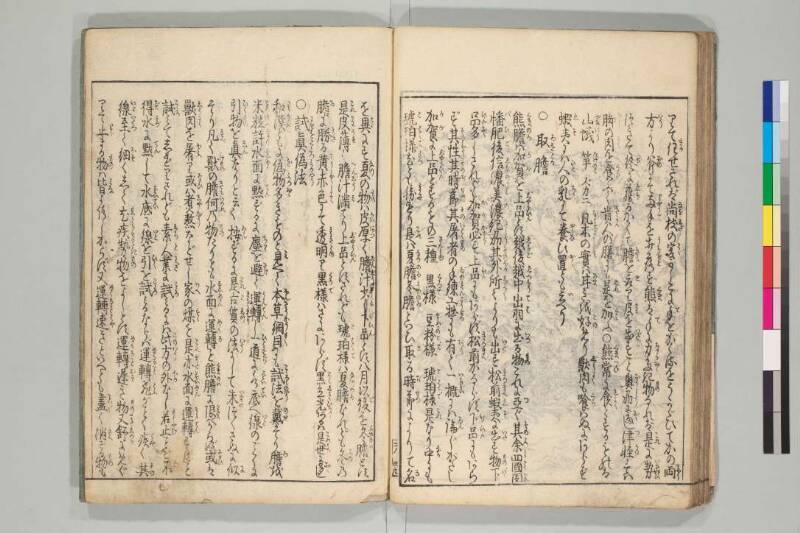
翻刻
【右丁】
りて任(まか)せされば尚(なを)枝(ゑだ)の爰(こゝ)かしこに手(て)をかくるをうかゞひてかの両(りやう)
方(はう)より斧(おの)にて両手(りやうて)を打落(うちをと)す熊(くま)は手(て)に力(ちから)多(おゝ)き物(もの)なれば是(これ)に勢(いきほひ)
つきて終(つひ)に獲(ゑら)るかくて膽(きも)を取(と)り皮(かわ)を出(いだ)すこと奥州(おうしう)に多(おゝ)し津軽(つかる)にては
脚(あし)の肉(にく)を食(くら)ふて貴人(きにん)の膳(ぜん)にも是(これ)を加(くわ)ふ○熊(くま)常(つね)に食(しよく)とするものは
山蟻(やまあり)笋(たけのこ)ズカニ凡(およそ)《振り仮名:木の実|こ み》は甘(あま)きを好(この)めり獣肉(じうにく)も喰(くら)はぬにあらず
蝦夷(ゑそ)には人(ひと)の乳(ちゝ)にて養(やしな)ひ置(おく)とも云(い)へり
○取膽(ゐをとる)
熊膽(くまのゐ)は加賀(かが)を上品(じやうひん)とす越後(ゑちご)越中(ゑつちう)出羽(ては)に出(いつ)る物(もの)これに亜(つ)ぐ其余(そのよ)四国(しこく)因(いな)
幡(ば)肥後(ひご)信濃(しなの)美濃(みの)紀州(きしう)其(その)外(ほか)所々(しよ〳〵)よりも出(いた)す松前(まつまへ)蝦夷(ゑぞ)に出(いた)す物(もの)下(げ)
品(ひん)多(おゝ)しされども加賀(かが)必(かなら)す上/品(ひん)にもあらず松前(まつまへ)かならず下品(けひん)にもあら
ず其性(そのしやう)其(その)時節(ぢせつ)其(その)屠者(あはくもの)の手練(しゆれん)工拙(こうせつ)にも有(あり)て一概(いちがい)には論(ろん)じがたし
加賀(かが)に上品(じやうひん)とするもの三種(さんしゆ)黒様(くろて)豆粉様(まめのこで)琥珀様(こはくで)是(これ)なり中(なか)にも
琥珀様(こはくで)尤(もつ)とも勝(まさ)れり是(これ)は夏膽(なつのゐ)冬膽(ふゆのゐ)といひ取(と)る時節(ぢせつ)によりて名(な)
【左丁】
を異(こと)にす夏(なつ)の物(もの)は皮(かは)厚(あつ)く膽汁(たんじう)少(すくな)し下品(げひん)とす八月以/後(ご)を冬膽(ふゆのい)とす
是(これ)皮(かわ)薄(うす)く膽汁(たんじう)満(み)てり上品(じやうひん)とすされども琥珀様(こはくで)は夏膽(なつのゐ)なれども冬(ふゆ)の
膽(ゐ)に勝(まさ)る黄赤色(わうしやくしよく)にて透明(すきとほ)り黒様(くろで)はさにあらず黒色(こくしよく)光(ひかり)あるは是(これ)世(よ)に多(おゝ)し
○試真偽法(にせをこゝろみるはう)
和漢(わかん)ともに偽物(ぎふつ)多(おゝ)きものと見(み)へて本草綱目(ほんさうかうもく)にも試法(こゝろみのはう)を載(のせ)たり膽(ゐ)を
米粒(こめつふ)許(ばかり)水面(すいめん)に黙(てん)#1ずるに塵(ちり)を避(さけ)て運転(うんてん|きり〳〵まはり)し一道(ひとすぢ)に水底(すいてい)へ線(いと)のごとくに
引(ひく)物(もの)を真(しん)なりと云て按(あん)ずるに是(これ)古質(こしつ)の法(はう)にして未(いまた)つくさぬに似(に)
たり凡(すべ)て獣(けもの)の膽(きも)何(いつれ)の物(もの)たりとも水面(すいめん)に運転(めくる)こと熊膽(くまのい)に限(かきる)べからず或(あるひ)は
獣肉(しうにく)を屠(ほふ)り或(あるひ)は煮熬(しやがう)などせし家(いへ)の煤(すゝ)を是(これ)亦(また)水面(すいめん)に運転(うんてん)すること
試(こゝろ)みてしれりされども素人業(しろとわざ)に試(こゝろ)みるには此(この)方(はう)の外(ほか)なし若(もし)止(やむ)ことを不(ゑ)
得(ず)水(みづ)に黙(てん)#1して水底(すいてい)に線(いと)を引(ひく)を試(こゝろ)みるならば運転(めくること)飛(とふ)がことく疾(はや)く其(その)
線(いと)至(いたつ)て細(ほそ)くして尤(もつとも)疾勢(するとき)物(もの)をよしとす運転(めくること)遅(おそ)き物(もの)又(また)舒(しつか)にめぐ
りて止(とゞ)まる物(もの)は皆(みな)よろしからず又/運転(めくること)速(はや)きといへとも盡(こと〴〵)く消(きへ)ざる物(もの)も
現代語訳
【右丁】
そのままにまかせておけば、なお枝のあちこちに手をかけるのを見計らって、両方から斧で両手を打ち落とす。熊は手に力が多い動物なので、これで勢いがついて終には捕獲される。このようにして胆を取り、皮を出すことが奥州に多い。津軽では脚の肉を食べて、貴人の膳にもこれを加える。○熊が常に食とするものは山蟻、筍、ズカニ、およそ木の実は甘いものを好む。獣肉も食わないわけではない。蝦夷では人の乳で養い置くとも言われている。
○胆を取る
熊の胆は加賀を上品とする。越後・越中・出羽に出るものはこれに次ぐ。その他、四国・因幡・肥後・信濃・美濃・紀州、その外所々からも出す。松前・蝦夷に出すものは下品が多い。されども加賀が必ず上品でもなく、松前が必ず下品でもない。その性質、その時節、その屠る者の手練・工拙にもよって、一概には論じがたい。加賀で上品とするもの三種、黒様・豆粉様・琥珀様がこれである。中でも琥珀様が最も勝れている。これは夏胆・冬胆といい、取る時節によって名前を異にする。
【左丁】
夏のものは皮が厚く胆汁が少ない。下品とする。八月以後を冬胆とする。これは皮が薄く胆汁が満ちている。上品とする。されども琥珀様は夏胆であれども冬の胆に勝る。黄赤色で透明である。黒様はそうではなく、黒色で光あるものはこれ世に多い。
○真偽を試す法
和漢ともに偽物が多いものと見えて、本草綱目にも試法を載せている。胆を米粒ほど水面に点ずるに、塵を避けて運転し、一筋に水底へ糸のように引くものを真なりという。考えるにこれは古い質の方法で、まだ尽くしていないように思われる。およそ獣の胆はいずれのものであっても、水面で運転することは熊胆に限るべきではない。あるいは獣肉を屠ったり、あるいは煮たりなどした家の煤も、これもまた水面で運転することを試してみて知った。されども素人が試すにはこの方法の他はない。もしやむを得ず水に点じて水底に糸を引くのを試すならば、運転が飛ぶように速く、その糸が至って細くして最も疾勢のものを良しとする。運転が遅いもの、またゆっくりと巡って止まるものは皆よろしくない。また運転が速いといっても全く消えないものも
英語訳
【Right page】
If left to its own devices, the bear will still place its paws here and there on branches, so hunters watch for this opportunity and strike off both paws with axes from both sides. Since bears have great strength in their paws, this weakens them and they are finally captured. In this way, the gallbladder is extracted and the hide is processed, which is common in Ōshū. In Tsugaru, the leg meat is eaten and even added to the meals of nobles. ○The bear's usual food consists of mountain ants, bamboo shoots, crabs, and generally it prefers sweet tree nuts. It does not refuse to eat animal meat either. In Ezo, it is said they are sometimes raised on human milk.
○Extracting the gallbladder
Bear gallbladders from Kaga are considered the finest quality. Those from Echigo, Etchū, and Dewa are second to these. Others are also produced in Shikoku, Inaba, Higo, Shinano, Mino, Kishū, and various other places. Those from Matsumae and Ezo are mostly of inferior quality. However, Kaga products are not necessarily always superior, nor are Matsumae products necessarily always inferior. This depends on the nature of the bear, the season, and the skill and craftsmanship of the hunter, so it cannot be generalized. There are three types considered superior in Kaga: black type, bean-powder type, and amber type. Among these, the amber type is the most excellent. These are called summer gallbladders and winter gallbladders, with names differing according to the season of harvest.
【Left page】
Summer ones have thick skin and little bile. These are considered inferior. Those taken from August onward are called winter gallbladders. These have thin skin and are full of bile, and are considered superior. However, the amber type, even though it is a summer gallbladder, surpasses winter gallbladders. It is yellow-red in color and transparent. The black type is not like this - the black-colored ones with luster are common in the world.
○Method for testing authenticity
Both in Japan and China there appear to be many counterfeits, as the Honzō Kōmoku (Compendium of Materia Medica) also records testing methods. When a rice grain-sized piece of gallbladder is dropped on the water surface, it avoids dust and rotates, drawing a thread-like line straight down to the bottom - this is said to be genuine. Upon consideration, this seems to be an old-fashioned method that appears incomplete. Generally, the gallbladders of any animal will rotate on the water surface, not just bear gallbladders. Even soot from houses where animal meat has been butchered or boiled will also rotate on the water surface, as I have tested and confirmed. However, for amateurs to test, there is no method other than this. If one must unavoidably test by dropping it in water and observing the thread drawn to the bottom, those that rotate as fast as flying, with very fine threads and the swiftest momentum, are considered good. Those that rotate slowly, or those that move leisurely and stop, are all unsatisfactory. Also, even those that rotate quickly but do not completely dissolve...