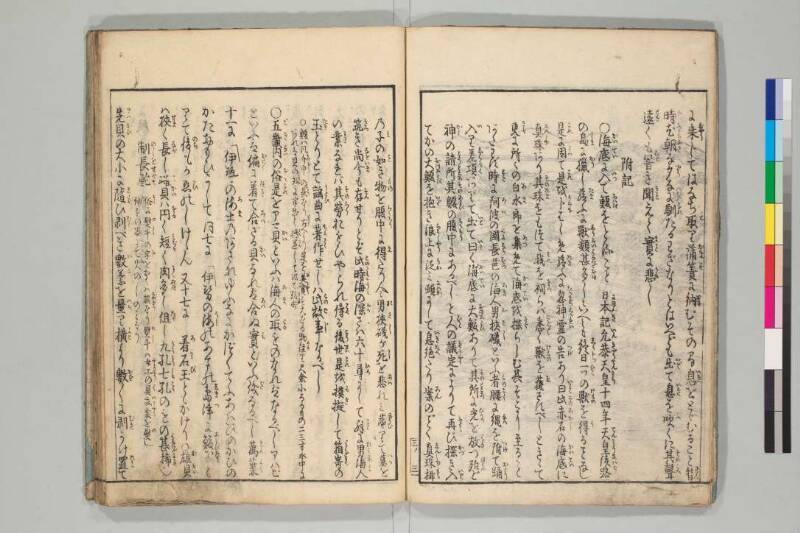
翻刻
【右丁】
に乗(じやう)じてはなち取(と)り蒲簀(かます)に納(おさ)むその間 息(いき)をとゞむること暫(さん)
時(じ)尤(もつとも)朝(あさ)な夕(ゆう)なに馴(なれ)たるわざなりとはいへども出(いで)て息(いき)を吹(ふ)くに其声(そのこへ)
遠(とを)くも響(ひゞ)き聞(きこ)えて実(まこと)に悲(かな)し
附記
○海底(かいてい)に入(いつ)て鰒(あわび)をとること日本記(にほんき)允恭天皇(いんきやうてんわう)十四年 天皇(てんわう)淡路(あはぢ)
の島(しま)に猟(かり)し給(たま)ふに獣類(しうるい)甚(はなはだ)多(おほ)しといへとも終日(しうじつ)一(ひと)ッの獣(けもの)を得(う)ることなし
是(これ)に因(よつ)て是(これ)を卜(うらな)はしめ給(たま)ふに忽(たちまち)神霊(しんれい)の告(つげ)あり曰(いわく)此(この)赤石(あかし)の海底(かいてい)に
真珠(しんじゆ)あり其珠(そのたま)をもつて我(われ)を祠(まつ)らば悉(こと〴〵)く獣(けもの)を獲(ゑ)さすべしときゝて
更(さら)に所々の《振り仮名:白水郎|あま 》を集(あつ)めて海底(かいてい)を探(さぐ)らしむ其そこに至ること
あたわず時(とき)に《振り仮名:阿波の国|あ わ くに》長邑(なかむら)の海人(あま)男狭礒(おさし)といふ者(もの)腰(こし)に縄(なは)を附(つけ)て踊(おどり)
入(い)り差項(しはらく)#1ありて出(いで)て曰(いわ)く海底(かいてい)に大鰒(おほあわび)ありて其所(そのところ)に光(ひかり)を放(はな)つ殆(ほとん)ど
神(かみ)の請所(こうところ)其鰒(そのあわび)の腹中(ふくちう)にあるべしと人(ひと)の議定(ぎじやう)によりて再(ふたゝ)び探(かづ)き入(いり)
てかの大鰒(おほあわび)を抱(いだ)き浪上(らうしやう)に泛(うか)み頓(にはか)にして息(いき)絶(たへ)たり案(あん)のごとく真珠(しんしゆ)棑(もゝ)#2
【左丁】
の子(み)の如(こと)き物(もの)を腹中(ふくちう)に得(え)たり人々 男狭礒(おさし)が死(し)を悲(あは)れみ葬(ほうむ)りて墓(はか)を
筑(きつ)き尚(なを)今(いま)も存(そん)せりとぞ此時(このとき)海(うみ)の深(ふか)さは六十尋( ひろ)にして殊(こと)に男海人(おとこあま)
の業(わざ)なれば其労(そのらう)おもひやられ侍(はべ)る後世(こうせい)是(これ)を摸擬(もぎ)して箱崎(はこざき)の
玉(たま)とりとて謡曲(うたひ)に著作(ちよさく)せしは此(この)故事(ごじ)なるべし
《割書:○鰒は凡 介中(かいぢう)の長(てう)なり古(いにし)へより是を美賞(びしやう)す大なる物 径(めぐ)り尺余小なるもの二三寸水中に| あれは貝の外(そと)に半出て転運(てんうん)して以て跋歩(はしる)#3》
○五幾内(ごきない)の俗(ぞく)是(これ)をアマ貝(かい)といふは海人(あま)の取(とる)ものなればなるべしアハビ
といふは偏(かた〳〵)に着(つき)て合(あは)ざる貝(かい)なれば合(あは)ぬ実(み)といふ儀(ぎ)なるべし万葉(まんよう)
十一に〽伊勢の海士(あま)のあさなゆふなにかづくてふあはびのかひの
かたおもひ□#4して同七に〽︎伊勢の海(うみ)のあまの島津(しまつ)に鰒玉(あわびたま)と
りて後(のち)もか恋(こひ)のしけゝん又十七に着石玉(あわび)ともかけり○雄貝(おかい)
は狭(せま)く長(なが)し雌貝(めかい)は円(まる)く短(みぢか)く肉(にく)多(おほ)し但(たゞ)し九孔(きうこう)七孔(しちこう)のもの甚(はなはだ)稀(まれ)也
○制長鮑(のしをせいす)《割書:俗(そく)に熨斗(のし)の字(じ)をかくは誤(あやまり)なり熨斗(のし)は女工(によこう)の具(く)衣裳(いしやう)を熨(の)し|伸(の)すの器にて火(ひ)のしのことなり》
先(まつ)貝(かひ)の大小に随(したが)ひ剥(むく)べき数葉(かす)を量(はか)り横(よこ)より数(かず)〳〵に剥(むき)かけ置(おき)て
現代語訳
【右丁】
船に乗って放ち取り、蒲簀(かます)に納める。その間、息を止めることしばらくの時間である。もっとも朝な夕なに慣れた業とはいえども、(海から)出て息を吹くその声が遠くまで響き聞こえて、まことに悲しい。
附記
○海底に入って鮑を取ることについて、『日本書紀』允恭天皇十四年の記録によると、天皇が淡路島で狩猟をされた際、獣類は甚だ多いといっても終日一匹の獣も得ることができなかった。これによってこれを占わせなさると、たちまち神霊のお告げがあって曰く「この明石の海底に真珠がある。その珠をもって我を祀れば、ことごとく獣を獲させよう」と聞いて、さらに所々の海人(あま)を集めて海底を探らせた。そこに至ることができず、その時に阿波国長邑の海人で男狭礒(おさし)という者が、腰に縄を付けて躍り入り、しばらくしてから出て曰く「海底に大鮑があって、その所に光を放つ。おそらく神の請う所がその鮑の腹中にあるだろう」と。人々の議定により再び潜り入って、かの大鮑を抱き、波上に浮かんで急に息絶えた。案の通り真珠が桃
【左丁】
の実のような物を腹中に得た。人々は男狭礒の死を哀れみ、葬って墓を築き、なお今も存在するという。この時海の深さは六十尋であって、特に男海人の業であるから、その労苦が思いやられる。後世これを模倣して箱崎の玉取りとして謡曲に著作したのは、この故事によるものであろう。
《割書:○鮑は凡そ貝類の長である。古来よりこれを美賞する。大きな物は径一尺余り、小さな物は二三寸。水中にあっては貝の外に半分出て転がって以て歩く》
○畿内の俗習でこれをアマ貝というのは、海人が取る物だからであろう。アワビというのは、片方に着いて合わない貝であるから、「合わぬ身」という意味であろう。万葉集十一に「伊勢の海士の朝な夕なに潜くという鮑の貝の片思いをして」、同七に「伊勢の海の海人の島津に鮑玉取りて後もか恋の繁けん」、また十七に鮑玉ともかけている。○雄貝は狭く長い。雌貝は丸く短く肉が多い。ただし九孔・七孔のものは甚だ稀である。
○のしアワビを作る《割書:俗に「熨斗」の字を書くのは誤りである。熨斗は女性の道具で、衣装を熨し伸ばす器で、火のしのことである》
まず貝の大小に従って剥くべき枚数を量り、横より数々に剥きかけ置いて
英語訳
【Right Page】
They board boats, release (divers), and collect (abalone) in wicker baskets. During this time, they hold their breath for a while. Although this is work they are accustomed to morning and evening, when they emerge and exhale, their voices echo far and wide, truly sorrowful to hear.
Additional Notes
○Regarding diving to the sea bottom to catch abalone, according to the Nihon Shoki (Chronicles of Japan), in the fourteenth year of Emperor Inkyo's reign, when the emperor hunted on Awaji Island, although there were very many beasts, he could not catch a single animal all day long. Because of this, he had divination performed, and immediately there was an oracle from the divine spirit saying, "There are pearls at the bottom of this Akashi sea. If you enshrine me with those pearls, I will let you catch all manner of beasts." Hearing this, he gathered ama (sea divers) from various places and had them search the sea bottom. Unable to reach there, at that time a sea diver from Nakamura in Awa Province named Osashi tied a rope around his waist and dove in. After a while he emerged and said, "There is a large abalone at the sea bottom, and it emits light from that place. Probably what the god requests is in that abalone's belly." By the people's decision, he dove in again and embraced that large abalone, floated to the surface, and suddenly died. As expected, he obtained pearls like peach
【Left Page】
seeds from its belly. The people mourned Osashi's death, buried him and built a tomb, which still exists today. At this time the sea's depth was sixty fathoms, and since this was especially the work of male sea divers, one can imagine their hardship. Later generations imitated this and composed it into Noh drama as the "Jewel Diver of Hakozaki"—this must be based on this historical event.
《Annotation: ○Abalone is generally the chief among shellfish. Since ancient times it has been prized. Large ones measure over one shaku in diameter, small ones two or three sun. In water, they protrude halfway out of their shells and roll to walk》
○In the Kinai region's common usage, calling this "Ama-gai" (diver shellfish) is probably because it is something that ama (sea divers) take. "Awabi" probably means "awa-nu mi" (non-matching body) because it is a shell that attaches to one side and does not match. In Man'yōshū volume 11: "The Ise sea divers who dive morning and evening for abalone shells, having one-sided love," and in volume 7: "Taking abalone pearls at the sea divers' Shimazu in Ise's sea, will love continue to flourish afterward?" Also in volume 17 it is written as abalone pearls. ○Male shells are narrow and long. Female shells are round, short, and have much meat. However, those with nine or seven holes are extremely rare.
○Making noshi-awabi 《Annotation: Writing the character "熨斗" (noshi) in common usage is incorrect. Noshi refers to women's tools, implements for pressing and stretching garments, referring to fire-heated pressing tools》
First, according to the size of the shell, measure the number of strips to be peeled, and from the side peel in layers and set aside