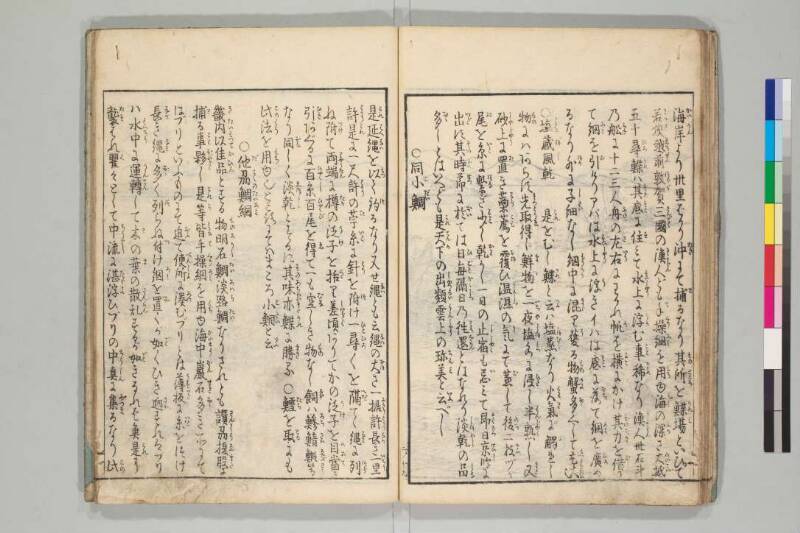
翻刻
【右丁】
海岸(かいかん)より卅里ばかり沖(おき)にて捕(と)るなり其所(そのところ)を鰈場(かれは)といひて
若狭(わかさ)越前(ゑちぜん)敦賀(つるが)三国(さんごく)の漁人(きよじん)ども手操網(てくりあみ)を用(もち)ゆ海(うみ)の深(ふか)さ大抵(たいてい)
五十尋( ひろ)鰈(かれ)は其底(そのそこ)に住(す)みて水上(すいしやう)に浮(うか)む事(こと)稀(まれ)なり漁人(きよじん)卅石斗
の船(ふね)に十二三人 舟(ふね)の左右(さいう)にわかれ帆(ほ)を横(よこ)にかけ其力(そのちから)を借(か)り
て網(あみ)を引(ひ)けりアバは水上(すいしやう)に浮(う)きイハは底(そこ)に落(おち)て網(あみ)を広(ひろ)め
るなり外(ほか)に子細(しさい)なし網中(もうちう)に混(まじ)り獲(う)る物(もの)蟹(かに)多(おゝ)くして尤(もつとも)大(おほひ)也
○塩蔵風乾(しをぼし) 是(これ)をむし鰈(かれ)と云(いふ)は塩蒸(しほむし)なり火気(くわき)に触(ふ)れし
物(もの)にはあらず先(まつ)取得(とりゑ)し鮮物(まゝ)を一夜(いちや)塩水(しほみつ)に浸(ひた)し半熟(はんじゆく)し又(また)
砂上(しやじやう)に置(お)き藁(わら)薦(こも)を覆(おほ)ひ温湿(うんしつ)の気(き)にて蒸(む)して後(のち)二枚( まい)づゝ
尾(お)を糸(いと)に繋(つな)ぎ少(すこ)し乾(かわ)かし一日の止宿(ししゆく)も忌(い)みて即日(そくじつ)京師(けいし)に
出(いだ)す其(その)時節(じせつ)に於(おい)ては日毎(ひごと)隔日(かくじつ)の往還(わうくわん)とはなれり淡乾(しほほし)の品(しな)
多(おゝ)しとはいへども是(これ)天下(てんか)の出類(しゆつるい)雲上(うんしやう)の珍美(ちんみ)と云(いふ)べし
○同 小鯛(こだい)
【左丁】
是(これ)延縄(はへなは)を以(もつ)て釣(つ)るなり又《振り仮名:せ縄| なは》とも云 縄(なは)の大(おほ)さ一据( にきり)#1許(ばかり)長(なか)さ一里(いちり)
許(はかり)是(これ)に一尺 許(はかり)の《振り仮名:■糸|おいと》#2に針(はり)を附(つ)け一尋(ひとひろ)〳〵を隔(へだ)てゝ縄(なわ)に列(つら)
ね附(つけ)て両端(りやうたん)に樽(たる)の泛子(うけ)を括(くゝ)り差頃(しはらく)ありてかの泛子(うけ)を目当(めあて)に
引(ひき)あぐるに百糸(ひやくし)百尾(ひやくび)を得(ゑ)て一も空(むな)しき物(もの)なし飼(ゑ)は鯵(あち)鯖(さは)鰕(ゑび)等(とう)
なり同(おな)しく淡乾(しほゝし)とするに其(その)味(あちはひ)亦(また)鰈(かれ)に勝(まさ)る○鱈(たら)を取(とる)にも
此法(このはう)を用(もち)ゆ也ところにてはまころ小鯛(こたい)と云(いふ)
○他州鯛網(だこくのたいあみ)
畿内(きたい)以(もつて)佳品(かひん)とする物(もの)明石鯛(あかしたい)淡路鯛(あはちたい)なりされとも讃州(さんしう)榎股(ゑまた)に
捕(と)る事(こと)夥(おびたゝ)し是等(これら)皆(みな)手操網(てくりあみ)を用(もち)ゆ海中(かいちう)巌石(かんせき)多(おゝ)き所にて
はブリといふものにて追(おふ)て便所(べんしよ)に湊(あつ)むブリとは薄板(うすいた)に糸(いと)をつけ
長(なが)き縄(なわ)に多(おゝ)く列(つ)らね付(つ)け網(あみ)を置(お)くが如(ごと)くひき廻(まは)すればブリ
は水中(すいちう)に運転(うんてん)して《振り仮名:木の葉|こ ま#3》の散乱(さんらん)するが如(ごと)きなれば魚 是(これ)に
襲(おそ)はれ瞿々(く )として中流(ちうりう)に《振り仮名:湛浮|ただよ》ひブリの中真(ちうしん)に集(あつま)るなり此(この)
現代語訳
【右丁】
海岸から三十里ほど沖で捕るのである。その場所を鰈場といって、若狭、越前、敦賀、三国の漁師たちが手繰網を用いる。海の深さは大体五十尋で、鰈はその底に住んでいて水上に浮かぶことは稀である。漁師は三十石ほどの船に十二、三人が乗り、船の左右に分かれて帆を横にかけ、その力を借りて網を引く。アバ(浮き)は水上に浮き、イワ(錘)は底に落ちて網を広げるのである。他に特別なことはない。網の中に混じって獲れるもので蟹が多く、とても大きい。
○塩蔵風乾 これを蒸し鰈というのは塩蒸しである。火気に触れたものではない。まず取れた新鮮なものを一夜塩水に浸して半熟にし、また砂上に置き、藁筵を覆って温湿の気で蒸してから、二枚ずつ尾を糸に繋ぎ、少し乾かして一日の宿泊も避けて即日京都に出荷する。その時節においては日毎、隔日の往復となる。塩干しの品は多いとはいえ、これは天下の逸品、雲上の珍味というべきである。
○同 小鯛
【左丁】
これは延縄を以って釣るのである。また「せ縄」とも言う。縄の太さは一握りほど、長さは一里ほどで、これに一尺ほどの釣り糸に針を付け、一尋ずつを隔てて縄に列ねて付けて、両端に樽の浮きを括り付け、しばらくしてあの浮きを目当てに引き上げると百本百尾を得て一つも空しいものはない。餌は鯵、鯖、海老等である。同じく塩干しにするとその味もまた鰈に勝る。○鱈を獲るにもこの方法を用いる。土地では「まこと小鯛」と言う。
○他州鯛網
畿内で佳品とするものは明石鯛、淡路鯛である。しかし讃州榎股で捕ることが甚だしい。これらは皆手繰網を用いる。海中に巌石が多い所では「ブリ」というもので追って適当な場所に集める。ブリとは薄板に糸をつけ、長い縄に多く列ねて付け、網を置くように引き回すとブリは水中で回転して木の葉が散乱するようになるので、魚はこれに驚かされて恐々として中流に漂い、ブリの中心に集まるのである。この
英語訳
【Right page】
They catch [flounder] about thirty ri offshore from the coast. That place is called the flounder grounds, where fishermen from Wakasa, Echizen, Tsuruga, and Sangoku use hand-trawl nets. The sea depth is generally about fifty fathoms, and flounder live at the bottom and rarely float to the surface. Fishermen take boats of about thirty koku capacity with twelve or thirteen people, divided on the left and right sides of the boat, setting the sail sideways and borrowing its power to pull the nets. The floats (aba) float on the water surface, and the weights (iwa) sink to the bottom to spread the net. There are no other particulars. Among the things caught mixed in the nets, there are many crabs, which are very large.
○Salt preservation and air drying: What is called "steamed flounder" is salt-steamed. It has not been touched by fire. First, the fresh catch is soaked in salt water overnight to half-cook it, then placed on sand, covered with straw mats, and steamed with warm, humid air. After that, two pieces at a time are tied by the tail with string, dried a little, and avoiding even one night's lodging, are shipped to Kyoto the same day. During that season, it becomes daily or every-other-day round trips. Though there are many varieties of salted and dried fish, this should be called a national treasure, a delicacy for the nobility.
○Same: Small sea bream
【Left page】
This is caught using longlines. It is also called "se-nawa." The rope is about one handful thick and about one ri long. To this, fishing lines about one shaku long with hooks attached are arranged on the rope at intervals of one fathom, with barrel floats tied to both ends. After a while, using those floats as markers, when pulled up, one hundred lines yield one hundred fish with not a single one empty. The bait consists of horse mackerel, mackerel, shrimp, etc. When similarly salt-dried, the taste also surpasses that of flounder. ○This method is also used to catch cod. Locally it is called "makoto kodai" (true small sea bream).
○Sea bream nets of other provinces
What the Kinai region considers fine products are Akashi sea bream and Awaji sea bream. However, catching in Sanshū Emata is very abundant. All of these use hand-trawl nets. In places where there are many rocks in the sea, they use something called "buri" to chase [fish] and gather them in suitable locations. Buri are thin boards with strings attached, arranged in great numbers on long ropes, and when pulled around like placing nets, the buri rotate in the water and scatter like fallen leaves, so the fish are startled by this and fearfully drift in the mid-current, gathering in the center of the buri. This...