翻刻
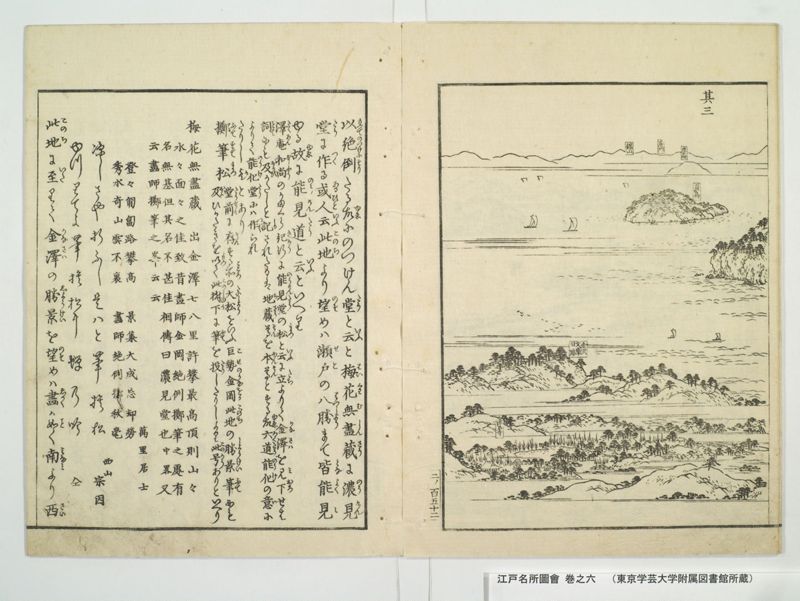
【右丁 絵図】
其三
猿島 夏島
房州
鋸山
金沢文庫旧跡
称名寺
【左丁】
以(もつて)絶倒(のつけにそり)たる故(ゆゑ)にのつけん堂(たう)と云(いふ)と梅花無盡蔵(はいくわむしんさう)に濃見(のうけん)
堂(たう)に作(つく)る或人云(あるひといふ)此地(このち)より望(のそ)めは瀬戸(せと)の八勝(はつしよう)まて皆(みな)能(よく)見(み)
ゆる故(ゆゑ)に能見道(のうみたう)と云(いふ)といへり
《割書:澤庵和尚(たくあんおしやう)の《振り仮名:かまくら記行| きかう》に能見堂(のうけんたう)の松(まつ)と云(いふ)に立(たち)よりて金澤(かなさは)を見下(みおろ)せは|詞(ことは)にも及(およひ)かたしと記(しる)されたるは地蔵尊(ちさうそん)を本尊(ほんそん)とする故(ゆゑ)六道能化(ろくたうのうけ)の意(い)に》
《割書:よりて能化堂(のうけたう)には作(つく)られ|たりし欤(か)とあり》
擲筆松(ふてすてまつ)《割書:堂前(たうぜん)に存(そん)する所(ところ)の大松(たいしよう)をいふ巨勢金岡(こせのかなをか)此地(このち)の勝景(しようけい)筆(ふて)にも|及(およ)ひかたきを以(もつ)て此(この)樹下(しゆか)に筆(ふて)を投(たう)したりしより此号(このかう)ありといへり》
梅花無盡蔵 出金澤七八里許攀最髙頂則山々
水々面々之佳致昔畫師金岡絶例#7擲筆之處有
名無基但其名不甚佳相傳曰濃見堂也《割書:中畧》又
云畫師擲筆之峯《割書:云云》
萬里居士
登々匍匐路攀髙 景集大成㤀却勞
秀水奇山雲不裏 畫師絶倒擲秋毫
凉しさや折ふし是はと筆捨松 《割書:西山》宗因
ゆつりてよ筆捨松に蝉の吟 仝
此地(このち)に至(いた)りて金澤(かなさは)の勝景(しようけい)を望(のそ)めは畫(ゑかく)か如(こと)く南(みなみ)より西(さい)
現代語訳
【右丁 絵図】
その三
猿島 夏島
房州
鋸山
金沢文庫旧跡
称名寺
【左丁】
絶倒したためにのっけん堂と言うと梅花無盡蔵では能見堂に作っている。ある人が言うには、この地から望めば瀬戸の八勝まで皆よく見えるために能見堂と言うとのことである。
《小字:澤庵和尚の鎌倉記行に「能見堂の松」と言って立ち寄り、金沢を見下ろせば言葉にも及ばないと記されているが、地蔵尊を本尊とするために六道能化の意によって能化堂には作られたのであろうかとある》
擲筆松《小字:堂前にある大松をいう。巨勢金岡がこの地の勝景は筆にも及ばないということで、この樹下に筆を投げたことからこの名前があると言われている》
梅花無盡蔵 金沢を出ること七八里ほど、最高峰に登れば山々、川々、海面の美しい景色。昔の画師金岡が絶倒して筆を投げた処に名前があると言われているが根拠はない。ただその名前はあまり良くないので、濃見堂と伝えられている《小字:中略》また画師擲筆の峯とも言う《小字:云々》
万里居士
登々匍匐路攀高 景集大成忘却労
秀水奇山雲不裏 画師絶倒擲秋毫
涼しさや折ふし是はと筆捨松 《小字:西山》宗因
譲ってよ筆捨松に蝉の吟 同
この地に至って金沢の勝景を望めば絵画のようで、南より西
英語訳
【Right page illustration】
Part Three
Sarushima Island Natsushima Island
Bōshū Province
Mount Nokogiri (Saw Mountain)
Former site of Kanazawa Bunko
Shōmyōji Temple
【Left page】
Because [the artist] was overwhelmed, it is called Nokken-dō, as written in "Baika Mujinzō" as Nōken-dō. Someone says that from this place one can see clearly all the way to the eight scenic spots of Seto, so it is called Nōken-dō.
《Small text: In Takuan Oshō's "Kamakura Kikō," it is written that he stopped by "the pine of Nōken-dō" and looked down at Kanazawa, finding it beyond words. Since the principal deity is Jizō, it may have been built as Nōke-dō based on the meaning of the six realms of salvation.》
Tekinitsu-matsu (Brush-throwing Pine) 《Small text: Refers to the great pine in front of the hall. It is said that the painter Kose no Kanaoka found the scenic beauty of this place beyond the reach of his brush and threw down his brush under this tree, hence the name.》
Baika Mujinzō: Going out from Kanazawa about seven or eight ri and climbing to the highest peak, one sees the beautiful scenery of mountains, rivers, and sea. It is said that the ancient painter Kanaoka was so overwhelmed that he threw down his brush here, giving the place its name, though there is no foundation for this. Since that name is not very good, it is traditionally called Nōken-dō. 《Small text: abbreviated》 It is also called the Peak Where the Painter Threw His Brush.
Banri Koji
Climbing step by step the winding path to the heights, the gathered scenery makes one forget all toil
Clear waters, strange mountains, clouds do not conceal, the painter overwhelmed throws down his brush
How cool it is, suddenly exclaiming "this is it!" at Brush-throwing Pine 《Small text: Seizan》 Sōin
Give way there, to the cicada's song at Brush-throwing Pine Same
Coming to this place and gazing at the scenic beauty of Kanazawa, it is like a painting, from south to west