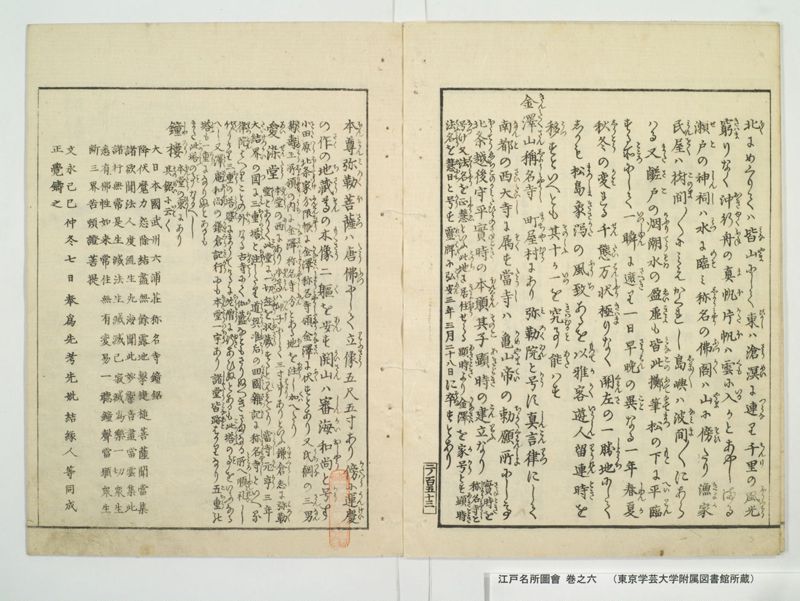
翻刻
【右丁】
北(ほく)にめくりては皆(みな)山(やま)にして東(ひかし)は滄溟(さうめい)に連(つらな)り千里(せんり)の風光(ふうくわう)
窮(きはま)りなく沖行(おきゆく)舟(ふね)の真帆(まほ)片帆(かたほ)は雲(くも)に入(いる)かとあやしまる
瀬戸(せと)の神祠(しんし)は水(みつ)に臨(のそ)み称名(しやうみやう)の佛閣(ふつかく)は山(やま)に傍(そひ)たり漁家(きよか)
民屋(みんをく)は《振り仮名:樹間〳〵|このま 》にみえかくれし島嶼(しま〳〵 )は《振り仮名:波間〳〵|なみま 》にあら
はる又(また)鹺戸(さこ)の烟(けふり)潮水(てうすゐ)の盈虚(ゑいきよ)も皆(みな)此(この)擲筆松(ふてすてまつ)の下(もと)に平臨(へいりん)
する所(ところ)にして一瞬(いつしゆん)に遮(さへき)り一日 早晩(さうはん)の異(こと)なる一年 春夏(しゆんか)
秋冬(しうとう)の変(かは)れる千態万状(せんたいはんしやう)極(きはま)りなく關左(くわんさ)の一勝地( しようち)にして
しかも松島(まつしま)象潟(きさかた)の風致(ふうち)あるを以(もつて)雅客(かかく)遊人(いうしん)留連(りうれん)時(とき)を
移(うつ)すといへとも其(その)《振り仮名:十か一|しふ いつ》を究事(きはむること)能(あた)はす
金澤山(きんたくさん)稱名寺(しようみやうし) 町屋村(まちやむら)にあり弥勒院(みろくゐん)と号(かう)す真言律(しんこんりつ)にして
南都(なんと)の西大寺(さいたいし)に属(そく)す當寺(たうし)は 亀山帝(かめやまてい)の勅願所(ちよくくわんしよ)にして
北条越後守平實時(ほうてうゑちこのかみたひらのさねとき)の本願(ほんくわん)其子(そのこ)顕時(あきとき)の建立(こんりふ)なり《割書:實時(さねとき)を|称名寺(しようみやうし)と》
《割書:号(なつ)け又 法名(はうみやう)を正慧(しやうゑ)といふ此地(このち)に居住(きよちゆう)せらる顕時(あきとき)より金澤(かなさは)を家号(かかう)とす顕時(あきとき) |法名(はふみやう)を慧日(ゑにち)と号(かう)す靈牌(れいはい)に弘安(こうあん)三年三月二十八日に卒(そつ)すとあり》
【左丁】
本尊(ほんそん)弥勒菩薩(みろくほさつ)は唐佛(たうふつ)にして立像(りふさう)五尺五寸あり傍(かたはら)に運慶(うんけい)
の作(さく)の地蔵尊(ちさうそん)の木像(もくさう)二軀( く)を安(あん)す開山(かいさん)は審海和尚(しんかいおしやう)と号(かう)す
《割書:小田原(をたはら)北条家分限帳(ほうてうけふんけんちやう)に金澤(かなさは)称名寺領(しようみやうしりやう)金澤(かなさは)に伏(ふく)すとあり又 氏綱(うちつな)の三男(さんなん) |菊壽王(きくしゆわう)所領(しよりやう)の内(うち)に金澤(かなさは)称名寺分(しようみやうしふん)とある地(ち)を注(ちゆう)し加(くは)へたり》
愛染堂(あいせんたう)《割書:本堂(ほんたう)の西(にし)にあり本尊(ほんそん)は印子(いんす)にして三寸斗( はかり)ありといふ鎌倉志(かまくらし)に弥勒(みろく)|堂(たう)とありて此堂(このたう)に一切経(いつさいきやう)を収蔵(しゆさう)すると見(み)えたり當寺(たうし)元亨(けんかう)三年》
《割書:大結界(たいけつかい)の図(つ)に三重塔(さんちうのたふ)と注(ちゆう)したり道興准后(たうこうしゆこう)の囬國雜記(くわいこくさつき)に称名寺(しようみやうし)といへる|律院(りつゐん)はへりことの外(ほか)なる古寺(ふるてら)にて伽藍(からん)なともさりぬへきさまなる所(ところ)へ順礼(しゆんれい)し》
《割書:侍(はへ)りけり三重( ちう)の塔婆(たうは)にまうてけるに老僧(らうそう)に行(ゆき)あひぬとあるも此塔(このたふ)の事(こと)をいふなる|へし又 澤庵和尚(たくあんおしやう)の鎌倉記行(かまくらきかう)にも本堂(ほんたう)一宇(いちう)あり諸堂(しよたう)皆(みな)跡(あと)はかりなり五重(こちう)の》
《割書:塔(たふ)も一重( ちう)になりぬとあるも|また此塔(このたふ)の事(こと)なるへし》
鐘樓(しゆろう)《割書:本堂(ほんたう)の東(ひかし)にあり|其銘(そのめい)に云(いは)く》
大日本國武州六浦荘称名寺鐘銘
降伏魔力怨除結盡無餘露地撃捷槌菩薩聞當集
諸欲聞法人度流生死海聞此妙響音盡當雲集此
諸行無常是生滅法生滅滅已寂滅爲樂一切衆生
悉有佛性如来常住無有變易一聽鐘聲當願衆生
断三界苦頓證菩提
文永己巳仲冬七日奉爲先考先妣結緣人等同成
正覺鑄之
現代語訳
【右丁】
北にめぐっては皆山で、東は大海原に連なり、千里の風光は限りなく、沖を行く舟の真帆片帆は雲に入るかと見まがうほどである。
瀬戸の神社は水に臨み、称名の仏閣は山に寄り添っている。漁家や民家は木々の間に見え隠れし、島々は波間に現れる。また塩田の煙や潮の満ち引きも、皆この擲筆松の下から一望できる所で、一瞬のうちに遮り、一日の朝夕の違い、一年の春夏秋冬の変化など、千態万状限りなく、関東の一勝地であり、しかも松島や象潟の風情があるため、雅客や遊人が留まり連なって時を過ごすといえども、その十分の一を究めることもできない。
金沢山称名寺 町屋村にあり、弥勒院と号する。真言律宗で南都の西大寺に属する。当寺は亀山天皇の勅願所で、北条越後守平実時の本願、その子顕時の建立である《小字:実時を称名寺と号し、また法名を正慧という。この地に居住された。顕時より金沢を家号とする。顕時の法名を慧日と号す。霊牌に弘安三年三月二十八日に卒すとある》
【左丁】
本尊弥勒菩薩は唐仏で立像五尺五寸ある。傍らに運慶作の地蔵尊の木像二体を安置する。開山は審海和尚と号する。
《小字:小田原北条家分限帳に「金沢称名寺領、金沢に伏す」とあり、また氏綱の三男菊寿王の所領の内に金沢称名寺分とある地を注し加えたり》
愛染堂《小字:本堂の西にあり、本尊は印子で三寸ほどあるという。鎌倉志に弥勒堂とあって、この堂に一切経を収蔵するとみえたり。当寺元亨三年大結界の図に三重塔と注したり。道興准后の回国雑記に「称名寺という律院は古くからの外様な古寺で、伽藍なども然るべき様な所へ巡礼し侍りけり。三重の塔婆に参ったところ、老僧に行き合いぬ」とあるのもこの塔のことを言うのであろう。また沢庵和尚の鎌倉記行にも「本堂一宇あり、諸堂皆跡ばかりなり。五重の塔も一重になりぬ」とあるのもまたこの塔のことであろう》
鐘楼《小字:本堂の東にあり、その銘に言うことには》
大日本国武州六浦荘称名寺鐘銘
降伏魔力怨除結尽無余露地撃捷槌菩薩聞当集
諸欲聞法人度流生死海聞此妙響音尽当雲集此
諸行無常是生滅法生滅滅已寂滅為楽一切衆生
悉有仏性如来常住無有変易一聴鐘声当願衆生
断三界苦頓証菩提
文永己巳仲冬七日奉為先考先妣結縁人等同成
正覚鋳之
英語訳
【Right page】
To the north, it is surrounded by mountains, and to the east it connects to the vast ocean. The scenery extends for a thousand ri without limit, and the full and half sails of boats going offshore seem to blend into the clouds.
The Shinto shrine of Seto faces the water, and the Buddhist hall of Shōmyō nestles against the mountain. Fishing houses and common dwellings appear and disappear among the trees, and islands emerge from between the waves. The smoke from salt fields and the ebb and flow of tides can all be seen from beneath this Brush-throwing Pine, where in an instant one can take in the different aspects of morning and evening in a single day, the changes of spring, summer, autumn and winter in a year - countless forms and states without limit. This is one of the most scenic spots in the Kantō region, with the charm of Matsushima and Kisakata, so that cultured visitors and travelers linger here spending their time, though they cannot fathom even one-tenth of its beauty.
Kinzakusan Shōmyōji Temple Located in Machiya Village, it is called Miroku-in. It belongs to the Shingon Ritsu sect and is affiliated with Saidaiji Temple in Nanto. This temple is an imperial prayer temple of Emperor Kameyama, founded through the original vow of Hōjō Echigo-no-kami Taira no Sanetoki and built by his son Akitoki. 《Small text: Sanetoki was called Shōmyōji, and his Buddhist name was Shōe. He resided in this place. From Akitoki onward, Kanazawa became the family name. Akitoki's Buddhist name was Enichi. The memorial tablet states he died on the 28th day of the 3rd month of Kōan 3.》
【Left page】
The principal image, Miroku Bosatsu, is a Tang Buddhist statue, a standing figure five shaku and five sun tall. Beside it are installed two wooden statues of Jizō carved by Unkei. The founding priest was called Shinkai Oshō.
《Small text: The Odawara Hōjō family's property register states "Kanazawa Shōmyōji domain is subject to Kanazawa," and also notes land called "Kanazawa Shōmyōji portion" within the holdings of Kikujuō, the third son of Ujitsuna.》
Aizen Hall 《Small text: Located west of the main hall. The principal image is a seal-stamp sized about three sun, according to records. The Kamakura-shi refers to it as Miroku Hall, noting that the complete Buddhist canon is stored in this hall. In the temple's Genkō 3 great boundary diagram, it is marked as a three-story pagoda. In Dōkō Junkō's Travel Record Around the Provinces, he writes: "The Ritsu temple called Shōmyōji is an exceptionally ancient temple with suitable temple buildings, where I made pilgrimage. When I visited the three-story pagoda, I encountered an old monk" - this also refers to this pagoda. Also, in Takuan Oshō's Kamakura Travel Record, it states "There is one main hall, all other halls are mere ruins. The five-story pagoda has also become just one story" - this too likely refers to this pagoda.》
Bell Tower 《Small text: Located east of the main hall. Its inscription reads:》
Dai Nippon Koku Bushū Mutsuura-shō Shōmyōji Bell Inscription
Subduing demonic power, removing enmity, completely exhausting all bonds, striking the victory hammer in the open ground, when bodhisattvas hear this, they shall gather
All who wish to hear the Dharma, crossing the ocean of life and death, hearing this wondrous sound, all shall gather here like clouds
All phenomena are impermanent, this is the law of arising and perishing; when arising and perishing have ceased, nirvana is bliss; all sentient beings
All possess Buddha-nature, the Tathāgata is eternal and unchanging; upon hearing the bell once, may all beings
Sever the suffering of the three realms and suddenly attain enlightenment
On the 7th day of mid-winter in the year Bun'ei Tsuchinoto-mi, this was cast in dedication to deceased parents and all connected persons that they might together achieve
Perfect enlightenment