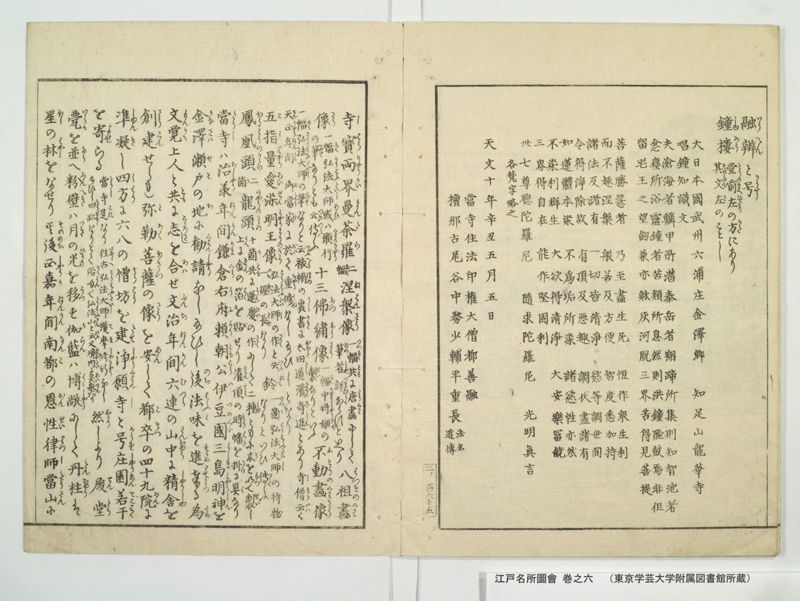
翻刻
【右丁】
融辨(いうへん)と号(かうす)
鐘樓(しゆろう)《割書:堂前(たうのまへ)左(ひたり)の方(かた)にあり|其文(そのふん)左(さ)のことし》
大日本國武州六浦庄金澤郷 知足山龍華寺
唱鐘知識文
夫滄海者鱗甲所潛泰岳者翔蹄所集則知智池者
忿塵所浴靈鐘者苦類所息然則洪鐘隆鼓焉非但
留吒#1王之望劔兼亦𬓲#2灰河脫三界苦得見菩提
菩薩勝慧者 乃至盡生死 恆作衆生利
而不趣涅槃 般若及方便 智度悉加持
諸法及諸有 一切皆清淨 慾等調世間
令得淨除故 有頂及𢙣趣 調伏盡諸有
如蓮體本染 不爲垢所染 諸慾性亦然
不染利群生 大欲得清淨 大安樂冨饒
三界#3得自在 能作堅固利
卅七尊聰陀羅尼 隨求陀羅尼 光明眞言
各梵字略之
天文十年辛丑五月五日
當寺住法印権大僧都善融
檀那古尾谷中務少輔平重長《割書:法名|道傳》
【左丁】
寺寳(しはう)両界曼荼羅(りやうかいまんたら)《割書:二|幅(ふく)》涅槃像(ねはんさう)《割書:一幅(いつふく)共(とも)に唐畵(たうくわ)にして|筆者(ひつしや)詳(つまひらか)ならすといへり》八租畵(はつそのくわ)
像(さう)《割書:一 幅(ふく)弘法大師(こうはふたいし)或(あるひ)は願行(くわんきやう)|の筆(ふて)なりとも云傳(いひつた)ふ》十三佛繡像( ふつしうさう)《割書:一幅( ふく)中将姫(ちゆうしやうひめ)の|製(せい)なりといふ》不動畵像(ふとうのくわさう)
《割書:一幅( ふく)弘法大師(こうはうたいし)の筆(ふて)なりと云(いふ)裱褙(へうほゐ)の裏書(うらかき)に太田道灌奇進(おほたたうくわんきしん)とあり寺僧(しそう)云(いは)く|天正年間(てんしやうねんかん) 御當家(こたうけ)に於(おい)て重修(ちやうしゆ)なし給ひとしとなり》
五指量(こしりやう)愛染明王像(あいせんみやうわうのさう)《割書:弘法大師(こうはふたいし)の作(さく)と云(いふ) |一握(いちあく)の長(たけ)なり》鈴(れい)《割書:一箇(いつか)弘法大師(こうはふたいし)の持物|なりといひ傳(つた)ふ》
鳳凰頭(ほうわうのかしら)《割書:二|箇(か)》龍頭(りやうのかしら)《割書:十箇( か)共(とも)に運慶(うんけい)の作(さく)にして二種( しゆ)ともに木(き)を以(もつ)て製(せい)し|上(うへ)に金(きん)の箔(はく)を貼(お)せり灌頂(くわんてう)の時(とき)幡(はた)を掛(かけ)る具(く)なり》
當寺(たうし)は治承年間(ちしやうねんかん)鎌倉右府頼朝公(かまくらうふよりともこう)伊豆國(いつのくに)三島明神(みしまみやうしん)を
金澤(かなさは)瀬戸(せと)の地(ち)に勧請(くわんしやう)なし給ひし後(のち)法味(はふみ)を進(すゝめ)奉(たてまつ)る為(ため)
文覚上人(もんかく )と共(とも)に志(こゝろさし)を合(あは)せ文治年間(ふんちねんかん)六連(むつら)の山中(さんちゆう)に精舎(しやうしや)を
創建(さうこん)せられ弥勒菩薩(みろくほさつ)の像(さう)を安(あん)して都卒(とそつ)の四十九院( ゐん)に
準凝(しゆんき)し四方(しはう)に六八の僧坊(そうはう)を建(たて)浄願寺(しやうくわんし)と号(かうす)庄園(しやうゑん)若干(そこはく)
を寄(よせ)らる《割書:當寺(たうし)是(これ)なり往古(いにしへ)弘法大師(こうはふたいし)護摩修行(こましゆきやう)なし|給ひし旧跡(きうせき)なりとて俗(そく)呼(よん)て弘法山(こうはふさん)と云(いふ)又 境内(けいたい)に㚑泉(れいせん)あり》然(しかり)しより殿堂(てんたう)
甍(いらか)を並(なら)へ粉壁(ふんへき)は月(つき)の光(ひかり)を移(うつ)す伽藍(からん)は博敞(はくしやう)にして丹柱(たんちゆう)は
星(ほし)の林(はやし)をなせり其後(そののち)正嘉年間(しやうかねんかん)南都(なんと)の恩性律師(おんせいりつし)當山(たうさん)に
現代語訳
【右丁】
融辨と号す
鐘楼《割書:堂前の左の方にあり|その文は左のとおりである》
大日本国武州六浦庄金沢郷 知足山龍華寺
唱鐘知識文
そもそも滄海(大海)は鱗甲(魚や亀など)の潜む所であり、泰岳は翔蹄(鳥や獣)の集う所である。つまり、智池(智慧の池)は煩悩の塵を洗い流す場所であり、霊鐘は苦しむ者が安らぎを得る所である。されば、大きな鐘を鳴らし太鼓を打つことは、単に留吒王の剣の霊威を留めるばかりでなく、灰河(三途の川)を渡って三界の苦しみを脱し、菩提を得ることを助けるためでもある。
菩薩の勝れた智慧は 生死を尽きるまで 常に衆生の利益となり
涅槃を求めず 般若と方便 智度によってすべてを加持し
諸法と諸有 一切をことごとく清浄にし 欲をもって世間を調え
清浄に除かせるがゆえに 有頂(存在の頂点)と悪趣(悪い境遇)も 調伏してすべての有を尽くす
蓮の本体が染まらぬように 垢によって染まることなく 諸欲の性もまたそのごとく
染まらずして群生を利す 大いなる欲は清浄を得 大安楽・富饒
三界に自在を得て よく堅固の利をなす
三十七尊陀羅尼 随求陀羅尼 光明真言
各梵字(略す)
天文十年辛丑五月五日
当寺住持 法印権大僧都 善融
檀那 古尾谷中務少輔 平重長《割書:法名|道伝》
【左丁】
寺宝:両界曼荼羅《割書:二幅》、涅槃像《割書:一幅、いずれも唐絵(中国画)であって、筆者は詳かではないと言う》、八祖画像《割書:一幅、弘法大師あるいは願行の筆であるとも言い伝える》、十三仏繍像《割書:一幅、中将姫の製であると言う》、不動画像《割書:一幅、弘法大師の筆であると言う。裱褙(表装)の裏書に「太田道灌寄進」とある。寺僧が言うには、天正年間に御当家(徳川家)においてご重修なされたとのことである》、五指量愛染明王像《割書:弘法大師の作と言う。一握りの高さである》、鈴《割書:一個、弘法大師の持ち物であると言い伝える》、鳳凰頭《割書:二個》、龍頭《割書:十個、いずれも運慶の作であり、二種ともに木をもって製し、上に金箔を貼ってある。灌頂の時に幡を掛ける具である》。
当寺は治承年間に、鎌倉右府頼朝公が伊豆国三島明神を金沢瀬戸の地に勧請なされた後、法味を進め奉るため、文覚上人とともに志を合わせ、文治年間に六連の山中に精舎を創建された。弥勒菩薩の像を安置して兜率天の四十九院に準じ、四方に六×八の僧坊を建て、浄願寺と号し、庄園若干を寄進された《割書:当寺がこれである。往古、弘法大師が護摩修行をなされた旧跡であるとして、俗に「弘法山」と呼ぶ。また境内に霊泉がある》。それより後、殿堂は甍を並べ、白壁は月の光を映し、伽藍は広大にして、丹塗りの柱は星の林のごとく立ち並んだ。その後、正嘉年間に南都(奈良)の恩性律師が当山に……
英語訳
【Right page】
[The temple] is named Yūben.
Bell Tower《Marginal note: Located to the left in front of the main hall. The inscription reads as follows.》
Dai Nihon-koku Bushū Mutsuura-no-shō Kanazawa-gō Chisoku-zan Ryūge-ji Temple
Inscription for the Dedication of the Temple Bell
Just as the vast ocean is where scaly creatures dwell, and the great mountains are where birds and beasts gather, so too is the pool of wisdom a place where the dust of worldly passions is cleansed, and the sacred bell a place where those who suffer find rest. Thus, striking the great bell and beating the drum serves not merely to invoke the spiritual power of King Rutā's sword, but also to help sentient beings cross the River of Ash, escape the suffering of the Three Realms, and attain enlightenment.
The supreme wisdom of the Bodhisattva, throughout all of existence, ever works for the benefit of sentient beings.
Not seeking nirvāṇa, through prajñā and skillful means, sustained by the perfection of wisdom,
All dharmas and all existence are entirely purified; desires are used to regulate the world,
So that it may be cleansed. Thus even the highest existence and the evil realms are subdued and all existence exhausted.
Just as the lotus body is originally untainted and is not stained by impurity, so too is the nature of desires —
Unstained, benefiting all beings. Great desire attains purity, great peace, joy, and abundance.
Attaining freedom throughout the Three Realms, working for steadfast benefit.
Dhāraṇī of the Thirty-Seven Honored Ones; Dhāraṇī of Fulfillment of All Wishes; Mantra of Light
(Sanskrit characters omitted throughout)
Fifth day of the fifth month, Tenbun 10 (1541), Year of the Metal Ox
Abbot of this temple, Hōin Gondaisōzu Zennyū
Patron: Furuoya-no-tani Nakatsukasa-no-shōyū, Taira no Shigenaga《Marginal note: Dharma name: Dōden》
【Left page】
Temple Treasures: Dual-Realm Mandala《Marginal note: Two scrolls》; Nirvāṇa painting《Marginal note: One scroll; both are Chinese paintings, and the artists are said to be unknown》; Portraits of the Eight Patriarchs《Marginal note: One scroll; said to be the brushwork of Kōbō Daishi or Gangyō》; Embroidered image of the Thirteen Buddhas《Marginal note: One scroll; said to be the work of Lady Chūjō-hime》; Painted image of Fudō Myōō《Marginal note: One scroll; said to be the brushwork of Kōbō Daishi. On the back of the mounting is written "Donated by Ōta Dōkan." The temple monks say that it was restored by the ruling house [the Tokugawa] during the Tenshō era》; Image of Aizen Myōō, measuring five finger-widths《Marginal note: Said to be the work of Kōbō Daishi; it is one fist in height》; Bell《Marginal note: One piece; said to be a personal possession of Kōbō Daishi》; Phoenix heads《Marginal note: Two pieces》; Dragon heads《Marginal note: Ten pieces; all are the work of Unkei, both types crafted from wood and gilded with gold leaf; these are implements for hanging banners during initiation ceremonies (kanjō)》.
This temple was founded during the Jishō era when the Lord of Kamakura, Minamoto no Yoritomo, enshrined the deity of Mishima Myōjin from Izu Province at Kanazawa Seto. In order to offer up religious devotions, Yoritomo joined forces with the monk Mongaku, and during the Bunji era, they built a temple in the mountains of Mutsura. A statue of Maitreya Bodhisattva was enshrined in accordance with the forty-nine halls of Tuṣita Heaven, monks' quarters were built in all directions in a six-by-eight arrangement, the temple was named Jōgan-ji, and various estate lands were donated.《Marginal note: This temple is that very one. In ancient times, Kōbō Daishi performed fire rituals (goma) here, and so the place is commonly called "Kōbō-yama." There is also a sacred spring within the temple grounds.》 From then onward, the halls and pavilions stood roof-tile to roof-tile; the white walls reflected the moonlight; the temple complex was grand and expansive; and the vermilion pillars rose like a forest of stars. After this, during the Shōka era, the Vinaya master Onsei from the Southern Capital (Nara) came to this mountain…