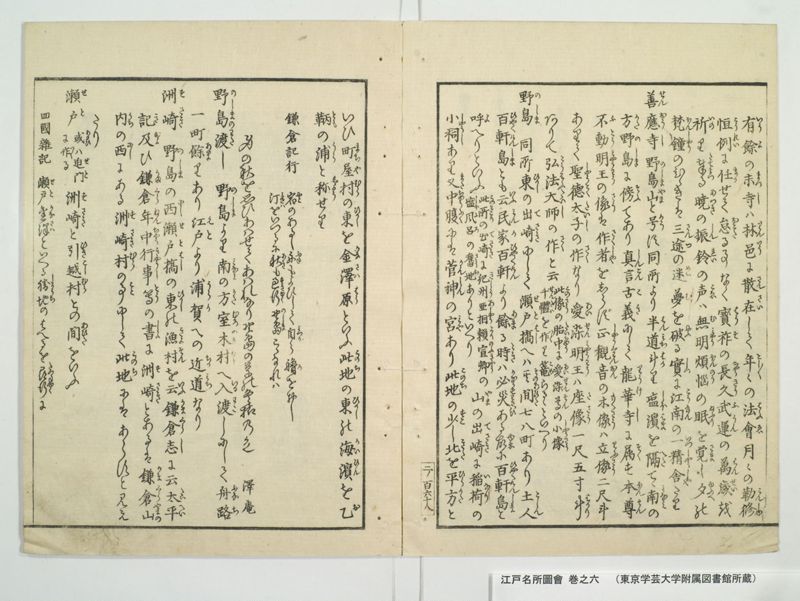
翻刻
【右丁】
有餘(いうよ)の末寺(まつし)は林邑(りんいう)散在(さんさい)して年々(とし〳〵)の法會(はふゑ)月々の勒修(こんしゆ)#1
恒例(こうれい)に任(まか)せて怠(おこた)る事なく寶祚(はうそ)の長久武運(ちやうきうふうん)の萬歳(はんせい)を
祈(いの)り奉(たてまつ)る暁(あつき)の振鈴(しんれい)の声(こゑ)は無明煩惱(むみやうほんのう)の眠(ねふり)を覚(さま)し夕(ゆふへ)の
梵鐘(ほんしやう)のひゝきは三途(さんつ)の迷夢(めいむ)を破(やふ)る實(しつ)に江南(こうなん)の一精舎(いつしやうしや)たり
善應寺(せんおうし) 野島山(のしまやま)と号(かう)す同所より半道斗(はんみちはか)り塩濵(しほはま)を隔(へた)てゝ南(みなみ)の
方(かた)野島(のしま)に傍(そふ)てあり真言古義(しんこんこき)にて龍華寺(りうけし)に属(そく)す本尊(ほんそん)
不動明王(ふとうみやうわう)の像(さう)は作者(さくしや)をしらず正観音(しやうくわんおん)の木像(もくさう)は立像(りふさう)二尺斗
ありて聖徳太子(しやうとくたいし)の作(さく)なり愛染明王(あいせんみやうわう)は座像(ささう)一尺五寸斗( はかり)
ありて弘法大師(こうはふたいし)の作(さく)と云《割書:此像(このさう)の胎中(たいちゆう)に愛染尊(あいせんそん)の小像(しやうさう)|千體(せんたい)を作(つく)り篭(こめ)らるゝといへり》
野島(のしま) 同所 東(ひかし)の出崎(てさき)にして瀬戸橋(せとはし)へは其間(そのあひた)七八町あり土人(としん)
百軒島(ひやくけんしま)とも云(いふ)民家(みんか)百軒(ひやくけん)より餘(あま)る時(とき)は必(かならす)災(わさはひ)ある故(ゆゑ)に百軒島(ひやくけんしま)と
呼(よ)へりといふ《割書:此所(このところ)の出崎(てさき)に紀州亜相頼宣卿(きしうあしやうよりのふきやう)の|塩風呂(しほふろ)の《振り仮名:𦾔地|きうち》ありといへり》山(やま)の出崎(てさき)に稲荷(いなり)の
小祠(しやうし)あり又(また)中腹(ちゆうふく)には菅神(かんしん)の宮(みや)あり此地(このち)の少(すこ)し北(きた)を平方(ひらかた)と
【左丁】
いひ町屋村(まちやむら)の東(ひかし)を金澤原(かなさははら)といふ此地(このち)の東(ひかし)の海濵(かいひん)を乙(お)
《振り仮名:鞆の浦|とも うら》と称(しよう)せり
鎌倉記行 宿(やと)のあるし舟(ふね)もよひして自(みつか)ら艪(ろ)をおし
汀(みきは)をいつるに秋(あき)も過行(すきゆく)野島(のしま)こゝなれは
身の秋を思ひあはせてあはれなり野島の草の冬枯の色 澤庵
《振り仮名:野島渡し|のしまのわた 》 野島(のしま)より南(みなみ)の方(かた)室木村(むろのきむら)へ入(いる)渡(わた)しにして舟路(ふなち)
一町餘( あま)りあり江戸(えと)より浦賀(うらか)への近道(ちかみち)なり
洲崎(すさき) 野島(のしま)の西(にし)瀬戸橋(せとはし)の東(ひかし)の漁村(きよそん)を云(いふ)鎌倉志(かまくらし)に云 太平(たいへい)
記(き)及(およ)ひ鎌倉年中行事(かまくらねんちゆうきやうし)等(とう)の書(しよ)に洲崎(すさき)とあるは鎌倉山(かまくらやまの)
内(うち)の西(にし)にある洲崎村(すさきむら)の事(こと)にして此地(このち)にはあらすと見え
たり
瀬戸(せと)《割書:或(あるひ)は迫門(せと) |に作(つく)る》洲崎(すさき)と引越村(ひきこしむら)との間(あひた)をいふ
四國雜記 瀬戸(せと)金澤(かなさは)といへる勝地(しようち)のはへるを尋行(たつねゆく)に
現代語訳
【右丁】
有余(龍華寺)の末寺は地域に散在しており、年々の法会、月々の勤行を恒例に従って怠ることなく、皇室の長久と武運の万歳を祈り申し上げている。暁の振鈴の声は無明煩悩の眠りを覚まし、夕べの梵鐘の響きは三途の迷夢を破る。まことに江南の一精舎である。
善応寺 野島山と号する。同所より半道ほど塩浜を隔てて南の方、野島に沿ってある。真言古義宗で龍華寺に属する。本尊不動明王の像は作者不明。正観音の木像は立像で二尺ほどあり、聖徳太子の作である。愛染明王は座像で一尺五寸ほどあり、弘法大師の作と言う。(この像の胎中に愛染尊の小像千体を作り籠められているという)
野島 同所の東の出崎で、瀬戸橋へはその間七八町ある。土地の人は百軒島とも言う。民家が百軒より多くなる時は必ず災いがある故に百軒島と呼ぶという。(この所の出崎に紀州副将軍頼宣卿の塩風呂の旧地があるという)山の出崎に稲荷の小祠があり、また中腹には菅神の宮がある。この地の少し北を平方と
【左丁】
言い、町屋村の東を金沢原という。この地の東の海浜を乙鞆の浦と称する。
鎌倉紀行 宿の主人が舟を用意してくれて、自ら櫓を押し
汀を出るに秋も過ぎ行く野島、ここなれば
身の秋を思い合わせてあはれなり野島の草の冬枯の色 沢庵
野島渡し 野島より南の方、室木村へ入る渡しで、舟路は一町余りある。江戸より浦賀への近道である。
洲崎 野島の西、瀬戸橋の東の漁村を言う。鎌倉志に言う、太平記及び鎌倉年中行事等の書に洲崎とあるのは鎌倉山の内の西にある洲崎村の事で、この地ではないと見える。
瀬戸(或いは迫門に作る)洲崎と引越村との間を言う。
四国雑記 瀬戸金沢という勝地の栄えるを尋ね行くに
英語訳
【Right page】
The branch temples of Uyū (Ryūge-ji) are scattered throughout the region, and they continue without fail the annual Buddhist ceremonies and monthly services according to custom, praying for the long prosperity of the imperial throne and eternal military fortune. The sound of the morning bell awakens one from the sleep of ignorance and earthly desires, while the evening temple bell breaks through the delusory dreams of the three evil paths. This is truly a Buddhist temple of the Jiangnan region.
Zen'ō-ji Temple is called Nojimayama. It is located about half a ri south from the same place, separated by a salt beach and adjacent to Nojima. It belongs to the Shingon Kogi sect under Ryūge-ji Temple. The statue of Fudō Myōō (the principal deity) has an unknown creator. The wooden statue of Shō Kannon is a standing figure about two shaku tall, created by Prince Shōtoku. The Aizen Myōō is a seated statue about 1.5 shaku tall, said to be created by Kōbō Daishi. (It is said that within this statue's interior, a thousand small images of Aizen-son are enshrined)
Nojima is an eastern cape of the same location, about seven or eight chō from Seto Bridge. Local people also call it Hyakken Island. They say it's called Hyakken Island because disasters inevitably occur when there are more than one hundred houses. (It is said that at this cape there was once a salt bath facility of Kishu Vice-Shogun Yorinobu) There is a small Inari shrine at the mountain cape, and a Kan-shin shrine on the mid-slope. A little north of this area is called Hirakata,
【Left page】
and the east of Machiya Village is called Kanazawa Plain. The eastern seashore of this area is called Otomo-no-ura.
Kamakura Travel Record: The inn host prepared a boat, and rowing by myself,
leaving the shore as autumn passes at Nojima, here it is—
thinking of my own autumn years, how moving it is, the winter-withered color of Nojima's grass — Takuan
Nojima Ferry: A ferry from Nojima southward into Muroki Village, with a boat route of over one chō. This is a shortcut from Edo to Uraga.
Susaki refers to a fishing village west of Nojima and east of Seto Bridge. According to the Kamakura-shi, the Susaki mentioned in books such as the Taiheiki and Kamakura Annual Events refers to Susaki Village west of Kamakura-yama-no-uchi, not this location.
Seto (sometimes written as Sakuto) refers to the area between Susaki and Hikkoshi Village.
Shikoku Miscellany: Seeking out the prosperity of the scenic spot called Seto Kanazawa...