翻刻
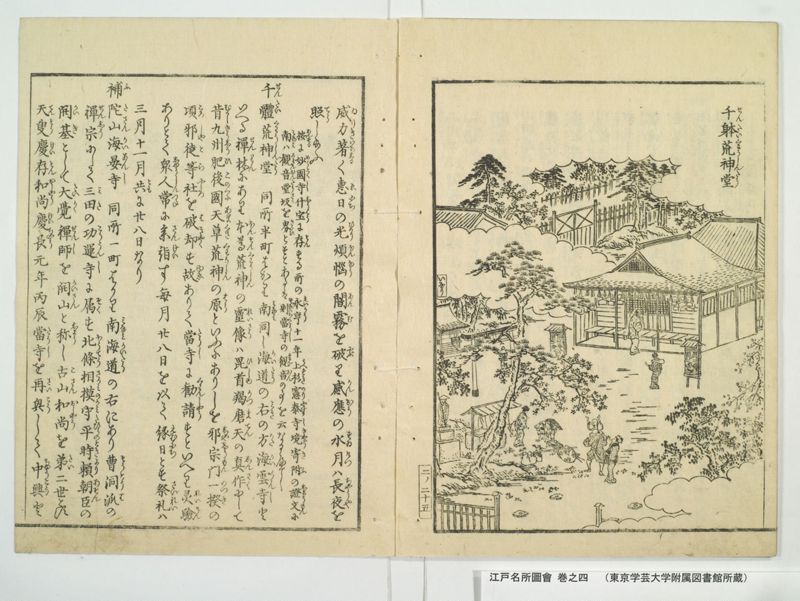
【右丁 絵図】
千躰荒神堂(せんたいくわうしんたう)
いなり
【左丁】
威力(ゐりき)著(いちしる)く惠日(ゑにち)の光(ひかり)煩悩(ほんなう)の闇霧(あんむ)を破(やぶ)り感應(かんおう)の水月(すゐけつ)は長夜(ちやうや)を
照(てら)し給ふ
《割書:按(あんする)に妙國寺(めうこくし)什宝(しうはう)に存(そん)する所の永亨(えいかう)十一年 上杉憲泰(うへすきのりやす)寺境(しきやう)寄附(きふ)の證文(しようもん)に|南(みなみ)は観音堂坂(くわんおんたうさか)を■(さかひ)#2とすとあるは則(すなはち)當寺(たうし)の観音(くわんおん)の事を云なるへし》
千躰荒神堂(せんたいくわうしんたう) 同所半町はかり南(みなみ)同し海道(かいたう)の右(みき)の方(かた)海雲寺(かいうんし)と
いへる禪林(せんりん)にあり本尊(ほんそん)荒神(くわうしん)の靈像(れいさう)は毘首羯磨天(ひしゆかつまてん)の真作(しんさく)にして
昔(むかし)九州(きうしう)肥後國(ひこのくに)天草(あまくさ)《振り仮名:荒神の原|くわうしん はら》といふにありしを邪宗門一揆(しやしうもんいつき)の
頃(ころ)邪徒等(しやとら)社(やしろ)を破却(はきやく)す故(ゆゑ)ありて當寺(たうし)に勧請(くわんしやう)すといへり灵驗(れいけん)
ありとて衆人(しゆうしん)常(つね)に参詣(さんけい)す毎月廿八日を以て縁日(えむにち)とす祭礼(さいれい)は
三月十一月 共(とも)に廿八日なり
補陀山(ふたさん)海晏寺(かいあんし) 同所一町はかり南(みなみ)海道(かいたう)の右にあり曹洞派(そうとうは)の
禪宗(せんしう)にして三田(みた)の功運寺(こううんし)に属(そく)す北條相模守平時頼朝臣(ほうてうさかみのかみたひらのときよりあそん)の
開基(かいき)として大覺禪師(たいかくせんし)を開山(かいさん)と称(しよう)し古山和尚(こさんおしやう)を弟二世(たい )#3とす
天叟慶存和尚(てんそうけいそんおしやう)慶長(けいちやう)元年丙辰 當寺(たうし)を再興(さいこう)して中興(ちゆうこう)と
現代語訳
【右丁 絵図】
千体荒神堂(せんたいこうじんどう)
稲荷
【左丁】
威力が著しく、恵日の光が煩悩の闇霧を破り、感応の水月が長夜を照らし給う。
《割書:考えるに、妙国寺の什宝に保存されている永享十一年の上杉憲泰による寺境寄附の証文に「南は観音堂坂を境とす」とあるのは、すなわち当寺の観音のことを言うのであろう》
千体荒神堂(せんたいこうじんどう) 同所から半町ばかり南、同じ海道の右の方にある海雲寺という禅寺にある。本尊荒神の霊像は毘首羯磨天の真作にして、昔九州肥後国天草《振り仮名:荒神の原(こうじんのはら)》というところにあったが、キリシタン一揆の頃、キリシタン等が社を破却したため、当寺に勧請したという。霊験ありとして衆人が常に参詣する。毎月二十八日を縁日とする。祭礼は三月と十一月ともに二十八日である。
補陀山(ふださん)海晏寺(かいあんじ) 同所から一町ばかり南、海道の右にある。曹洞派の禅宗にして三田の功運寺に属する。北条相模守平時頼朝臣の開基として大覚禅師を開山と称し、古山和尚を第二世とする。天叟慶存和尚が慶長元年丙辰に当寺を再興して中興と
英語訳
【Right page illustration】
Sentai Kōjin Hall (Thousand-Body Fierce Deity Hall)
Inari
【Left page】
Its divine power is remarkable, the light of the auspicious sun breaks through the dark mist of worldly desires, and the water-moon of spiritual response illuminates the long night.
《Small print: According to consideration, a document of temple land donation by Uesugi Noritasu from the 11th year of Eikyō preserved among the treasures of Myōkoku-ji states "the southern boundary is Kannon Hall Slope," which presumably refers to the Kannon of this temple》
Sentai Kōjin Hall (Thousand-Body Fierce Deity Hall) - Located about half a chō south of the same place, on the right side of the same coastal road, in a Zen temple called Kaiun-ji. The sacred statue of the principal deity Kōjin is a genuine work of Viśvakarma Deva. Long ago it was located in a place called Amakusa (with the reading note: Kōjin-no-hara) in Higo Province, Kyūshū, but when the Christian rebels destroyed the shrine during the Christian uprising, it was transferred to this temple for various reasons. People constantly visit for worship believing in its miraculous powers. The 28th day of each month is designated as the festival day. The main festivals are on the 28th day of both the third and eleventh months.
Fudasan Kaian-ji Temple - Located about one chō south of the same place, on the right side of the coastal road. It is a Zen temple of the Sōtō sect belonging to Kōun-ji in Mita. It claims Hōjō Sagami-no-kami Taira-no-Tokiyori as its founder and Daikaku Zenji as its founding abbot, with Kosan Oshō as the second generation. Tentsō Keison Oshō restored this temple in the first year of Keichō (1596) and is considered the restorer.