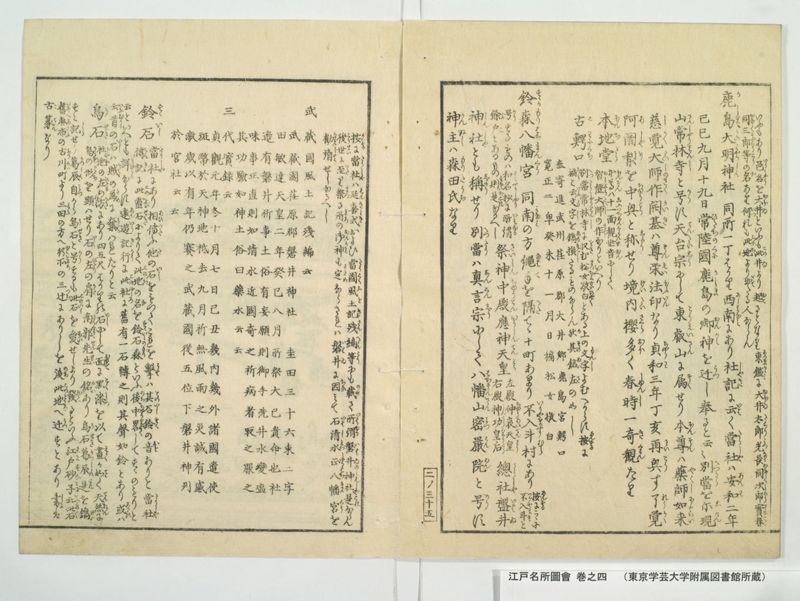
翻刻
【右丁】
《割書:いふもあり邑名(いうみやう)を大井(おほゐ)といふも此井(このゐ)より起(おこ)るとなり東鑑(あつまかゝみ)に大井太郎光長(おほゐたらうみつなか)同(おなしく)次郎(しらう)實春(さねはる)|同(おなしく)三郎(さふらう)等(とう)の名(な)あり何(いつ)れも此地(このち)より出(いて)たる人ならん》
鹿島大明神社(かしまたいみやうしん ) 同所一丁はかり西南(にしみなみ)にあり社記(しやき)に云(いは)く當社(たうしや)は安和(あんわ)二年
己巳九月十九日 常陸國(ひたちのくに)鹿島(かしま)の御神(おんかみ)を迁(うつ)し奉ると云々 別當(へつたう)を尓現(しけん)#1
山(さん)常林寺(しやうりんし)と号(かう)す天台宗(てんたいしう)にして東叡山(とうえいさん)に属(そく)せり本尊(ほんそん)は薬師如来(やくしによらい)
慈覚大師作(しかくたいしのさく)開基(かいき)は尊栄法印(そんえいほふいん)なり貞和(ちやうわ)三年丁亥 再興(さいこう)す了覚(れうかく)
阿闍梨(あしやり)を中興(ちゆうこう)と称(しよう)せり境内(けいたい)櫻(さくら)多(おほ)く春時(しゆんし)一奇観( きくわん)たり
本地堂(ほんちたう)《割書:本尊(ほんそん)は十一面観世音(しふいちめんくわんせおん)にして|智證大師(ちしようたいし)の作(さく)なりといへり》
古鰐口(こわにくち)《割書:別當(へつたう)常林寺(しやうりんし)に収(をさ)む松女敬白(まつちよけいひやく)とある上の文字(もんし)よむへからす按(あんする)に|福(ふく)と云(いふ)文字(もし)を鐫損(ゑりそんし)たるものならん欤(か)其銘(そのめい)左(さ)の如し》
奉寄進武州荏原郡大井郷鹿島宮鰐口
寛正二■#2癸未十一月日■#3松女敬白
鈴森八幡宮(すゝかもりはちまんくう) 同 南(みなみ)の方 繩手(なはて)を隔(へた)てゝ十町あまり不入斗村(いりやますむら)にあり《割書:按(あんする)にこゝに|不入斗(いりやます)と》
《割書:号(かう)するものは和妙抄(わみやうしやう)に所謂(いはゆる)|餘戸(よこ)とあるもの則(すなはち)是(これ)なるへし》祭神(さいしん)中殿(ちゆうてん)應神天皇(おうしんてんわう)《割書:左殿 仲哀天皇(ちゆうあいてんわう)|右殿 神功皇后(しんこうくわうこう)》總社盤井(さうしやいわゐ)
神社(しんしや)とも稱(しよう)せり別當(へつたう)は真言宗(しんこんしう)にして八幡山(はちまんさん)密嚴院(みつこんゐん)と号(かう)す
神主(かんぬし)は森田氏(もりたうち)なり
【左丁】
《割書:按(あんする)に當社(たうしや)は延喜式(えんきしき)およひ當國風土記残編(たうこくふときさんへん)等(とう)にも載(のせ)て所謂(いはゆる)磐井神社(いはゐのしんしや)是(これ)ならん|後世(こうせい)に至(いた)り祭(まつ)る所(ところ)の御神(おんかみ)も定(さため)ならされは磐井(いはゐ)に因(ちな)みて石清水正八幡宮(いはしみつしやうはちまんくう)を》
《割書:勧請(くわんしやう)せしなるへし|》
武藏國風土記殘編云
武藏國荏原郡磐井神社 圭田三十六束二字
田敏達天皇二年癸巳八月所祭大己貴命也社
邊有磐井祈事土俗有妄願則御手洗井水變塩
味事正直則如清水近國奇之祈病者取之服之
其功驗如神土俗曰藥水《割書:云云》
三代實録云
貞觀元年冬十月七日己丑畿内畿外諸國遣使
班幣於天神地祇去九月祈無風雨之災誠有感
激歳以有年仍賽之武藏國從五位下磐井神列
於宮社《割書:云云》
鈴石(すゝいし)《割書:當社(たうしや)にあり相傳(あひつた)ふ他(た)の石(いし)をもつてこれを撃(うて)は其石(そのいし)鈴(すゝ)の音(おと)ありと當社(たうしや)|傳記(てんき)に此(この)靈石(れいせき)によりて此地(このち)の名(な)を鈴石森(すゝいしのもり)といふ後(のち)中畧(ちゆうりやく)してすゝのもりと》
《割書:云といへとも詳(つまひらか)ならす遠遊記行(ゑんいうきかう)に此社(このやしろ)に𦾔有一石轉之則其聲如鈴とあり或(あるひ)は|云(いふ)昔(むかし)の石(いし)は賊(そく)の為(ため)に奪(うは)#4はれたりと云》
烏石(うせき)《割書:社地(しやち)の左(ひたり)の方(かた)にあり四五尺はかりの石(いし)にして面(おもて)に黑漆(こくしつ)を以て畫(えかく)か如(こと)く天然(てんねん)に|烏(からす)の形(かたち)を顕(あら)はせり石(いし)の左(ひたり)の肩(かた)に南郭先生(なんくわくせんせい)の銘(めい)あり烏石葛辰(うせきかつしん)是(これ)を鐫(けい)》
《割書:すと記(しる)せり葛辰(かつしん)自(みつ)から烏石(うせき)と号(かう)するも此石(このいし)を愛(あい)せしより發(おこ)るといふ江戸砂子云(えとすなこにいふ)此石(このいし) |𦾔(いにしへ)麻布(あさふ)の古川町(ふるかは )より三田(みた)の方へ行所(ゆくところ)の三辻( つち)にありしを後(のち)此地(このところ)へ迁(うつ)すとあり書(しよ)は|古篆(こてん)なり》
現代語訳
【右丁】
(割書:というものもあり、地名を大井というのもこの井戸から起こったとされる。『東鑑』に大井太郎光長、同次郎実春、同三郎等の名があり、いずれもこの地から出た人であろう)
鹿島大明神社 同所一丁ばかり西南にある。社記によると、当社は安和二年己巳九月十九日、常陸国鹿島の御神を遷し奉ったという。別当を慈現山常林寺と号する。天台宗にして東叡山に属している。本尊は薬師如来で慈覚大師の作、開基は尊栄法印である。貞和三年丁亥に再興し、了覚阿闍梨を中興と称した。境内に桜が多く、春時は一大奇観である。
本地堂(割書:本尊は十一面観世音にして智証大師の作であるという)
古鰐口(割書:別当常林寺に収める。松女敬白とあるが上の文字は読めない。按ずるに福という文字を彫り損じたものであろうか。その銘は次の通りである)
奉寄進武州荏原郡大井郷鹿島宮鰐口
寛正二■癸未十一月日■松女敬白
鈴森八幡宮 同じく南の方、縄手を隔てて十町あまり不入斗村にある(割書:按ずるにここに不入斗と号するものは『和名抄』にいわゆる余戸とあるもの、すなわちこれであろう)。祭神は中殿が応神天皇(割書:左殿は仲哀天皇、右殿は神功皇后)。総社磐井神社とも称される。別当は真言宗にして八幡山密厳院と号する。神主は森田氏である。
【左丁】
(割書:按ずるに当社は『延喜式』および『当国風土記残編』等にも載せて、いわゆる磐井神社これであろう。後世に至り祭る所の御神も定まらないので、磐井に因んで石清水正八幡宮を勧請したのであろう)
武蔵国風土記残編によると
武蔵国荏原郡磐井神社 圭田三十六束二字
敏達天皇二年癸巳八月に祭った大己貴命である。社辺に磐井があり、祈ることがある。土俗に妄願があれば御手洗井の水が塩味に変わり、正直であれば清水の如くである。近国これを奇とし、病を祈る者これを取って服すれば、その効験は神の如くである。土俗はこれを薬水という。
三代実録によると
貞観元年冬十月七日己丑、畿内畿外諸国が使いを遣わし、天神地祇に幣を班った。去る九月に風雨の災いなきを祈り、誠に感激があり、歳をもって有年となった。仍ってこれに報いた。武蔵国従五位下磐井神が宮社に列せられた。
鈴石(割書:当社にあり、相伝えて他の石をもってこれを撃てば、その石に鈴の音ありという。当社伝記にこの霊石によってこの地の名を鈴石森というが、後に中略してすずの森というといえども詳らかでない。『遠遊記行』にこの社に石有り、これを転ずれば則ちその声鈴の如しとあり。或いは昔の石は賊のために奪われたりという)
烏石(割書:社地の左の方にあり、四五尺ばかりの石にして、面に黒漆を以て画いたが如く、天然に烏の形を現している。石の左の肩に南郭先生の銘があり、烏石葛辰これを刻むと記されている。葛辰自ら烏石と号するのもこの石を愛したより起こるという。『江戸砂子』によると、この石は昔麻布の古川町より三田の方へ行く所の三辻にあったが、後にこの地へ移したとあり、書は古篆である)
英語訳
【Right page】
(Marginal note: There is also [a well] called that, and the place name Ōi is also said to originate from this well. In the Azuma Kagami there are names such as Ōi Tarō Mitsunaga, the same Jirō Saneharu, the same Saburō and others, all of whom were probably people who came from this area)
Kashima Daimyōjin Shrine Located about one chō southwest of the same place. According to the shrine records, this shrine relocated and enshrined the deity from Kashima in Hitachi Province on the 19th day of the 9th month of Anwa 2 (959), year of the earth snake. The bettō (temple administrator) is called Jigen-zan Jōrin-ji. It belongs to the Tendai sect and is affiliated with Tōei-zan. The principal deity is Yakushi Nyorai, said to be the work of Great Master Jikaku. The founder was Dharma Seal Son'ei. It was rebuilt in Jōwa 3 (1347), year of the fire boar, and Dharma Master Ryōkaku is called the restorer. There are many cherry trees in the precincts, presenting a great spectacle in spring.
Honji-dō (Marginal note: The principal deity is Eleven-faced Kannon, said to be the work of Great Master Chishō)
Ancient temple bell (Marginal note: Kept at the bettō temple Jōrin-ji. It has "Matsunyo Keihaku" inscribed, but the characters above cannot be read. It is thought that perhaps the character "fuku" was damaged in carving. The inscription is as follows)
Dedicated temple bell to Kashima Shrine, Ōi Village, Ebara District, Musashi Province
Kanshō 2 ■ year of the water sheep, 11th month ■ day, Matsunyo respectfully donated
Suzumori Hachiman Shrine In the same southern direction, separated by a rope road, more than ten chō away in Iriyamasu Village (Marginal note: It is thought that what is called Iriyamasu here is probably what the Wamyō-shō refers to as yoko [余戸, a type of administrative unit]). The enshrined deity in the central hall is Emperor Ōjin (Marginal note: Left hall - Emperor Chūai, Right hall - Empress Jingū). It is also called Sōsha Iwai Shrine. The bettō belongs to the Shingon sect and is called Hachiman-zan Mitsugon-in. The head priest is of the Morita family.
【Left page】
(Marginal note: It is thought that this shrine is listed in the Engi-shiki and the Remaining Chapters of the Provincial Gazetteer, and is probably the so-called Iwai Shrine. In later generations, as the deities worshipped became uncertain, Iwashimizu Shō-Hachiman Shrine was probably invited based on the connection to Iwai)
According to the Remaining Chapters of the Musashi Provincial Gazetteer:
Iwai Shrine, Ebara District, Musashi Province Sacred rice field thirty-six bundles, two characters
Dedicated to Ōnamuchi no Mikoto in the 8th month of the 2nd year of Emperor Bidatsu (573), year of the water snake. There is a stone well beside the shrine for prayer. When local people have false wishes, the water of the purification well changes to salty taste; when honest, it becomes like clear water. Neighboring provinces find this wondrous, and those who pray for healing take and drink it, finding its efficacy divine. The locals call it medicine water.
According to the Sandai Jitsuroku:
On the 7th day of the 10th month, winter of Jōgan 1 (859), year of the earth rabbit, provinces within and outside the capital sent envoys to distribute offerings to heavenly and earthly deities. Having prayed in the previous 9th month for no disasters of wind and rain, there was sincere response, and the year brought good harvest, so this was a thanksgiving. Iwai Shrine of Musashi Province, Junior Fifth Rank Lower Grade, was listed among the official shrines.
Bell Stone (Marginal note: Located at this shrine. It is traditionally said that when struck with another stone, that stone produces the sound of a bell. According to this shrine's records, due to this sacred stone this place was named Suzuishi-mori (Bell Stone Grove), later abbreviated to Suzu-no-mori, though this is not certain. The Enyūki-kō states that at this shrine there was a stone, and when rolled it made a sound like a bell. Some say the ancient stone was stolen by thieves)
Crow Stone (Marginal note: Located on the left side of the shrine grounds. It is a stone of about four to five feet, and its surface naturally displays the form of a crow as if painted with black lacquer. On the left shoulder of the stone is an inscription by Master Nankaku, recording that Karasu-ishi Katsu-shin carved it. It is said that Katsu-shin calling himself Karasu-ishi originated from his love of this stone. According to Edo Sunago, this stone was formerly at the three-way intersection on the route from Azabu's Furukawa-chō toward Mita, but was later moved to this location. The writing is in ancient seal script)